






















Kid Rock Halftime Show: Turning Point USA’s “All-American Halftime Show” Becomes a Flashpoint Ahead of Super Bowl Sunday

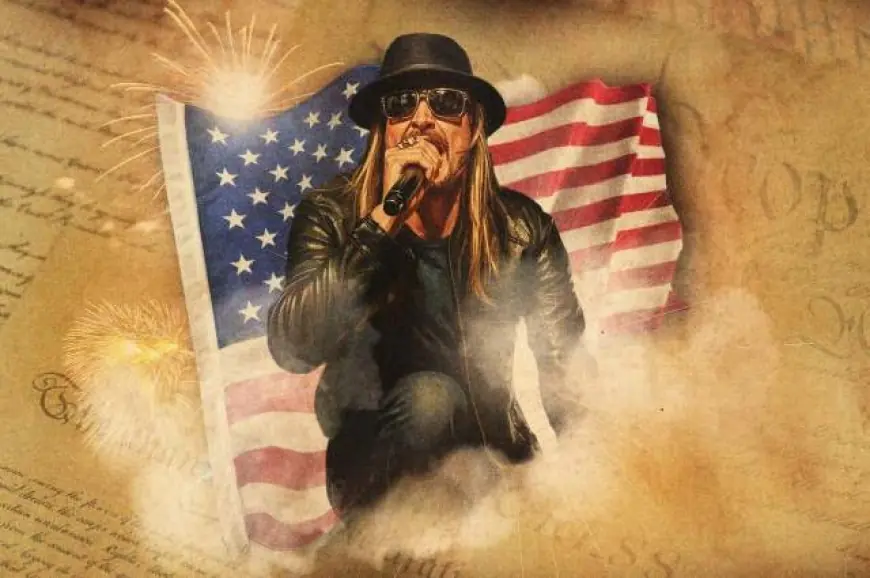
Kid Rock is set to headline a politically branded “alternative halftime show” running alongside the Super Bowl halftime window on Sunday, February 8, 2026, in what organizers are calling the All-American Halftime Show. Marketed by Turning Point USA as a “faith, family, and freedom” counter-program, the event has pulled in a country-heavy lineup that includes Gabby Barrett, Lee Brice, and Brantley Gilbert, and it is already generating more cultural heat than a typical livestream concert.
The reason is bigger than music. This is a deliberate attempt to turn halftime into an identity choice: if you don’t like the official halftime performer, here is a parallel stage with a different message, different aesthetics, and a different audience.
What happened: a halftime counter-program becomes a national conversation
In recent days, promotion for the Kid Rock halftime show has accelerated as the Super Bowl nears, with Turning Point USA pushing the event as a values-driven alternative that will run during the same halftime period. The show is expected to begin coverage around 7:30 p.m. ET, with the main performance window timed for roughly 8:00 p.m. ET, acknowledging that the exact halftime start can shift depending on game flow.
At the same time, criticism has surged online as older Kid Rock lyrics and past controversies resurfaced and spread widely ahead of his high-visibility booking. That scrutiny is colliding head-on with the event’s family-friendly positioning, creating a messaging problem for organizers who want the show to feel wholesome, patriotic, and broadly accessible.
Behind the headline: why Turning Point USA wants an alternative halftime show now
The incentives are straightforward.
Context: The Super Bowl halftime show has become one of the rare remaining mass-culture moments in American entertainment, meaning it is both a spectacle and a symbol. Any perceived tilt in cultural representation triggers a response from groups that want to claim their own version of “the mainstream.”
Incentives: Turning Point USA is using a guaranteed attention spike to do three things at once: rally supporters, build a larger audience for its media ecosystem, and create a repeatable template for future counter-programming. Halftime is perfect for this because viewers are already conditioned to switch screens, check social feeds, or sample other channels.
Stakeholders:
-
Turning Point USA gains visibility and list-building leverage if the show draws a large live audience.
-
Kid Rock gains another marquee platform that reinforces his brand alignment with a specific cultural lane.
-
Other performers gain exposure, but they also inherit the reputational spillover that comes with a politicized stage.
-
Sponsors, venues, and distribution partners face pressure to either embrace the identity branding or keep a careful distance.
What we still don’t know: the missing pieces that will shape how big this gets
Several key details will determine whether this becomes a one-night curiosity or a lasting media play:
-
The true live audience size, especially compared with typical concert streams outside the Super Bowl ecosystem
-
Whether the show is tightly produced as a concert, built around interstitial commentary, or structured like a variety special
-
How organizers handle the gap between “family-friendly” framing and renewed attention to older lyrics and past remarks
-
Whether any brand partners quietly reduce involvement if the controversy dominates the postgame news cycle
How to watch the Kid Rock halftime show
For viewers searching “how to watch” on Super Bowl Sunday, the simplest path is through Turning Point USA’s official channels and the national television carriage that has been advertised for the event, including a companion streaming option through the same distributor’s app.
Timing in ET:
-
Coverage is advertised to start at about 7:30 p.m. ET
-
The main performance window is expected around 8:00 p.m. ET, aligned with halftime
Because halftime timing can slide by several minutes, the practical move is to have the stream or channel ready early, especially if you want to catch the opening.
Second-order effects: why this matters beyond one halftime slot
If this works, it won’t stop at halftime.
A successful alternative halftime show would validate a new playbook: politically aligned entertainment designed to piggyback on major shared events. That could lead to parallel programming during awards shows, debates, holiday broadcasts, and other national moments, further fragmenting pop culture into separate “default” channels for different audiences.
It also raises the risk temperature for artists. When concerts become interpreted as political signals, booking decisions turn into reputational bets. Some performers will lean into that. Others will avoid it, narrowing cross-audience touring opportunities.
What happens next: realistic scenarios and triggers
Scenario 1: Big live turnout, minimal controversy after airtime
Trigger: a smooth show that stays on-message and generates shareable clips without fresh blowback.
Scenario 2: Strong engagement, but controversy becomes the headline
Trigger: renewed focus on older lyrics overwhelms the “family-friendly” branding and dominates the Monday conversation.
Scenario 3: Moderate audience, outsized influence
Trigger: the show’s clips travel widely, shaping future counter-programming even if numbers are middling.
Scenario 4: Expansion into a recurring brand property
Trigger: organizers treat this as a pilot episode and announce additional “values entertainment” specials tied to other events.
Scenario 5: Talent and partner reshuffling
Trigger: partners or performers reassess involvement if backlash becomes costly or unpredictable.
Kid Rock’s halftime moment is not just about a set list. It’s a test of whether a politically framed concert can reliably siphon attention from the biggest entertainment stage in American sports — and whether the people building that alternative ecosystem can keep control of the narrative once the spotlight hits.