





















Bad Bunny turns Super Bowl LX halftime into a Puerto Rico-forward pop spectacle

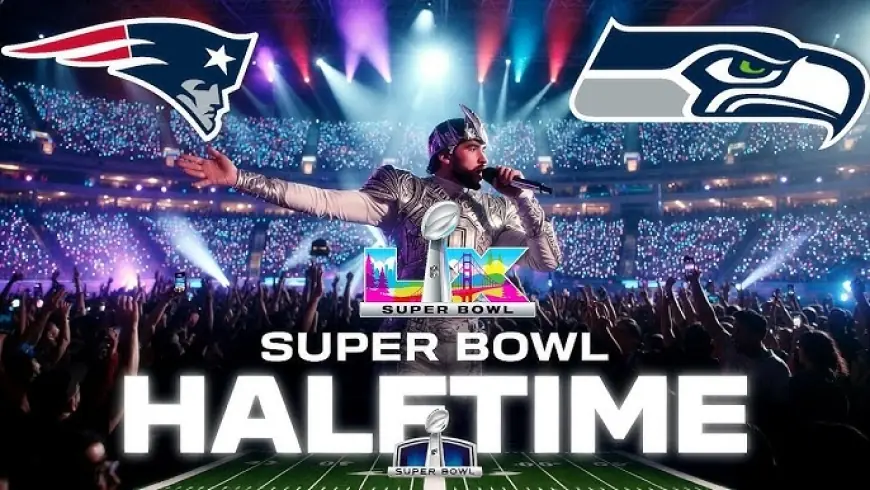
Bad Bunny took the field at Levi’s Stadium during Super Bowl LX on Sunday night, delivering a halftime performance built around Spanish-language hits, dance-first pacing, and heavy visual nods to Puerto Rican culture. The set landed in the game’s mid-break window—typically the biggest entertainment stage in American TV—and leaned into movement and percussion as much as chart-ready hooks.
The show arrived after a week of build-up centered on two ideas Bad Bunny kept returning to in pregame remarks: making people dance and bringing his culture to the biggest night in football.
When the halftime show happened
With kickoff scheduled for 6:30 p.m. ET, the halftime show fell into the expected about 8:00–8:30 p.m. ET window, depending on game flow and stoppages in the first half. The performance itself ran roughly a little over a dozen minutes, consistent with modern halftime production timing and the on-field setup required to build and clear the stage.
For viewers, the practical “start time” remains a moving target each year: halftime begins when the second quarter ends, not at a fixed clock time.
The performance: Spanish-first, dance-first
Bad Bunny’s show played like a sprint—short transitions, tightly stitched song segments, and an emphasis on rhythm sections that kept the stadium moving. The musical palette mixed his global reggaeton and Latin-trap identity with clear touches of Caribbean dance tradition, leaning into percussion, brass-like textures, and choreography that highlighted partner movement rather than solo theatrics.
Visually, the show leaned into warm, saturated color and crowd-facing staging designed to read on television: big ensemble formations, camera-friendly blocking, and a runway-like layout that kept the performer in motion. The overall feel was closer to a street-party energy than a slow-burn stadium rock build—quickly establishing tempo and staying there.
Set list and guest appearances: what’s clear, what isn’t
Immediately after the performance, song lists circulated rapidly online, but a fully standardized official set list can take time to settle as broadcasts, replays, and clip packages sync. What’s clear from broad real-time coverage is that the performance pulled from multiple eras of his catalog, with a strong emphasis on widely recognized hits and recent material tied to his current album cycle.
Guest rumors were part of the run-up to the show, as they are every year, but not every widely shared claim is reliable in the moment. If an official set list and confirmed guest rundown is released, it will clarify which collaborations were performed in full versus teased in short transitions.
Why this halftime show mattered beyond the music
This halftime wasn’t just a booking—it was a signal about audience and identity. Bad Bunny’s performance reinforced how the Super Bowl halftime stage has evolved into a global pop platform where Spanish-language music can be presented without translation, without dilution, and without apology. The show’s structure assumed viewers could follow the emotion and the energy even if they didn’t understand every lyric—an approach that mirrors how streaming has trained audiences to move across language borders.
It also reflected the league’s broader push to connect with a wider fan base, particularly U.S. Latino audiences and international viewers who increasingly treat halftime as the main event.
Reaction: a familiar split, plus a common ground
As with most modern halftime shows, the reaction split along predictable lines: fans who wanted a dance party got one, while viewers expecting a more traditional, rock-style stadium spectacle were less convinced. Still, even skeptical reactions tended to converge on one point: the performance was paced like a headliner set, not a medley that feels like a compromise.
The choreography and staging were designed for maximum momentum in minimum time—exactly what a halftime show must do to justify itself in the middle of the sport’s biggest game.
What happens next
The halftime bump is real and measurable, even if it’s not the point. Expect a surge in streaming for the songs featured in the performance, renewed attention on his catalog from casual viewers, and a wave of conversation about how Spanish-language pop is positioned in mainstream U.S. events.
For the halftime brand, the takeaway is straightforward: a Spanish-first show can dominate the country’s most watched stage without being treated as a novelty.
Key takeaways
-
The performance hit during the standard halftime window after a 6:30 p.m. ET kickoff and ran a little over a dozen minutes.
-
The show centered Spanish-language hits and choreography, with clear Puerto Rico-forward visual themes.
-
Song-by-song details and any guest confirmations may firm up as official rundowns are published.
Sources consulted: Reuters, Associated Press, ABC News, Billboard