






















Josh McDaniels returns to the Super Bowl spotlight after a Patriots reset

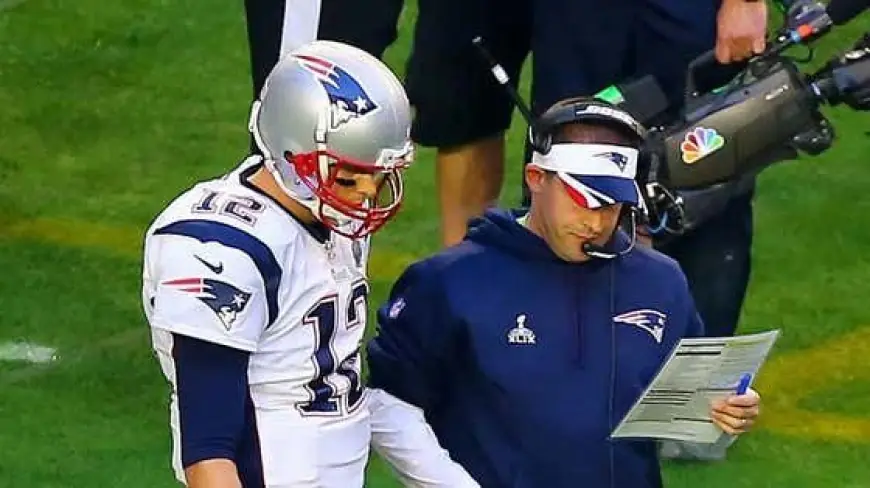
Josh McDaniels is back on the biggest stage in football, entering Super Bowl Sunday, February 8, 2026, as New England’s offensive coordinator after a year that reshaped both his reputation and the Patriots’ identity. Two years removed from a second head-coaching dismissal, McDaniels has re-emerged as a central architect of a high-scoring offense and, days before kickoff, collected a major league-wide coaching honor.
The moment is a familiar one for him—Super Bowl week—yet the context is new: a roster led by a young quarterback and a franchise that remade itself quickly under a new head coach.
A major award and a fast turnaround
McDaniels was named the AP NFL Assistant Coach of the Year for the 2025 season, recognition that landed as the Patriots’ return to title contention became one of the league’s defining stories. The award framed his season as more than a reunion; it was an endorsement that his approach still translates in today’s NFL, even without the long-running infrastructure that once surrounded the Patriots’ dynasty years.
The subtext is hard to miss. For several seasons, the question around McDaniels wasn’t whether he could design offense—it was whether his résumé could recover from uneven, sometimes turbulent head-coaching stints. This award doesn’t erase that record, but it does move the conversation back to what he has long done best: build a weekly plan that gives a quarterback answers.
How New England’s offense changed in 2025
The most visible McDaniels stamp has been clarity: fewer “all or nothing” concepts, more rhythm throws, and a steadier blend of run looks and quick-game options that prevent defenses from teeing off. That doesn’t mean the Patriots became conservative—only that the structure has made explosive plays feel earned rather than improvised.
A big part of the improvement has been the way the offense has layered choices for the quarterback. Instead of living on one primary read, the passing game has leaned into progression concepts that keep the ball moving, reduce sacks, and force defenses to defend the entire width of the field. It’s the kind of system that can travel in January, when weather, pressure, and opponent familiarity punish teams that rely purely on timing.
That approach also fits McDaniels’ career arc: he’s repeatedly shown he can build elite production when the quarterback is comfortable diagnosing, changing protections, and taking the “easy” completion that sets up the next shot.
Drake Maye’s development under McDaniels
This Super Bowl run has also become a referendum on how quickly a young quarterback can mature in a demanding system. The Patriots’ second-year starter has been positioned as a decisive, in-control passer rather than a constant scrambler trying to survive. That doesn’t happen by accident; it requires an offense that tells the quarterback what the defense is trying to do, then gives him outlets if the picture changes post-snap.
For McDaniels, the key achievement has been balance—asking a young player to handle responsibility without drowning him in it. That usually shows up in small but meaningful ways: when hot routes are built in, when motions simplify coverages, when early-down play calls keep the offense ahead of the chains, and when the quarterback is empowered to check into runs that punish light boxes.
If the Patriots win, the narrative will likely focus on the quarterback’s poise. But the more technical story is whether the plan consistently creates “clean” throws in high-leverage moments.
The shadow of past head-coaching failures
McDaniels’ coaching history splits cleanly into two halves: acclaimed coordinator and unsuccessful head coach. That contrast has followed him for more than a decade, and it’s why this Super Bowl feels like a reputational hinge.
What changes now isn’t his play-calling résumé—he already had that. What changes is how teams, owners, and future hiring cycles interpret his ability to lead, adapt, and manage the pressure points that head coaches face. A championship won as a coordinator doesn’t automatically translate to head-coach readiness, but a season like this can rebuild trust and create a path back into top-tier consideration.
In the short term, the simplest interpretation is also the most accurate: McDaniels appears most effective when he can live in the details of offense all week and then call a game with total focus on matchups and sequencing.
What to watch during Super Bowl LX
Super Bowl plans tend to be tight and specific. For New England, the most telling signs of McDaniels’ night will be whether the offense stays efficient without needing trickery, and whether it can handle pressure looks without collapsing into negative plays.
Key takeaways
-
McDaniels entered Super Bowl Sunday as the AP’s top assistant coach after rebuilding New England’s offense in 2025.
-
The Patriots’ rise has been tied to a structured, quarterback-friendly system that still allows explosive playmaking.
-
The game doubles as a career inflection point for a coach whose coordinator success has long contrasted with head-coach setbacks.
Sources consulted: NFL; Associated Press; Fox Sports; New England Patriots team communications