

























Lindsey Vonn Crash at Milano Cortina 2026: Injury Update After Women’s Downhill Fall, Airlift, and Surgery

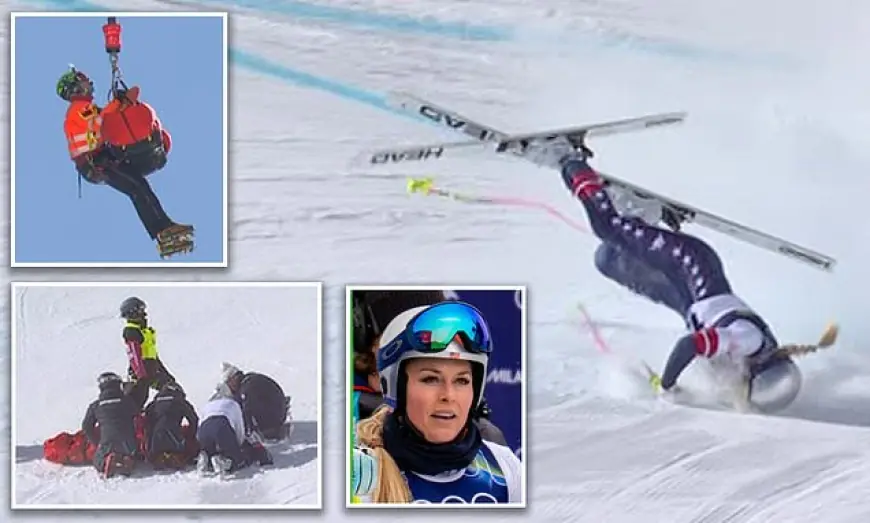
Lindsey Vonn suffered a violent crash during the women’s downhill at the Milano Cortina 2026 Winter Olympics on Sunday, February 8, 2026, and was airlifted from the course for medical care. Vonn is in stable condition, but her injury is serious: she broke her left leg and later underwent surgery in Italy. The incident ended her Olympic downhill run just seconds after it began and has immediately raised questions about whether this was the final race of one of alpine skiing’s most decorated careers.
What happened to Lindsey Vonn in the women’s downhill final
Vonn, 41, lost control early in her run and went down hard after clipping a gate. The crash happened roughly 13 seconds into her descent, leaving her on the snow in visible pain while medical staff responded. A rescue helicopter transported her off the mountain and she was later taken to a hospital, where doctors stabilized and treated the fracture.
The women’s downhill continued after the delay, and American teammate Breezy Johnson went on to win gold, a result that would normally dominate headlines but instead has been overshadowed by the severity and symbolism of Vonn’s fall.
Video of Lindsey Vonn crash today fuels fresh debate over racing while injured
Lindsey Vonn injury update today: stable condition after surgery
The most important update is this: Vonn’s life is not in danger, and she is reported to be in stable condition following surgery to address the broken left leg. She remains under medical supervision as doctors manage pain, swelling, and the early phase of recovery.
Because downhill crashes can involve multiple impact points, the biggest near-term unknown is whether there are additional injuries beyond the leg fracture, especially to the knee and surrounding ligaments. Public updates so far have emphasized stability and treatment rather than detailed medical specifics.
The ACL storyline: why Vonn racing today carried extra risk
This Olympic crash did not come out of nowhere. In the days leading into the Games, Vonn was already dealing with a major knee ligament injury. She had crashed in a pre-Olympic downhill late in January 2026 and later confirmed an ACL rupture, yet chose to compete anyway.
That decision is at the heart of the debate now. Alpine downhill is the fastest, most punishing discipline in the sport, and even small losses in stability can cascade into catastrophic mistakes. Racing with a compromised knee is not simply a pain-tolerance story; it changes how an athlete can absorb compression, react to terrain, and recover from a slight misalignment at speed.
Behind the headline: incentives, pressure, and who has a stake in the decision
Context matters here. Vonn’s return to the Olympic stage was already framed as a comeback against the odds, and the Milano Cortina Games offered a uniquely cinematic stage: high-profile downhill terrain, a massive global audience, and a legacy-defining opportunity.
Incentives and pressures that shaped the moment:
-
Legacy pressure: A medal at 41 would have been historic and would have reframed her entire late-career narrative.
-
National-team stakes: Medal opportunities in speed events are rare, and the temptation to push a proven champion into the start gate is real, even when risk rises.
-
Athlete identity: Elite skiers often define themselves by resilience and fearlessness. That mindset wins races, but it can also narrow the space for restraint.
Stakeholders include Vonn, her medical team, coaches, the U.S. program, sponsors, and the broader sport itself, which must balance the heroism of comeback stories with the duty to protect athletes from avoidable harm.
What we still don’t know
Several key details remain unclear as of Sunday night, February 8, 2026, ET:
-
The exact type of fracture and the hardware used in surgery, which will shape recovery timelines.
-
Whether there are additional knee, hip, or spine impacts from the crash.
-
Whether Vonn will speak publicly soon, and if she will frame this as a setback to recover from or as the end of her competitive career.
What happens next: realistic scenarios and triggers
Here are the most plausible next steps, depending on medical findings and public statements:
-
Short-term recovery focus
Trigger: post-surgery imaging and swelling control. Expect limited updates until doctors confirm stability and rule out secondary injuries. -
A formal withdrawal from remaining events
Trigger: confirmation that the fracture or knee damage makes further competition impossible at these Games. -
A legacy-close chapter
Trigger: Vonn or her team signals that this crash ends her racing career, shifting the conversation to honors, tributes, and long-term health. -
A longer medical timeline with cautious language
Trigger: doctors identify complicating factors that make a quick projection impossible, prompting a slower drip of updates.
Why it matters beyond one crash
Vonn’s fall is a reminder of what downhill demands: it is a sport where fractions of a second and millimeters of edge control can separate victory from trauma. It also spotlights a broader Olympic tension: the world celebrates heroic returns, but the cost of chasing a storybook ending can be steep.
For now, the headline is simple and human: Lindsey Vonn crashed, she was injured, she received surgery, and she is stable. Everything else, including how this reshapes her legacy and what it means for athlete decision-making at the highest level, will depend on the next medical update and the choices she makes once the immediate crisis passes.