

























Video of Lindsey Vonn crash today fuels fresh debate over racing while injured

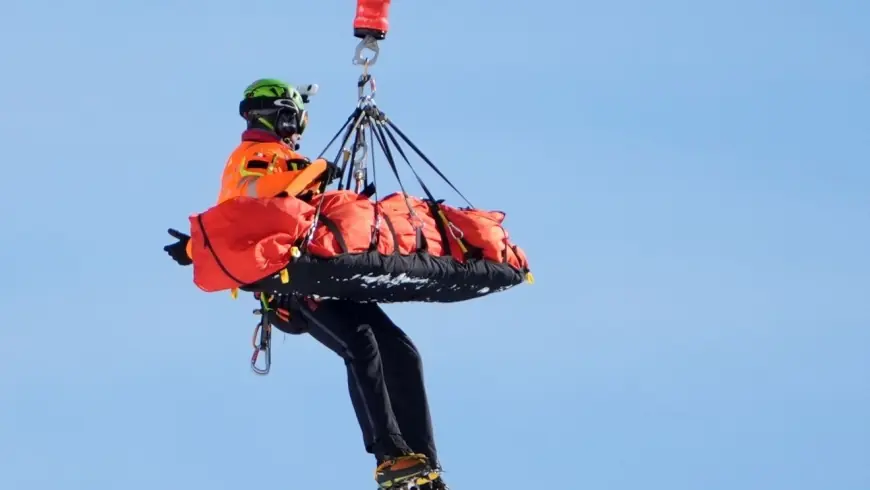
A widely shared video of Lindsey Vonn’s crash in the women’s Olympic downhill on Sunday, February 8, 2026, is renewing scrutiny of how far elite athletes should push when they’re not fully healthy—especially in speed events where a small mistake can become a major impact in seconds. Vonn, 41, fell just moments after leaving the start gate in Cortina d’Ampezzo and was airlifted by helicopter for medical evaluation, ending her run almost immediately and casting a shadow over the race.
The fall also landed in a charged context: Vonn had already acknowledged racing with a serious left-knee injury, including an ACL rupture sustained in a crash late last month. Even for fans used to seeing downhill skiers take risks, the combination of “Olympics + injury + high speed” made the footage instantly consequential.
What the crash video shows in real time
The clip that’s circulating captures a sequence that unfolds fast enough to be disorienting on first watch—an explosive push out of the gate, a brief attempt to settle into the racing line, and then an abrupt loss of control that sends her off balance before she tumbles to a stop.
What viewers can clearly see:
-
An early error within seconds of the start, with Vonn losing her line almost immediately.
-
A hard impact and slide, followed by a prolonged pause as medical teams reach her.
-
A rescue evacuation, with Vonn later transported off the course by helicopter for evaluation.
The crash occurred during the morning Olympic schedule in Cortina at roughly 5:30 a.m. ET (11:30 a.m. local time), with the race stopping and starting amid multiple incidents on the course.
Lindsey Vonn's accident
by u/Ecstatic-Ganache921 in olympics
What’s confirmed about her condition
As of Sunday, February 8, 2026 (ET), the key confirmed facts are limited but significant: Vonn crashed early, received on-slope medical attention, and was taken for evaluation after being evacuated by helicopter. Officials have not released a detailed diagnosis from the crash itself, and no definitive decision about additional starts has been publicly announced.
That leaves two major unknowns that matter far more than any viral clip: whether she suffered new structural damage in the fall, and whether swelling, pain, or instability will make further racing unsafe even if imaging does not show a fresh tear or fracture.
The injury context that makes this different
What’s driving the debate is not just the fall—it’s the backdrop. Vonn entered the Olympic downhill after recently suffering a significant left-knee injury, which she described as an ACL rupture along with other knee damage. Downhill skiing is especially unforgiving to knee stability because it combines high speed, compressions, vibration, jumps, and rapid corrections while skiers fight to keep skis flat and tracking.
In that context, critics argue the video is evidence that racing while significantly compromised can turn the sport’s ordinary risk into something closer to a coin flip. Supporters counter that elite athletes routinely compete with pain and partial injuries, and that the Olympics are exactly where athletes accept higher stakes—provided medical staff and the athlete agree the risk is acceptable.
Risk, reward, and the “one last run” calculus
The video has become a flashpoint because it compresses the entire dilemma into a few seconds: the lure of one more Olympic start versus the possibility of worsening an injury that could affect life after sport.
For athletes, the decision isn’t just bravery versus caution. It often comes down to:
-
Functional capability: Can the body perform the specific forces of this event, not just “ski a run” in training?
-
Worst-case downside: What’s the realistic risk of long-term damage if something goes wrong?
-
Competitive upside: Is there a credible path to a result that justifies the risk, or is it primarily symbolic?
-
Team alignment: Do the medical team, coaches, and athlete truly agree—or are they compromising under pressure?
The footage doesn’t answer those questions, but it intensifies them—because it’s a reminder that the sport doesn’t give partial credit for intentions.
How the race finished after the crash
Despite the disruption, the women’s downhill continued and produced a major U.S. result: Breezy Johnson won gold in 1:36.10, edging Emma Aicher by 0.04 seconds, with Sofia Goggia taking bronze. The outcome made Johnson the first American medalist of the 2026 Winter Games and added a stark contrast to the moment earlier in the morning—one U.S. skier celebrating, another being evaluated.
What to watch for next
The next meaningful update won’t come from replay angles—it will come from medical clarity and a safety decision. Three practical signals typically matter most in the days immediately following a crash:
-
whether she can walk and bear weight without significant pain,
-
what imaging shows about fractures, ligament integrity, and cartilage/meniscus injury,
-
whether the team rules out further starts based on risk, even if she wants to continue.
Until those are known, the video will keep circulating as a proxy for a bigger issue: how a sport built on commitment handles the moments when commitment collides with injury.
Sources consulted: Reuters, Associated Press, U.S. Ski & Snowboard, NBC Olympics