





















Clippers vs. Timberwolves: What time is it, who’s out, and what’s at stake

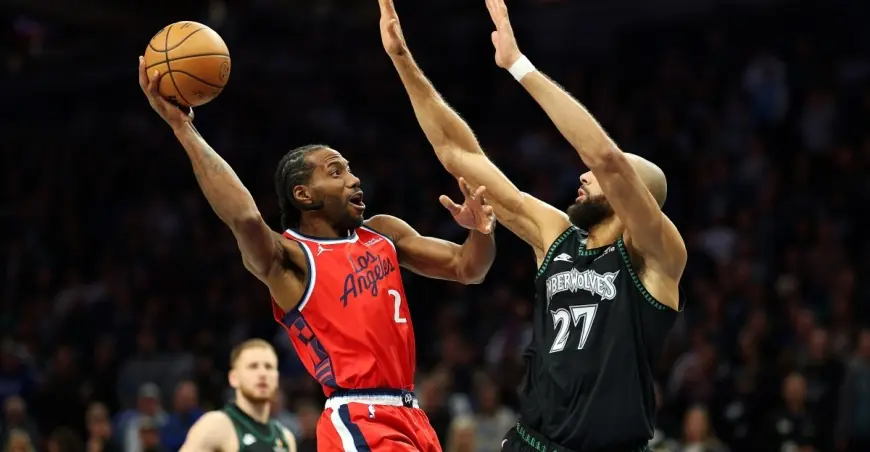
The Los Angeles Clippers visit the Minnesota Timberwolves on Sunday, February 8, 2026, in a matchup that quietly carries real weight for both teams: Minnesota is trying to protect its playoff positioning in a crowded West, while Los Angeles is searching for traction amid a reshaped rotation and key absences.
Tipoff is set for 3:00 p.m. ET at Target Center in Minneapolis, giving the game an early-afternoon national sports window and making it a quick-turn test for teams managing health, minutes, and momentum.
Game time, place, and quick context
Sunday’s meeting comes with two different arcs. Minnesota enters with the stronger record and home-court confidence, while the Clippers arrive as a team still settling into a new look and trying to string together cleaner two-way stretches.
| Detail | Info (ET) |
|---|---|
| Matchup | Clippers vs. Timberwolves |
| Date | Sun, Feb. 8, 2026 |
| Tipoff | 3:00 p.m. ET |
| Venue | Target Center (Minneapolis) |
| Records | Clippers 24–27; Timberwolves 32–21 |
Who’s out: the injury and availability picture
Availability is the biggest pregame variable, and it tilts toward Minnesota. The Clippers’ report includes multiple names, highlighted by a season-ending absence for Bradley Beal and a continued absence for Darius Garland. Minnesota’s list is lighter, though they remain without Terrence Shannon Jr., and they have one rotation question with Julian Phillips.
The practical impact is simple: fewer healthy ball-handlers and fewer stable wing minutes can change everything from pace to late-clock shot quality.
Why the Clippers feel like a team in transition
Los Angeles has the feel of a roster mid-reshape, leaning on defensive toughness and half-court execution while working through lineup combinations. When the Clippers are at their best, they slow games down, get into their sets early, and force opponents to beat them repeatedly over long possessions.
But that identity gets stressed when creators are missing. Without reliable guard creation, the offense can drift into tough jumpers and late-clock possessions—exactly the type of game Minnesota prefers to defend when it can keep its rim protection set and limit second chances.
Minnesota’s edge: size, rebounding, and downhill pressure
The Timberwolves’ cleanest path is to turn advantages into simple math: win the paint, control the glass, and keep the Clippers from getting comfortable switching and isolating.
Minnesota’s front line gives them a consistent defensive base, and their best offensive stretches often come when they defend well enough to run—turning stops into early offense before the opponent can set matchups. If the Timberwolves keep turnovers under control, they can force the Clippers to score over a set defense for long stretches.
Key matchups to watch
A few head-to-head dynamics should decide whether this becomes a Minnesota-controlled game or a late coin flip:
-
Anthony Edwards’ pressure vs. perimeter containment: If Edwards consistently bends the defense, Minnesota’s spacing and kick-out looks become much easier.
-
Rudy Gobert at the rim vs. Clippers’ shot profile: Los Angeles needs quality spacing and clean driving lanes to avoid getting funneled into low-efficiency attempts.
-
Bench minutes: Early-afternoon games can get sloppy; whichever team wins the “non-star” minutes usually controls the fourth-quarter tone.
What a “good win” looks like for each team
For Minnesota, a good win means no drama: solid transition defense, fewer live-ball turnovers, and steady fourth-quarter execution without gifting extra possessions.
For the Clippers, a good win is about grind and precision: keep Minnesota out of transition, force contested shots without fouling, and manufacture enough creation—through movement, offensive rebounding, or timely shooting—to stay within one or two possessions late.
If the game is close in the final six minutes, Minnesota’s edge is continuity and depth; the Clippers’ edge is the ability to make the game feel uncomfortable and tactical.
Sources consulted: NBA, Reuters, Sports Illustrated, Yahoo Sports