























Celtics without Jayson Tatum as rehab reaches 5-on-5 stage ahead of Knicks matchup

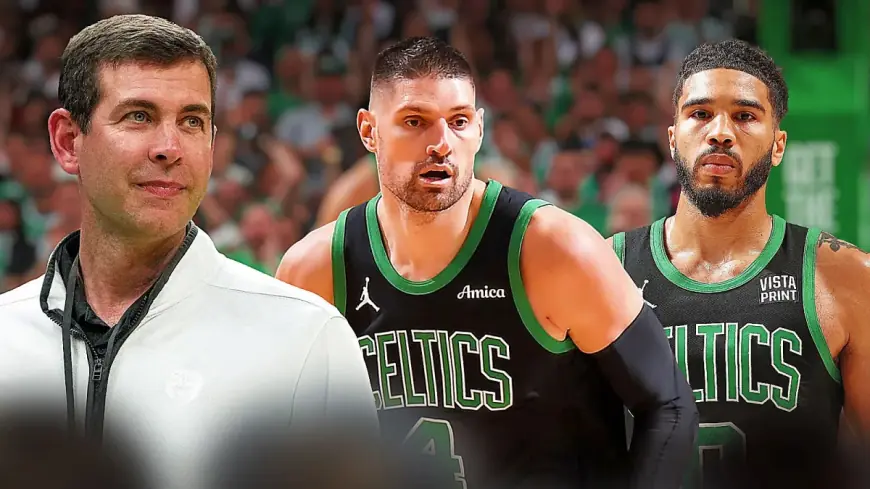
The Boston Celtics entered Sunday, February 8, 2026, balancing two storylines that have come to define their season: a tight Eastern Conference race and the continued absence of Jayson Tatum. With the Celtics hosting the New York Knicks at 12:30 p.m. ET, the game carried immediate standings weight—while the longer-view focus remained on Tatum’s recovery from a right Achilles repair and a new step forward in his rehab work.
Team and league injury reporting listed Tatum as out Sunday. At the same time, recent updates around the club describe him beginning controlled 5-on-5 activity, a notable checkpoint in a return process that has moved deliberately, without a public target date.
Jayson Tatum’s status: out Sunday, but rehab progressing
Tatum remains sidelined while continuing a structured recovery plan following Achilles surgery. The key development around his rehab is the move into controlled 5-on-5 work—an indication that he has progressed beyond strictly individual movement, shooting, and strength benchmarks into team-style reps that more closely resemble game demands.
That progression matters, but it does not equal clearance. Controlled scrimmages can be tightly managed: limited contact, controlled pace, and hard stops when fatigue or discomfort appears. Teams typically treat this stage as a bridge to more competitive reps, then to full practice participation, and only later to game availability.
For Boston, the priority has been avoiding a rushed return. The Celtics’ approach has emphasized that Tatum will come back only when he feels capable of playing at his usual standard, rather than simply being “able to play.”
Celtics vs. Knicks: standings pressure without Boston’s top scorer
Sunday’s matchup at TD Garden landed as a practical test of Boston’s ability to win high-leverage games without its primary offensive engine. The Celtics and Knicks entered the day separated by a small margin near the top of the East, with the result shaping who holds a stronger position heading into the next stretch of the schedule.
New York also arrived with injuries shaping its rotation. OG Anunoby was ruled out with a toe injury, while Karl-Anthony Towns was cleared to play after a right-eye laceration. Josh Hart, previously listed as questionable, was also available.
For the Celtics, the absence of Tatum puts extra emphasis on pace control, rebounding, and shot quality—especially against a Knicks team that can punish short-handed opponents on the glass and in half-court matchups.
Who has to carry Boston’s offense while Tatum sits
When Tatum is out, Boston’s identity shifts from “star-driven” to “committee-driven.” The offense relies more on:
-
Jaylen Brown’s rim pressure and midrange creation
-
Derrick White’s decision-making, two-way play, and timely scoring
-
Efficient three-point volume created through ball movement rather than isolation
-
Role-player stability, particularly in lineups that must defend without sacrificing spacing
The Celtics can still win big games without Tatum, but the margin for error tightens. Turnovers become more costly, and scoring droughts can appear if the three-point volume doesn’t come with strong shot selection. Against a quality opponent, Boston typically needs a clean defensive night and a strong free-throw/turnover profile to keep control.
Injury snapshot and what it means for rotations
Below is a quick status check tied to Sunday’s Celtics–Knicks game (ET):
| Team | Player | Status | Note |
|---|---|---|---|
| Celtics | Jayson Tatum | Out | Right Achilles repair |
| Celtics | Sam Hauser | Out | Low back spasms |
| Knicks | OG Anunoby | Out | Toe injury |
| Knicks | Karl-Anthony Towns | Available | Right eye laceration (cleared) |
| Knicks | Josh Hart | Available | Right ankle soreness (cleared) |
With Tatum out and Hauser unavailable, Boston’s wing minutes become more valuable, and the Celtics’ bench spacing can be harder to maintain. For New York, Anunoby’s absence can shift matchups on the perimeter and increase the defensive workload on remaining wings.
What “controlled 5-on-5” signals—and what it doesn’t
For fans tracking the question of when Tatum returns, the controlled 5-on-5 milestone is encouraging because it suggests:
-
improved movement confidence at near-basketball speed
-
greater tolerance for changes of direction and timing-based actions
-
readiness for more complex, reactive decision-making
But it does not confirm a date. Achilles recoveries often involve variability once the athlete begins more intense lateral work, repeated accelerations, and contact-based actions. Teams also watch for swelling, soreness, and symmetry issues that only show up after multiple days of higher-load activity.
The near-term outlook: more checkpoints, no public timeline
Boston’s next calendar marker is the post–All-Star stretch, when travel and schedule density increase. Whether Tatum is ready to rejoin full practices by then remains unclear, and the club has not attached a firm return target publicly.
For now, the Celtics’ reality is two-track: keep stacking wins in the East while continuing to build toward a postseason version of the roster that includes a fully-ready Tatum—if and when he clears the final steps.
Sources consulted: Reuters, ESPN, NBA, Hoops Rumors