

























Breezy Johnson wins Olympic downhill gold as Cortina race turns chaotic

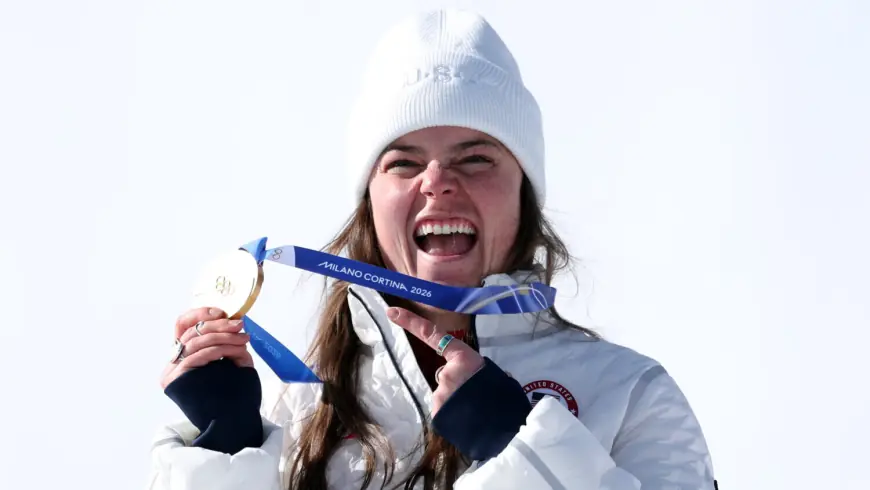
Breezy Johnson delivered the United States’ first medal of the 2026 Winter Games on Sunday, winning women’s downhill gold in Cortina d’Ampezzo in a race overshadowed by a scary crash involving teammate Lindsey Vonn. Johnson’s run was clean, aggressive, and fast enough to hold up through a stop-start morning that left many skiers shaken and the finish area visibly tense.
Johnson, 30, stopped the clock at 1:36.10, edging Germany’s Emma Aicher by 0.04 seconds to claim her first Olympic medal. Italy’s Sofia Goggia took bronze, while American teammate Jackie Wiles narrowly missed the podium in fourth.
Breezy Johnson breaks through on the biggest stage
For Johnson, the win caps a long climb back to the very top of her sport. She entered these Games as a top downhill contender, but Olympic races can be unforgiving: one bobble can erase years of preparation. On Sunday, she handled a demanding speed track with the kind of commitment that separates medalists from the rest—staying direct on the fall line, carrying speed through terrain changes, and minimizing time lost in the technical sections.
The performance also changed the immediate tone around Team USA at Milano Cortina. The U.S. came into the first full week seeking a momentum moment, and Johnson’s gold provided exactly that—especially in an event where American women have rarely reached the top step.
A race defined by crashes and stoppages
The downhill unfolded under heavy emotional weight after Vonn crashed early and required urgent medical attention on the course before being evacuated for evaluation. Vonn’s fall came quickly enough that many viewers barely saw a full run, and the reaction from athletes at the bottom reflected just how serious it looked.
The day’s danger was not limited to one incident. Additional hard crashes during the event led to more interruptions and visible concern among competitors waiting at the start. Those stoppages can affect rhythm and decision-making in downhill, where athletes rehearse a precise timing and mental script before pushing out of the gate.
Even so, Johnson kept her focus. She skied after the tone of the day had already shifted, executing a run that held up while others struggled to find the same balance of risk and control.
From missed Beijing to world champion form
Johnson’s Olympic breakthrough carries extra meaning because her recent history includes both physical setbacks and a reputational hit. She missed the 2022 Winter Games after a knee injury suffered close to the Opening Ceremony. Later, she served a 14-month suspension tied to anti-doping “whereabouts” rule violations—an administrative system that requires athletes in registered testing pools to provide accurate location information for out-of-competition testing.
She returned to racing and re-established herself among the world’s best, then won the 2025 world championship downhill—a result that set expectations for Milano Cortina but did not guarantee anything. Speed skiing careers are often defined by thin margins, and Johnson has lived both sides of that reality: long recovery stretches, questions about form, and then a run that proves she can still win when it matters most.
What Sunday’s gold means for Team USA
Johnson’s win does more than add one medal to the tally. It steadies the U.S. women’s alpine program early in the Games and reshapes how rivals and coaches view upcoming speed events. In a two-week tournament, a single gold can lift team energy and influence strategy—who races which events, how aggressively athletes and coaches manage risk, and how the group handles the emotional swings that come with injury scares.
It also spotlights the depth of the U.S. speed group. With Wiles close behind the podium and other Americans finishing deeper in the field, the overall picture suggests the U.S. can contend in multiple starts if conditions and health cooperate.
What to watch next in Johnson’s Olympic schedule
Downhill champions rarely have a quiet week afterward. The calendar moves quickly, and speed athletes often face choices about doubling up in related events.
Key takeaways to track over the next several days:
-
Recovery and readiness: Downhill takes a physical toll; how Johnson feels in the days after gold matters for any additional starts.
-
Team combined implications: Johnson has already shown she can thrive in multi-discipline formats, and the Olympic schedule offers another chance to add to her medal haul.
-
Safety and course decisions: After multiple crashes, officials and teams will scrutinize setups, visibility, and risk points—factors that can change how athletes approach the next speed race.
For now, Johnson’s result stands on its own: a precise, fearless downhill run delivered on the sport’s biggest stage, in a race where keeping composure was as important as raw speed.
Sources consulted: Reuters, U.S. Ski & Snowboard, NBC Olympics, Associated Press