






















Turning Point halftime show set for Super Bowl Sunday counterprogramming

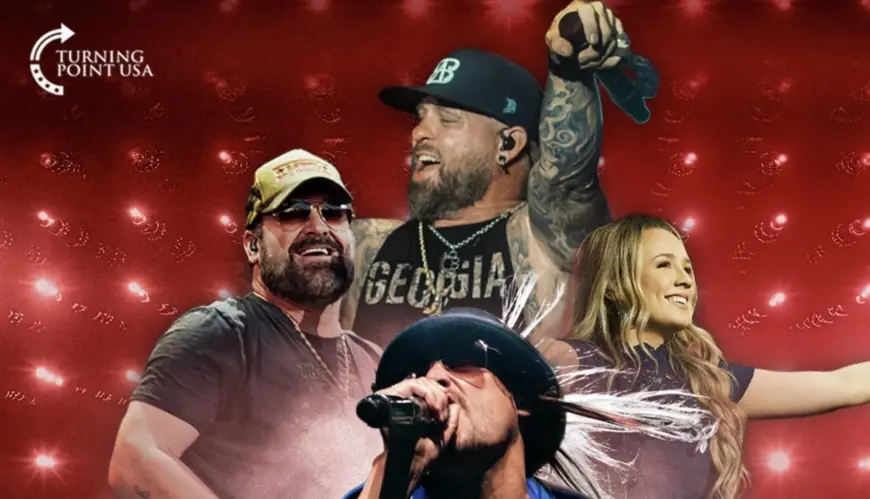
As Super Bowl LX reaches halftime on Sunday, Feb. 8, 2026, a separate online concert billed as an alternative viewing option is scheduled to run at roughly the same time as the game’s headline performance. The event—tied to Turning Point USA—has drawn attention for its timing, its lineup of mainstream country and rock acts, and the way it has turned halftime into a split-screen cultural moment.
Super Bowl kickoff is set for about 6:30 p.m. ET, with halftime typically landing around the 8:00–8:30 p.m. ET window depending on game pace. That timing is central: the alternative show is designed to be watched during the same break, not before or after.
Turning Point halftime show: what it is and why it exists
The concept is straightforward: a separately produced concert meant to give viewers another entertainment option while the Super Bowl is in halftime. Organizers have framed it as a “family-friendly” program focused on patriotic themes and values, pitched to fans who do not want to watch the main halftime performance.
The show’s rollout has also been fueled by politics—less about football strategy and more about the cultural symbolism of who headlines the biggest stage in American sports. That dynamic has made the alternative concert a talking point well beyond music fandom, especially in the final days leading into the game.
When it starts and how it’s scheduled
Because the Super Bowl’s halftime start is not fixed to an exact minute, the alternative show is best understood as a window:
-
Super Bowl kickoff: ~6:30 p.m. ET
-
Likely halftime window: ~8:00–8:30 p.m. ET (varies with game flow)
-
Alternative show coverage: listings commonly cite around 8:00 p.m. ET, with some schedules indicating coverage beginning about 7:30 p.m. ET
If you’re trying to sync it precisely, the safest approach is to be ready a few minutes before the end of the second quarter, then switch over once the teams head to the locker room.
The lineup and the format
The announced lineup centers on a headline performance by Kid Rock, supported by Brantley Gilbert, Lee Brice, and Gabby Barrett. In public comments, at least one performer has emphasized they are joining to entertain rather than provoke, a nod to the criticism that the event’s premise is inherently divisive.
Unlike the stadium show—which is built for a live in-venue crowd and a massive broadcast audience—the alternative concert is structured as a made-for-viewing production. That typically means tighter camera work, fewer dead moments, and a format closer to a televised special than a live arena set.
The controversy shaping the conversation
The alternative show is happening in direct reaction to the Super Bowl’s official halftime headliner, Bad Bunny, whose booking has sparked a predictable wave of praise, criticism, and political commentary. The resulting clash has made halftime feel less like a shared national moment and more like a choose-your-own broadcast.
In the run-up to Sunday, commentary has also focused on what “counterprogramming” does to the Super Bowl ecosystem: it doesn’t change what happens on the field, but it can reshape how the entertainment side is discussed—especially online, where real-time clips and reactions drive the postgame narrative.
What to watch for next
Two practical questions will determine how big this becomes beyond Sunday night:
-
Audience size and staying power. If the alternative concert draws a meaningful live audience, it could encourage similar efforts around future major broadcasts. If it doesn’t, it may fade as a one-off protest event tied to a single year’s booking.
-
Brand and sponsor reaction. The Super Bowl’s entertainment machine is built around broad appeal. Any sign that halftime is becoming a recurring battleground could push brands to seek safer, less polarizing associations—or double down on identity-driven marketing.
For viewers, the decision is simpler: stick with the official halftime show, try the alternative, or catch both later in highlights. Either way, the fact that halftime now has a “rival” production is itself the headline—an indicator of how quickly sports entertainment can become a proxy for wider cultural fights.
Sources consulted: Associated Press, Billboard, Deadline, Turning Point USA official event site