























Mikaela Shiffrin reflects on pressure and perception heading into her fourth Olympics after a tough Beijing and a long return

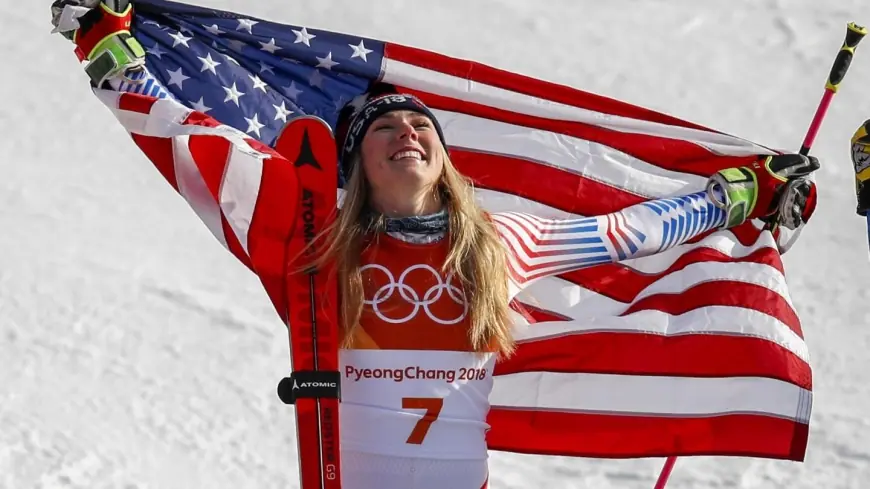
Mikaela Shiffrin is arriving at Milano Cortina 2026 with a different relationship to expectation than she carried into Beijing four years ago. The sport still treats her as a gold-medal favorite, but her recent public comments show a shift from trying to control outcomes to managing the mental noise that surrounds them.
That change is partly the residue of a painful Beijing Olympics and partly the product of a long return from injuries that forced her to rebuild confidence—especially in giant slalom—while performing under constant spotlight.
The Beijing hangover and what it changed
Beijing 2022 remains the defining “pressure” reference point for Shiffrin’s Olympic story. She did not finish in the two events most associated with her dominance, and the result became a shorthand narrative: the best skier in the world, undone on the biggest stage.
In recent reflections, Shiffrin has framed that experience less as a mystery to solve and more as an unavoidable part of elite sport. She has emphasized that Olympics amplify everything—mistakes, headlines, and the tendency for the public to treat a single run as a referendum on a career. The takeaway she describes now is not a new technical cue; it’s an acceptance that perfect conditions for peak performance are rare, and that chasing “the perfect Olympics” can become its own trap.
Living inside the spotlight without letting it drive
Shiffrin’s name carries a kind of automatic expectation: medals are assumed, and anything else is framed as surprising. She has spoken openly about how that dynamic shapes perception—how the same athlete can be praised as inevitable when winning and questioned as fragile when not.
Her approach entering these Games has centered on detaching identity from results: focusing on process and preparation rather than a public tally. That doesn’t mean lowering ambition. It means narrowing what she tries to control—training blocks, course inspection habits, equipment decisions, and recovery—while refusing to let external narratives dictate her emotional temperature.
A key theme in her comments has been reclaiming “pressure” as something that signals opportunity rather than threat, without pretending it disappears.
The long return and the confidence rebuild
Shiffrin’s recent seasons have not been a straight march of wins. She has dealt with significant crashes and injuries that changed her relationship with risk, particularly in giant slalom. The physical rehab was only part of it; the bigger challenge was the mental residue—how a split-second mistake can echo in the mind when speeds climb and margins vanish.
In interviews leading into the Games, she has described the comeback as incremental: stacking days of good training, slowly rebuilding trust in her body, and learning to manage fear without letting it dictate decisions. That context matters because Olympic racing demands commitment. Any hesitation—especially in technical events—shows up immediately on the clock.
A values-driven frame in a noisy moment
Another part of Shiffrin’s message in Italy has been broader than skiing. She has talked about representing values such as inclusion and kindness and about what it means to be visible at a moment when athletes can become political symbols whether they want to or not.
This isn’t a pivot away from performance; it’s a way to keep perspective when the stakes feel consuming. By anchoring her experience to something bigger than a podium, she has signaled a desire to protect her mental space—particularly after a cycle in which public scrutiny, disappointment, and recovery overlapped.
What this mindset means for medal chances
Shiffrin is still positioned as a top contender, especially in slalom, and she has spoken about focusing her Olympic program to stay sharp rather than overloaded. The central point of her recent reflections is that medals follow execution, not expectation.
Three practical indicators will shape her results over the next week: how her slalom rhythm looks on early training days, whether her giant slalom confidence holds under Olympic intensity, and how well she manages the emotional swings that come with being treated as the face of a team.
Key takeaways
-
She has reframed Beijing 2022 as a lesson in acceptance, not a puzzle with a single fix.
-
Her comeback has emphasized mental recovery and confidence, not just fitness.
-
She is treating pressure as part of the privilege of competing, while resisting the narratives attached to it.
Sources consulted: Reuters, Associated Press, Olympics.com, Time Magazine