























Kid Rock halftime show: What it is, when it airs, and why it’s controversial

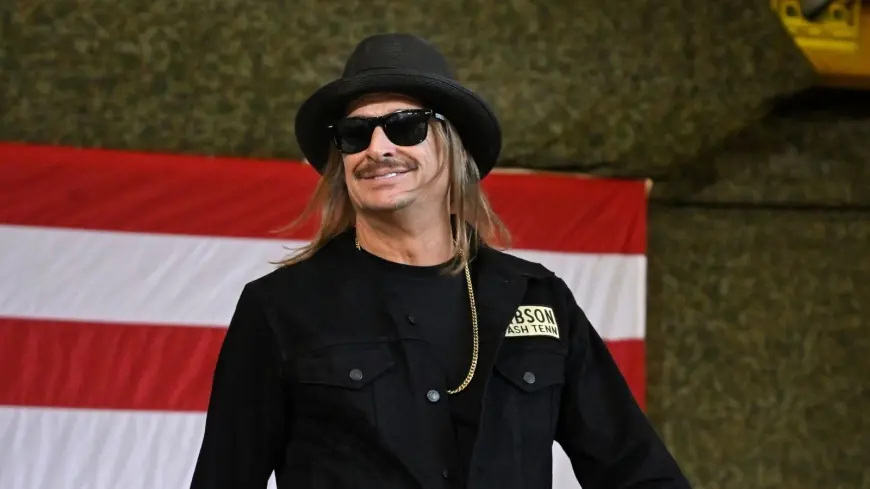
As Super Bowl Sunday arrives, “Kid Rock halftime show” has become a common search phrase—but it’s not the official on-field performance inside the stadium. Kid Rock is headlining a separately produced, alternative program timed to run during the Super Bowl’s halftime window, positioned as counterprogramming to the NFL’s official halftime headliner, Bad Bunny.
The split has turned halftime into a two-track event: the league’s main show for the broadcast audience, and an outside production aimed at viewers who want a different soundtrack and a different cultural tone.
Not the NFL’s official halftime show
The NFL’s official halftime show for Super Bowl 2026 features Bad Bunny as the headliner. Kid Rock is not scheduled to perform as part of that on-field production.
Instead, Kid Rock’s appearance is tied to a parallel event promoted as an “All-American” alternative. The concept is straightforward: offer a separate halftime music program that viewers can choose to watch during the same midgame break.
That distinction matters because some social posts and headlines have blurred the line, leading to confusion about whether the NFL changed performers or added Kid Rock to the stadium show. As of today, the official halftime lineup remains unchanged.
What the alternative show includes
The alternative halftime program is being staged and promoted by Turning Point USA, a conservative political organization that said it created the event in response to backlash over the NFL’s halftime choice.
The announced music lineup centers on Kid Rock and includes additional country acts. Organizers have presented the show as a patriotic-themed entertainment option rather than a stadium spectacle, with messaging aimed at an audience they describe as culturally conservative.
While production details vary by distribution, the pitch has been consistent: it’s a made-for-halftime broadcast built to compete for attention during the same 15–20 minute window when the Super Bowl pauses for the break.
When it airs and what “halftime” means for timing
Because the alternative show is timed to the game’s halftime, its start is tied to live game flow rather than a fixed clock time. Super Bowl kickoff is scheduled for 6:30 p.m. ET on Sunday, February 8, 2026. Halftime typically arrives around 8:00–8:30 p.m. ET, but it can shift earlier or later depending on the pace of play, penalties, reviews, and the number of stoppages.
For viewers trying to catch the opening of either halftime option, the practical move is to be ready as the second quarter winds down—especially in the final five minutes before the two-minute warning, when the broadcast starts transitioning toward the break.
Why it has sparked backlash and support
The alternative show has drawn criticism from several directions:
-
Some critics argue it’s explicitly political counterprogramming that deepens a culture-war framing around the Super Bowl.
-
Others point to Kid Rock’s long history as a polarizing public figure and say the choice is designed to provoke.
-
Some faith-based viewers have questioned whether he fits the values the alternative show claims to represent.
Supporters, meanwhile, describe the event as a consumer choice—an entertainment option for viewers who feel the official halftime show doesn’t speak to them. The organizers have leaned into that framing, presenting the show as a “for our audience” alternative rather than an attempt to replace the NFL production.
One reason the debate has intensified is that the NFL halftime show has become a cultural tentpole: it’s not just music, it’s identity and representation on one of the largest live stages in American television. When an alternative show is marketed as a rebuttal to the main act, the conversation quickly moves beyond set lists.
The bigger picture: halftime has become a contest for attention
Even without politics, halftime is a high-stakes competition for eyeballs. Brands, broadcasters, and performers treat those minutes as premium real estate. The alternative Kid Rock event adds a new layer: a direct attempt to siphon viewers during the most concentrated burst of attention in the entire broadcast.
Whether it succeeds in pulling a meaningful audience is difficult to measure in real time, but the strategy signals something important: halftime is no longer just a single, shared cultural moment. It’s increasingly a programmable slot where different groups can watch different “main events” simultaneously.
For the NFL, that fragmentation is a risk—anything that reduces shared attention can soften the cultural impact of the official show. For organizers of the alternative program, that same fragmentation is the point: it’s a way to build a parallel audience without needing access to the stadium.
Key takeaways for viewers
-
Kid Rock is not part of the NFL’s on-field halftime performance.
-
His show is a separate program designed to run during the halftime break.
-
The start time depends on when halftime occurs, usually around 8:00–8:30 p.m. ET.
-
The event’s purpose and marketing have fueled a broader debate about politics and culture around the Super Bowl.
Sources consulted: Associated Press, Forbes, CBS News, The Independent