

























KDE Linux Enhances Hardware Support and Boosts Performance

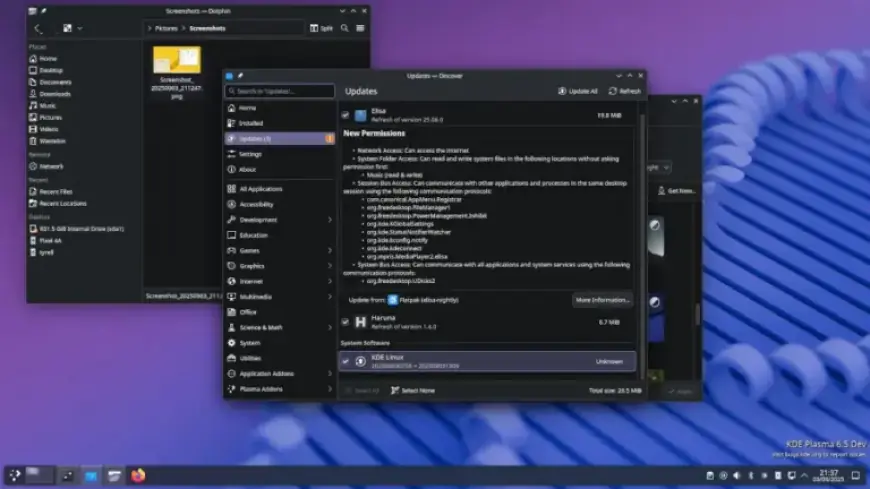
KDE Linux continues to enhance hardware support and boost performance as it approaches its beta release. Following the earlier alpha version that debuted in September, developers have focused on refining this open-source desktop distribution. KDE Linux serves as the reference platform for KDE, utilizing an immutable base OS combined with Arch Linux packages.
Recent Improvements in KDE Linux
KDE developer Nate Graham recently shared a blog post outlining key enhancements made to KDE Linux. These improvements pave the way for a more stable beta release.
- Delta Updates Enabled: KDE Linux now supports delta updates by default. This feature allows quicker and smaller update downloads.
- Enhanced Hardware Support: The distribution includes more drivers and configuration updates, improving compatibility with various peripherals.
- Performance Optimizations: The integration of the Zen kernel and other kernel optimizations contributes to overall system performance. Low-latency audio enhancements have also been introduced.
- Collaboration with CachyOS: Many of the performance optimizations in KDE Linux are derived from CachyOS, another Arch Linux distribution.
- Additional Features: The latest version supports RAR file compression, includes a command-not-found handler, and features a quieter boot process.
- KDE Applications: More KDE applications are included in the distribution, enhancing the overall user experience.
Conclusion
As the KDE Linux development team works diligently towards the beta release, users can look forward to better hardware support and enhanced performance. For detailed updates and future enhancements, visit Filmogaz.com. With ongoing improvements, KDE Linux aims to provide a robust platform for its users.