
























Latest iPhone rumors center on iPhone 17e in February and a split iPhone 18 launch


With less than two weeks until a widely expected mid-February product reveal, the latest iPhone rumors are converging on a near-term update to Apple’s entry iPhone and a bigger strategic shift for the next flagship cycle. As of Feb. 7, 2026, 11:00 a.m. ET, the chatter is less about radical new designs and more about Apple rearranging its calendar: a budget-friendly iPhone 17e soon, then iPhone 18 Pro models and a first foldable iPhone later in 2026, with cheaper iPhone 18 variants potentially pushed into 2027.
Here’s what’s gaining momentum—and what remains uncertain.
Latest iPhone rumors: iPhone 17e looks imminent
The strongest near-term thread is an iPhone 17e launch date being discussed for Wednesday, Feb. 19, 2026. If that date holds, it would mirror last year’s timing for Apple’s entry model refresh and keep the “e” line on a predictable annual cadence.
What’s notable is how consistent the broad picture has become across separate leak pipelines: iPhone 17e is framed as a spec refresh more than a redesign. The core question isn’t whether it exists—it’s how far Apple pushes upgrades without stepping on the main iPhone 17 lineup.
iPhone 17e: upgrades that sound plausible
Three rumored changes show up repeatedly in recent coverage:
-
Newer silicon: An A19-class chip is widely expected, largely to keep the entry model aligned with Apple’s current on-device AI features and longer software support expectations.
-
Connectivity refresh: A newer Apple-branded modem is frequently mentioned, along with an Apple Wi-Fi/Bluetooth chip update in some reports. The practical promise is better efficiency, steadier performance, and improved battery life rather than headline speed.
-
Charging and magnets: Faster magnetic wireless charging and stronger MagSafe-style accessory compatibility are commonly cited, which would be a meaningful quality-of-life upgrade for the price tier.
On the other hand, several rumored “non-changes” are also becoming a theme: a single rear camera, a 6.1-inch class display, and a display refresh rate staying at 60Hz rather than moving to 120Hz.
One detail remains genuinely mixed: the front design cutout. Some chatter points to a move from a notch to a Dynamic Island-style cutout, while other threads suggest Apple keeps the notch for product separation and cost control. That discrepancy is a reminder that even late-cycle leaks can conflict.
iPhone 18 Pro: smaller cutout, internal leaps
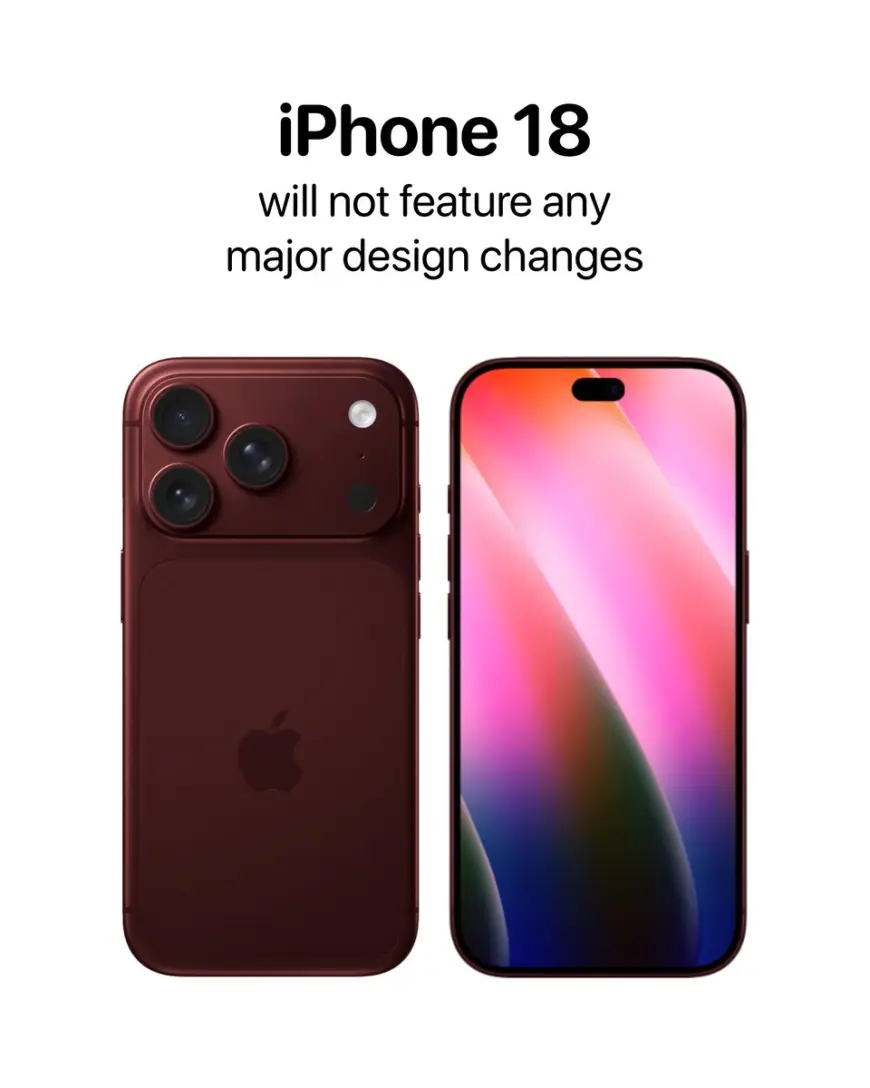
Looking beyond February, attention is already shifting to the iPhone 18 Pro and iPhone 18 Pro Max. The most repeated theme is not a dramatic external redesign, but a narrower top cutout driven by Face ID components moving partially under the display.
If that happens, the visible front interruption could shrink without Apple committing to a full “no cutout” design. That would fit the broader pattern of Apple making incremental hardware changes while highlighting compute, camera processing, and on-device AI.
Other iPhone 18 Pro talking points appearing in current rumor rounds include a more advanced A-series chip generation and camera refinements that prioritize flexibility (for example, hardware changes that improve low-light control). Specifics vary across leak sources, so the safe takeaway is directional: Apple may push the Pro experience forward through performance, efficiency, and computational photography rather than chassis changes.
Foldable iPhone: price range and positioning
The foldable iPhone conversation has shifted from “if” to “how expensive” and “how polished.” The most consistent claims frame Apple’s first foldable as a premium device positioned above today’s Pro Max pricing—often described in a rough $2,000–$2,500 USD band.
Design-wise, leaks keep returning to two priorities Apple would likely treat as non-negotiable:
-
A high-quality hinge and durability story
-
A minimized crease appearance compared with earlier generations of foldables on the market
Even if those goals are met, the first foldable iPhone is still expected to be a niche product by volume—aimed at enthusiasts and high-end buyers—while Apple watches real-world durability and adoption before going broader.
A split launch schedule takes shape
Perhaps the most consequential rumor isn’t a feature at all—it’s timing. A growing body of coverage suggests Apple may separate the iPhone line into two waves: premium models in fall 2026, with standard and entry models later.
| Product | Rumored window | What’s driving the talk |
|---|---|---|
| iPhone 17e | Feb. 2026 (often cited: Feb. 19) | Entry refresh cadence |
| iPhone 18 Pro / Pro Max | Fall 2026 | Pro-first cycle, new display tech focus |
| Foldable iPhone | Fall 2026 | Ultra-premium positioning |
| iPhone 18 / 18e | Spring 2027 | Staggered lineup strategy |
If Apple does this, it would reshape upgrade decisions: buyers who want “new this fall” could be steered toward higher-priced models, while value-focused buyers wait several more months.
What to watch next
Two things will clarify the picture quickly.
First, whether Apple schedules a February product announcement and how it positions iPhone 17e: as a quiet refresh, or as an entry model that meaningfully inherits flagship features. Second, whether supply-chain signals and accessory leaks in the spring point to a real split launch plan for iPhone 18.
Until then, treat any single “confirmed” spec—especially around the screen cutout—as provisional. The most stable signal right now is the direction of travel: steady iterative hardware, stronger efficiency and AI alignment, and a lineup calendar that may change how and when people upgrade.
Sources consulted: Tom’s Guide, Macworld, MacRumors, Apple Newsroom