

























Why St. John’s University Struggles with Accessibility Challenges

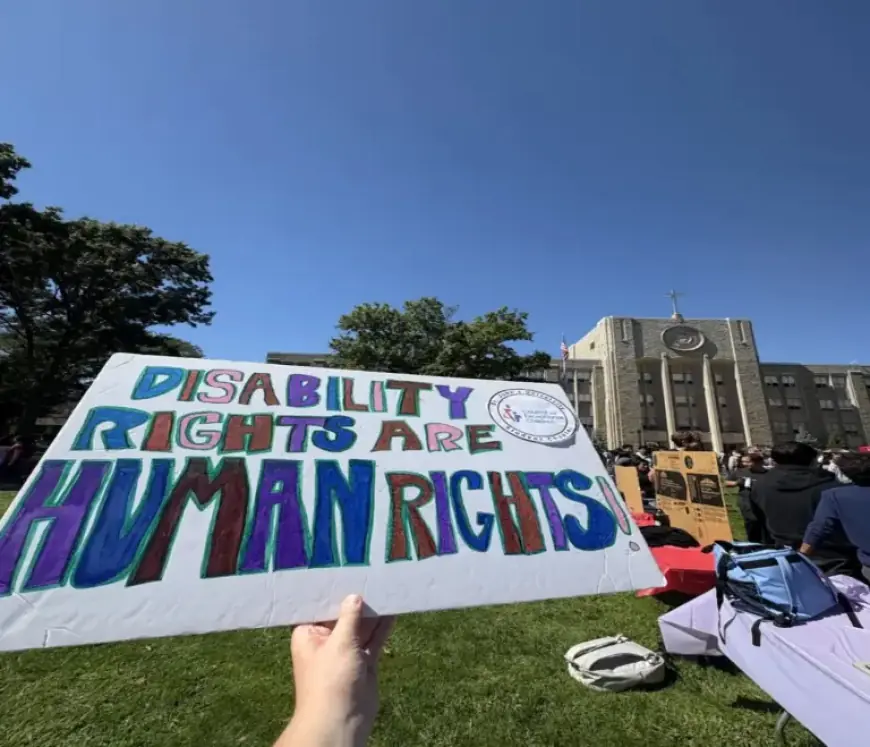
The challenges related to accessibility at St. John’s University have sparked concern among students and faculty alike. Despite the university’s financial capabilities, significant improvements for students with disabilities remain overdue. The experiences of many students illustrate a pattern of neglect regarding accessible infrastructure.
Accessibility Issues at St. John’s University
Many students at St. John’s University face daily obstacles due to inadequate accessibility. Navigating steep hills and dealing with malfunctioning elevators and doors has become a common experience. For students with disabilities, these challenges are critical and should not be overlooked.
Financial Disparities in Accessibility Investments
St. John’s University has successfully raised substantial funds, including $106 million for the St. Vincent Health Science Center and a significant donation of $25 million toward a new basketball facility. However, the question arises: why hasn’t similar attention been given to enhancing accessibility on campus?
- Current Accessibility Questions:
- Why aren’t funds allocated for renovations in St. John’s Hall?
- Why no additional elevators for better access?
- Why isn’t there more investment in maintaining automatic doors and pathways?
A Lack of Support and Awareness
Numerous organizations exist on campus, yet only two actively represent students with disabilities. The Accessibility Committee is among them, but it is not sufficient to address all the needs of students with disabilities. This lack of representation highlights the inequity present at St. John’s.
According to the CDC, one in four adults in the United States lives with some form of disability. This statistic underscores the importance of inclusive environments. Ignoring these needs sends a clear message that individuals with disabilities do not belong.
The Broader Impacts of Inaccessibility
Conversations about inaccessibility transcending physical limitations are crucial. Students often overlook the stigma associated with disabilities, which can marginalize those affected. Creating accessible spaces is not just an act of compliance but an essential step toward inclusivity.
Reflecting on the history, accessibility discussions have been ongoing for years. For instance, an article published in September 2018 echoed the same concerns, but little has changed since then. As 2026 approaches, the urgency to address accessibility issues persists.
Call to Action for Change
Students and faculty are encouraged to advocate for their rights and push for change. Methods to raise awareness include:
- Engaging in discussions about disability rights.
- Reading literature on the history of disability issues.
- Sharing personal experiences regarding campus accessibility.
Collective efforts can create pressure on the administration, emphasizing the need for an accessible St. John’s University. The time for change is now; a proactive approach will benefit all students in fostering an inclusive academic environment.