
























Taylor Swift’s “Opalite” Music Video Lands With a Star-Heavy Cast and a Nostalgic Story About Manufactured Connection

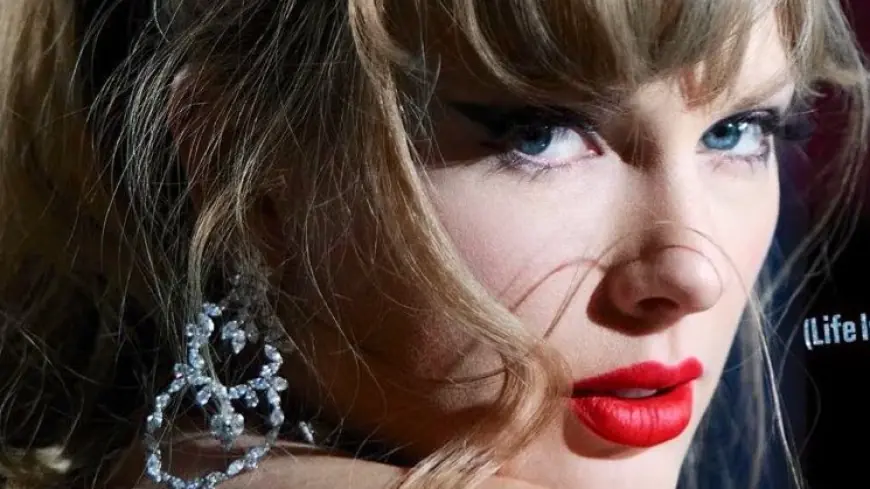
Taylor Swift released the “Opalite” music video on Friday, February 6, 2026, ET, unveiling a stylized, retro-leaning short film that pairs surreal humor with a pointed metaphor about loneliness and the way modern intimacy can feel engineered. The video features Domhnall Gleeson as Swift’s on-screen counterpart and includes prominent appearances from Cillian Murphy, Greta Lee, and Lewis Capaldi, turning what could have been a conventional single rollout into a celebrity ensemble event.
The timing matters: Swift is in the middle of an era where every visual choice becomes part of a larger narrative about control, reinvention, and cultural dominance. “Opalite” plays directly into that, delivering something that is both meme-ready and unusually specific in theme.
What happens in the “Opalite” video
The plot hinges on a faux-product premise: a spray-like solution that promises companionship and emotional transformation. Swift’s character begins in an intentionally sterile, lonely setup, then forms an attachment to an inanimate object presented as a “pet” and a confidant. Gleeson’s character mirrors the same concept through his own odd, affectionate bond with a different nonhuman “companion.”
Their storylines collide, pushing them from parallel isolation into awkward intimacy, with a deliberately staged, comedic kind of romance that still lands emotionally. The cameos from Murphy, Lee, and Capaldi are deployed less as distractions and more as texture, reinforcing the video’s world as a glossy, curated “commercial reality” where everyone seems to be playing a role.
The result is a visual that can be watched as slapstick, as satire, or as a commentary on how easily people reach for packaged fixes when they feel disconnected.
Behind the headline: why “Opalite” is more than a quirky video
Context is doing a lot of work here. Pop visuals in the streaming era are often treated as optional extras, but Swift’s campaigns have repeatedly used videos as mainline storytelling, not accessory content. “Opalite” fits that pattern: it’s high-concept enough to drive conversation, but legible enough to travel across audiences who may not follow album-lore closely.
The incentives are clear. For Swift, a distinctive video resets attention without needing controversy. For her collaborators, a short appearance becomes a cultural touchpoint that will circulate in clips, reactions, and press coverage. For the broader pop ecosystem, this kind of release models a strategy other stars chase: turn a music video into an event that feels like a short-form film premiere.
There’s also a thematic incentive. “Opalite” is a man-made material associated with opal-like shimmer, and that “manufactured glow” idea maps neatly onto the story: happiness, intimacy, and identity can be performed, purchased, or constructed. Whether viewers find that clever or cynical, it’s built to provoke interpretation.
Stakeholders and reputational risk
Everyone involved benefits from the visibility, but the stakes differ.
Swift’s stake is authorship: when she frames the narrative, she controls how fans and critics debate it. Gleeson, Murphy, and Lee bring prestige, which subtly shifts the reception from “pop marketing” toward “pop cinema.” Capaldi’s presence adds a different kind of credibility: recognizable, warm, and meme-friendly without feeling like a calculated flex.
The risk is that the internet will flatten the message into one joke, one screenshot, one “explainer” that hardens into a single reading. When a video becomes a discourse object, nuance can be the first casualty.
What we still don’t know
The biggest unknown is intention versus audience projection. Some viewers will treat “Opalite” as a direct personal statement about Swift’s real-life relationships, while others will argue it’s purely conceptual. The creative team’s decision-making is also opaque from the outside: how much of the humor was written for replayability, and how much emerged organically in production.
There’s also the durability question. Is “Opalite” a one-off visual detour, or the template for the rest of this era’s aesthetics and storytelling?
What happens next: likely scenarios and triggers
One: the video becomes a meme engine, with isolated scenes eclipsing the full narrative. Trigger is short-form clip circulation.
Two: it becomes a fan-theory magnet, with viewers mapping each prop and cameo to a broader Swift “universe.” Trigger is lyrical dissection and Easter-egg hunting.
Three: it shifts the single’s momentum, turning casual listeners into repeat viewers who stay for the story. Trigger is watch-time and shareability.
Four: it raises the bar for celebrity-cameo videos, prompting peers to chase similarly stacked casts. Trigger is competitive imitation.
Five: it sparks a small backlash that the concept is “too manufactured,” ironically echoing its theme. Trigger is overexposure and discourse fatigue.
Why it matters
“Opalite” is a reminder that a music video can still function as pop’s loudest storytelling tool when it’s built as a conversation starter, not just a performance capture. Swift didn’t just attach faces to a track. She attached a premise: in a world of curated loneliness, even connection can feel like something you buy, spray on, and stage under bright lights. The star power draws you in; the uneasy emotional punchline is what keeps it circulating.