
























Tom Holland’s 2026 Pivot: Why His Next Spider-Man Move Could Redefine His Career Beyond Superhero Stardom

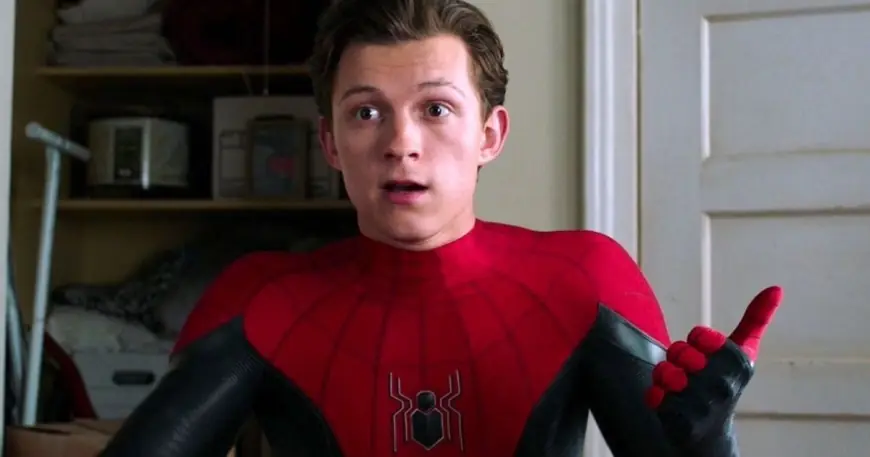
Tom Holland is heading into a make-or-break stretch that will test whether he can keep his balance between franchise gravity and a more varied acting identity. The clearest near-term marker is his next Spider-Man film, set for release on July 31, 2026, a date that effectively turns the second half of next year into a referendum on where Holland sits in Hollywood’s hierarchy: dependable blockbuster anchor, or something broader.
The timing matters because audiences are more selective than they were during the peak of the superhero boom. A Spider-Man release is still a cultural event, but it no longer guarantees a blank-check era for everyone involved. Holland’s next steps will show whether he can convert superhero familiarity into long-term range, rather than letting the mask define the ceiling.
What happened: Tom Holland’s next Spider-Man is locked in for 2026
The fourth Holland-led Spider-Man chapter in the modern series is currently slated for July 31, 2026 in the United States, positioning it as one of the biggest summer releases. The project’s pitch has been framed as a fresh start after the ending of the last film, which intentionally reset Peter Parker’s world and relationships.
That “fresh start” framing is not just story language. It is marketing language for audiences who want a reason to care again, and it is a creative signal that the next installment is likely to reshape tone, stakes, and supporting cast dynamics.
Behind the headline: why this Spider-Man chapter is a pressure test
Holland’s Spider-Man sits at the crossroads of two powerful incentives that often clash:
-
Studio incentives: keep a proven global character in motion, protect the brand, and build toward crossovers.
-
Audience incentives: reward novelty, punish repetition, and demand emotional authenticity, not just spectacle.
For Holland personally, the incentive is leverage. A strong 2026 performance strengthens his ability to pick projects that are not solely franchise-adjacent. A shaky reception, even with high box office, can tighten the gravitational pull back toward “safe” roles that feel like variations on the same persona.
Stakeholders with the most at stake include the studio partners, theater chains counting on a tentpole, and a cast whose careers can be re-scaled by association. Fans have the loudest influence on narrative momentum, but the least patience for creative hedging.
Who is Tom Holland, and why he stays bankable
Holland’s durability comes from a rare combination: he reads as emotionally accessible on camera, he can handle physical performance, and he has maintained a public persona that feels less manufactured than many stars at his scale. That helps Spider-Man, a character built on awkward sincerity as much as action.
But that same relatability can become a typecast trap. If every role depends on charm plus earnestness, range can start to look theoretical. The next era will show whether Holland can keep the likability while pushing into characters that are messier, older, or morally ambiguous.
What we still don’t know: the missing pieces that will shape the 2026 narrative
There are several open questions that will determine how the film, and Holland’s moment, lands:
-
How radically the film will change Peter Parker’s day-to-day life after the reset
-
Whether key relationships return in a major way or only in limited appearances
-
What the villain and central conflict will emphasize: street-level consequences, multiverse escalation, or something in between
-
Whether the broader superhero universe shapes the plot, or stays mostly off-screen
These details matter because audiences now react as much to what a film promises to be as to what it is. If it looks like homework for future installments, enthusiasm can cool fast.
Second-order effects: what a successful 2026 does for Holland and the industry
If the film feels like a genuine reinvention, it can validate a new playbook for long-running franchises: reset the emotional stakes, reduce continuity burden, and rebuild intimacy. That would not only benefit Holland; it would influence how other major series attempt their own midstream reinventions.
It could also expand the lane for “blockbuster actor as actor,” where stars are allowed to do enormous commercial work without surrendering the perception of craft. That’s the hardest balance to maintain in the current attention economy.
What happens next: realistic scenarios and triggers
Here are the most plausible next steps, based on how major franchise rollouts typically unfold:
-
A controlled, secrecy-heavy marketing run, triggered by a desire to prevent plot leakage and keep the reset feeling intact
-
A supporting-cast spotlight campaign, triggered by the need to prove the new chapter is more than brand continuity
-
A tone shift toward smaller-scale stakes, triggered by audience fatigue with constant escalation
-
A larger crossover signal, triggered by a strategic push to align major releases and rebuild event momentum
-
A post-release career pivot for Holland into riskier roles, triggered by strong reviews that credit him, not just the character
Why it matters
Tom Holland’s Spider-Man has always been a coming-of-age story. In 2026, it becomes a career coming-of-age story too. The next film will indicate whether Holland can evolve from “perfectly cast franchise lead” into a star who can carry large projects and still be taken seriously when he chooses quieter, stranger, or more challenging work. The choice is not mask or no mask. It is whether the mask remains the headline, or becomes just one chapter in a much bigger biography.