

























Maxwell documents revive focus on Virginia Giuffre as Congress seeks new testimony

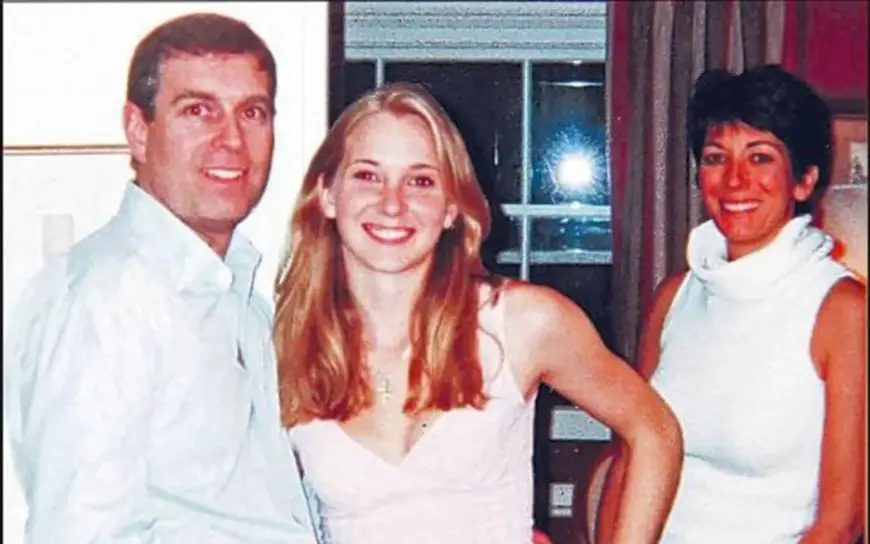
A newly released set of Epstein-related documents is renewing public attention on Ghislaine Maxwell and the late Virginia Giuffre, with fresh scrutiny centered on a 2015 email draft that appears to address how a widely known photograph of Giuffre with a senior British royal was taken. The disclosure comes as Maxwell, serving a 20-year federal sentence for her role in Jeffrey Epstein’s sex-trafficking operation, is scheduled for a closed deposition with a U.S. House committee on Monday, February 9, 2026.
The latest release has intensified a long-running dispute over credibility, documentation, and accountability—while also raising questions about what new information, if any, Maxwell can provide under oath given her legal posture.
The email draft and the disputed photograph
Among the newly disclosed materials is a 2015 email draft attributed to Maxwell that discusses the circumstances of Giuffre meeting the royal in London in 2001 and the taking of a photograph that later became central to Giuffre’s public allegations. The email text describes Maxwell being present in London around that period and references a photo being taken, language that many observers see as undercutting past suggestions that the image was fabricated or doctored.
The release does not resolve every contested detail about what occurred that night, and it does not establish criminal liability on its own. Still, it adds a contemporaneous-seeming thread that aligns with Giuffre’s long-standing claim that she met the royal through Epstein’s network and that the photo was taken in that context.
Giuffre’s family has publicly framed the disclosure as vindication, pointing to years of attacks on her credibility. The royal previously denied wrongdoing and settled a civil claim in 2022 without admitting liability.
Virginia Giuffre’s death and her posthumous memoir
Giuffre, one of Epstein’s most prominent accusers and a high-profile advocate for survivors of sex trafficking, died by suicide on April 25, 2025, in Western Australia at age 41. Her death removed a central public voice from the Epstein saga, while also amplifying the stakes of record releases that touch on her life and allegations.
In October 2025, Giuffre’s memoir was published posthumously, detailing her account of being recruited and abused within Epstein’s orbit and describing the personal cost of pursuing justice against powerful figures. The book’s release, combined with new document dumps, has kept her name at the center of renewed public interest—even as key questions about institutional failures and enforcement decisions remain unsettled.
Where Maxwell’s legal case stands now
Maxwell was convicted in federal court in late 2021 and sentenced to 20 years in prison. Her direct appeals have been exhausted, including a U.S. Supreme Court decision in October 2025 declining to take up her case. In late 2025, Maxwell also pursued additional post-conviction litigation claiming new evidence and arguing she did not receive a fair trial, a filing that remains part of ongoing legal maneuvering.
Even with appeals narrowed, Maxwell’s situation continues to carry major implications: she remains the highest-profile convicted participant in Epstein’s trafficking scheme and the only person positioned to offer first-hand testimony about the network’s operations—at least in a way that could be tested under oath.
The February 9 deposition and what it can realistically produce
Maxwell is scheduled to be deposed in a closed session by the House Committee on Oversight and Government Reform on February 9, 2026. Public statements around the deposition indicate Maxwell’s attorneys expect she will invoke her constitutional privilege against self-incrimination and decline to answer at least some questions.
That reality limits expectations for dramatic new disclosures. Still, even a limited deposition can matter: it can lock in positions, clarify what she refuses to answer, and shape future oversight actions—especially if lawmakers push for document production, immunity discussions, or referrals based on what is learned.
Key developments to watch
-
Whether Maxwell answers any questions beyond basic biographical matters
-
Whether lawmakers seek additional records tied to the newly released email draft
-
Whether investigators expand scrutiny of how victim privacy is handled in future releases
-
Whether new witness allegations prompt law-enforcement review in the U.S. or U.K.
The broader impact: transparency, privacy, and credibility battles
The current cycle is not only about Maxwell or Giuffre. It is also about how institutions release sensitive materials and what safeguards exist for survivors when high-volume disclosures hit the public. Survivors and advocates have repeatedly warned that unstructured releases can expose victims to harassment while offering limited clarity on accountability.
At the same time, the newest materials illustrate why documentation still matters years later: a single written exchange can reshape public perceptions, reinforce survivor accounts, or force renewed responses from public figures and institutions.
With Maxwell’s deposition set for February 9, 2026, the next test is practical. If she refuses to answer most questions, the spotlight will shift back to documents—what has been released, what remains withheld, and whether oversight pressure changes the pace or the substance of future disclosures.
Sources consulted: Reuters, Associated Press, ABC News, The Guardian