
























Benghazi attack: Suspect Zubayr Al-Bakoush brought to U.S. to face charges

A man accused of being a “key participant” in the 2012 Benghazi attack is now in U.S. custody, reopening a case that has spanned more than 13 years and multiple prosecutions. U.S. officials said Zubayr Al-Bakoush was transferred to the United States early Friday, February 6, 2026, and will face an eight-count federal indictment tied to the assault that killed four Americans.
The development marks one of the most consequential steps in the Benghazi investigation since earlier convictions in federal court, and it puts fresh focus on how the government plans to try a terrorism case built around events from September 11, 2012.
What happened on February 6, 2026
U.S. officials said Al-Bakoush arrived at Joint Base Andrews in Maryland at about 3:00 a.m. ET on Friday and was taken into federal custody. They did not publicly disclose where he was arrested, how the operation unfolded, or which foreign partners assisted, leaving many operational details unclear.
He is expected to be brought before a federal court in Washington, D.C., for initial proceedings that typically include an appearance before a judge, a review of charges, and arguments over detention pending trial.
What prosecutors allege in the indictment
Officials described the case as an eight-count indictment that includes charges tied to murder, attempted murder, arson, and conspiracy involving terrorism-related conduct. The government has framed Al-Bakoush as a central participant, signaling that prosecutors intend to connect his alleged actions not only to the breach of the U.S. facility but also to the deaths that occurred during the attack and its aftermath.
Because the case dates back to 2012, early court filings will be closely watched for specifics: what role Al-Bakoush is alleged to have played, what evidence places him at key locations, and how prosecutors intend to present witness testimony and digital or documentary records so many years later.
Benghazi in brief: what happened in 2012
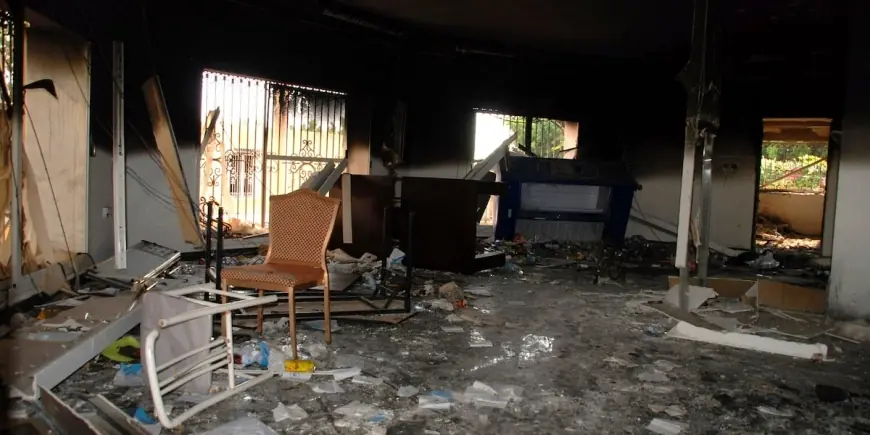
The Benghazi attack occurred on the night of September 11, 2012, when armed militants assaulted the U.S. Special Mission compound in Benghazi, Libya. Fires were set during the attack, and the violence later extended to a nearby CIA annex.
Four Americans were killed:
-
Ambassador J. Christopher Stevens
-
State Department information management officer Sean Smith
-
Security personnel Tyrone Woods and Glen Doherty
Beyond the loss of life, Benghazi became a defining episode in debates over diplomatic security, the U.S. posture in post-revolution Libya, and how the government communicated about the assault in the days immediately afterward.
How this fits with earlier Benghazi prosecutions
Al-Bakoush is the third person to be brought to U.S. court in connection with the Benghazi attack. Two others have already been convicted and sentenced in federal cases, including Ahmed Abu Khatallah and Mustafa al-Imam.
Those prosecutions showed both what is possible—and what is hard—in Benghazi cases: proving specific conduct in a chaotic overseas attack, relying on witnesses who may be difficult to locate or protect, and litigating evidence gathered in a conflict environment. In that context, Al-Bakoush’s case will be a test of whether investigators can still build a clear narrative of responsibility and intent more than a decade later.
What to watch next in the case
The next few court steps will set the tone. A judge will weigh whether Al-Bakoush remains detained while the case proceeds, and prosecutors will begin laying out how they plan to prove the charges. Defense counsel—once identified—can be expected to challenge the reliability of old evidence, the credibility of witnesses, and the fairness of trying a case so long after the events.
A bigger strategic question also hangs over the case: whether this arrest is a final chapter or part of a renewed effort to pursue additional alleged participants. Officials have emphasized persistence in the investigation, but any future prosecutions will depend on custody opportunities, evidence strength, and international cooperation.
| Key milestones in the Benghazi legal timeline | Date (ET) |
|---|---|
| Attack on U.S. facilities in Benghazi | Sept. 11, 2012 |
| Mustafa al-Imam sentenced to 19 years, 6 months | Jan. 23, 2020 |
| Ahmed Abu Khatallah resentenced to 28 years | Sept. 26, 2024 |
| Zubayr Al-Bakoush transferred into U.S. custody | Feb. 6, 2026 |
Sources consulted: U.S. Department of Justice, Associated Press, Reuters, The Washington Post