
























WM Phoenix Open Roars Back in 2026 as Jordan Spieth Joins a Stacked Field Under Maximum Spotlight

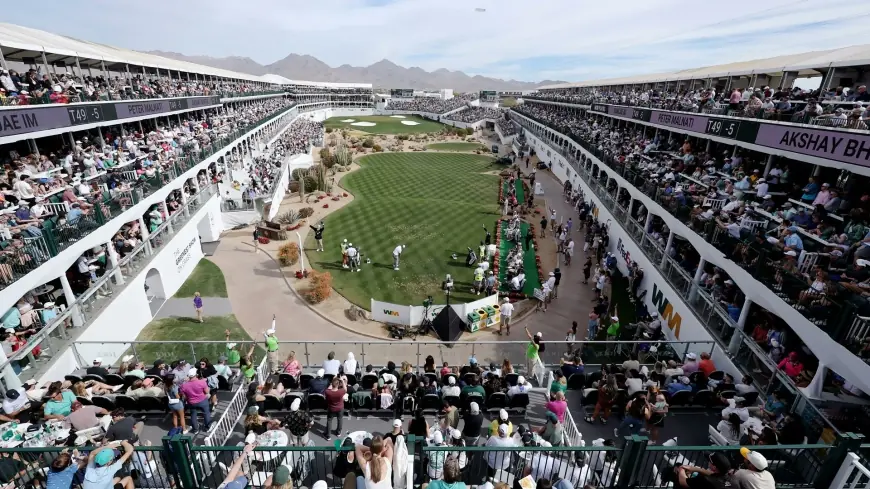
The WM Phoenix Open is underway in Scottsdale with its signature mix of elite golf and controlled chaos, and Jordan Spieth is back in a featured spot as the tournament’s early rounds set the tone for a weekend that often feels more like a stadium event than a traditional stop on tour. With Super Bowl week pulling attention across sports, the Phoenix Open has leaned into its role as the loudest counterprogramming on the calendar, and the early tee sheet reflects that intent.
What happened at the Phoenix Open as tournament play begins
The 2026 WM Phoenix Open runs Thursday, February 5 through Sunday, February 8, with opening-round groups designed to create immediate buzz. One of the headline pairings puts Jordan Spieth alongside top-ranked Scottie Scheffler and rising contender Chris Gotterup.
Spieth’s Round 1 tee time is scheduled for 10:15 a.m. ET, placing him in prime viewing hours and positioning his group to hit the par 3 16th while the amphitheater crowd is building. The tournament’s 16th hole is the gravitational center of the week, where noise, momentum, and nerves collide in a way that can swing an entire round.
Wednesday’s pro-am also amplified the event’s crossover appeal, with a notable NFL star drawing a huge reaction on the 16th after a near hole-in-one. That kind of moment is not just a sideshow in Phoenix; it is part of the product.
Jordan Spieth’s week: why this start matters
Spieth arrives with a familiar storyline: elite resume, enormous name recognition, and a constant conversation about whether he can convert flashes into a full trophy run again. He has shown encouraging stretches recently, and the biggest practical question for his chances is not star power, it is whether his ball-striking and driving patterns hold up across four days on a course that punishes slight misses.
Being paired with Scheffler also matters tactically. Playing next to a relentless fairway-to-green machine forces a certain discipline. It can sharpen decision-making, but it also raises the pressure to avoid the one big number that can undo an otherwise solid round in Phoenix.
What’s behind the headline: why the WM Phoenix Open is different
Context is everything here. The Phoenix Open has become a modern test case for what live sports looks like when fans want a party and organizers still need a credible competition. The tournament’s incentive is to deliver a spectacle without losing control. The players’ incentive is to treat it like a major test without letting the environment hijack their routines.
Stakeholders span far beyond the leaderboard:
-
Players trying to manage adrenaline and distractions in the loudest setting on tour
-
Tournament organizers balancing fan experience with safety and flow
-
Sponsors and hospitality buyers, for whom this week is a flagship activation
-
Local businesses and city stakeholders, who benefit from tourism and national attention
-
Golf’s traditionalists and newer fans, who disagree on how wild the event should be
The second-order effects are real. When Phoenix succeeds, it strengthens the case that golf can be a mass-crowd entertainment product, not just a quiet viewing sport. When it goes too far, it becomes a referendum on behavior, security, and whether the sport is risking its own image.
What we still don’t know
Several key pieces will define the week but are not settled early on:
-
How firm the tournament’s crowd-control measures feel once the weekend surge arrives
-
Whether the course plays softer or firmer as weather and traffic wear on key landing areas
-
Which contenders separate on the closing stretch, where risk-reward decisions pile up late
-
How Spieth’s driving and approach accuracy trend from Round 1 to Round 2, the typical swing point for making a real run
What happens next: realistic scenarios with triggers
Scenario one, Spieth rides early momentum into contention
Trigger is a clean first round with controlled mistakes, especially on the holes that invite aggression. If he exits Thursday within a few shots and keeps the driver manageable, his confidence tends to compound quickly.
Scenario two, the 16th hole becomes a turning point for a big name
Trigger is one rash decision under crowd energy. In Phoenix, one swing can turn a round into either a highlight or a scramble for the cut line.
Scenario three, the tournament becomes a showcase for the tour’s top tier
Trigger is Scheffler or another elite ball-striker separating early. If someone posts a low number Thursday afternoon and backs it up Friday morning, the weekend becomes a chase.
Scenario four, the story shifts from golf to crowd management
Trigger is a spike in incidents or delays. Even minor disruptions can dominate the narrative because Phoenix is always one viral clip away from redefining its own image.
Why it matters
The WM Phoenix Open is not just another stop. It is a pressure chamber for players and a proving ground for the sport’s future presentation. For Jordan Spieth, a strong week would be more than points and prize money, it would be evidence that his game can hold up under the loudest, most distracting conditions. For the tournament, the challenge is the same every year: keep the party without losing the plot, and prove that the “People’s Open” can be both a festival and a serious championship.