






















The Lincoln Lawyer Season 4 Drops as the Bosch TV Universe Keeps Expanding, Putting Manuel García-Rulfo Back in the Spotlight

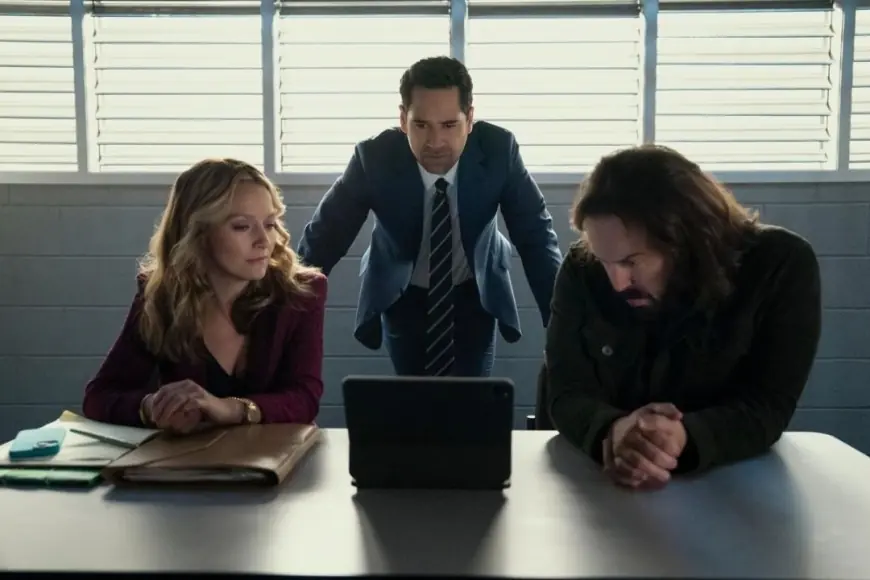
Manuel García-Rulfo is having a franchise moment. On February 5, 2026 ET, The Lincoln Lawyer Season 4 arrived with a high-stakes hook that immediately resets the series: Mickey Haller is no longer simply defending clients in court, he is fighting to defend himself while behind bars. At the same time, the broader Michael Connelly screen universe that includes Bosch continues to evolve through spin-offs and a newly ordered prequel, giving crime-drama fans multiple entry points even as some legacy chapters close.
The result is a rare convergence: a legal thriller taking its biggest structural swing yet, and a parallel police-procedural brand stretching in two directions at once, forward into new characters and backward into origin-story territory.
The Lincoln Lawyer Season 4: what happens and why it changes the show
Season 4 adapts the story thread in which Haller is framed after a body is discovered in the trunk of his car, pushing him into custody and forcing him to navigate the system as the accused. That premise matters because it flips the show’s core engine.
Instead of watching Mickey orchestrate strategy from the driver’s seat of his daily grind, the season turns him into a constrained operator relying on a network. His team must do more of the legwork outside the walls, and the series leans harder into pressure, trust, and vulnerability. New opponents and shifting alliances raise the emotional temperature, while the legal chessboard narrows because the stakes are personal and immediate.
Behind the scenes, the timing also signals confidence. The series has already been renewed for Season 5 as of January 28, 2026 ET, reinforcing that this darker, higher-risk direction is not a one-off stunt but a new phase.
Behind the headline: why the “Mickey in jail” twist is a strategic bet
This season’s framing is not just a plot twist; it is a business and storytelling calculation.
Context
The legal-drama space is crowded, and long-running procedurals often drift into repetition. Putting the lead on the defensive creates a natural refresh without changing the DNA of the show.
Incentives
For the streamer, the incentive is retention. A season-long “prove he’s been set up” arc drives binge behavior and reduces the chance viewers treat episodes as interchangeable. For the creative team, it opens character lanes: loyalty tests, reputational fallout, and moral compromise become unavoidable rather than optional.
Stakeholders
García-Rulfo carries the emotional load, but the supporting cast gains leverage too. When the lead is constrained, the ensemble becomes the story’s oxygen, which can elevate the show’s depth and broaden audience attachment.
Second-order effects
If Season 4 lands, it establishes a template for future seasons: not “case of the week,” but “a personal crisis that forces the legal system into the spotlight.” That can keep the series fresher deeper into its run, while also inviting more crossover-style storytelling with other crime brands that share the same readership roots.
Bosch TV series: an ending, a handoff, and a prequel on the way
Bosch, as a screen property, has been doing something The Lincoln Lawyer is only beginning to attempt: turning one central character into an expandable world.
The sequel series Bosch: Legacy ended with its third season, with the franchise closing that chapter on April 17, 2025 ET. But the universe did not stop. A spin-off centered on detective Renée Ballard premiered July 9, 2025 ET and was renewed for a second season on October 6, 2025 ET.
Then came the backward step: a Bosch prequel titled Bosch: Start of Watch was ordered on October 15, 2025 ET, with production scheduled to begin in Los Angeles in 2026. It is positioned as an origin story set in early-1990s Los Angeles, built to bring in new viewers while giving longtime fans a new angle on familiar mythology.
Behind the headline: what the Bosch expansion tells you about franchise math
The Bosch strategy is a playbook for how modern crime dramas survive.
Context
Audiences still crave comfort viewing, but they also want novelty. A single procedural can lose momentum; a universe can keep rotating the spotlight.
Incentives
Spin-offs reduce risk. A new lead can attract fresh viewers without asking them to commit to seven prior seasons, while existing fans show up on day one. Prequels serve a different incentive: they refresh the brand with a new cast and tone while preserving recognition.
Stakeholders
Studios, streamers, and rights holders all benefit from multiple on-ramps. Talent benefits too, because a franchise with more branches creates more roles and more leverage in negotiations.
Missing pieces
The biggest unknown in any expanded universe is consistency. Fans reward coherent tone, continuity, and character integrity. They punish “content for content’s sake.” Whether these projects feel essential or merely adjacent will decide the long-term ceiling.
What happens next: realistic scenarios fans should watch
-
The Lincoln Lawyer leans even harder into serialized crisis
Trigger: Season 4 viewership holds strong through the finale and Season 5 doubles down on longer arcs. -
Mickey Haller’s world becomes more ensemble-driven
Trigger: supporting characters drive major plot turns as the series proves it can thrive without Mickey controlling every scene. -
Bosch fans consolidate around the newest spin-off
Trigger: the Ballard storyline becomes the forward-facing flagship while prequel production ramps. -
The prequel becomes a gateway for new audiences
Trigger: casting and early marketing emphasize “new start” rather than “homework required.” -
A broader wave of shared-universe crime storytelling accelerates
Trigger: platforms chase proven brands, prompting more interconnected adaptations and crossovers in the genre.
Why it matters
The Lincoln Lawyer Season 4 and the evolving Bosch TV slate reflect the same underlying trend: crime drama is becoming less about a single show’s longevity and more about a world’s reusability. For viewers, that means bigger swings like “the hero becomes the accused” and more options inside the same storytelling ecosystem. For Manuel García-Rulfo, it cements a new tier of visibility: he is not just the lead of a popular legal series, he is now fronting a franchise confident enough to put its star under maximum pressure and keep rolling.