Timberwolves trade lands Ayo Dosunmu, sends Rob Dillingham to Bulls

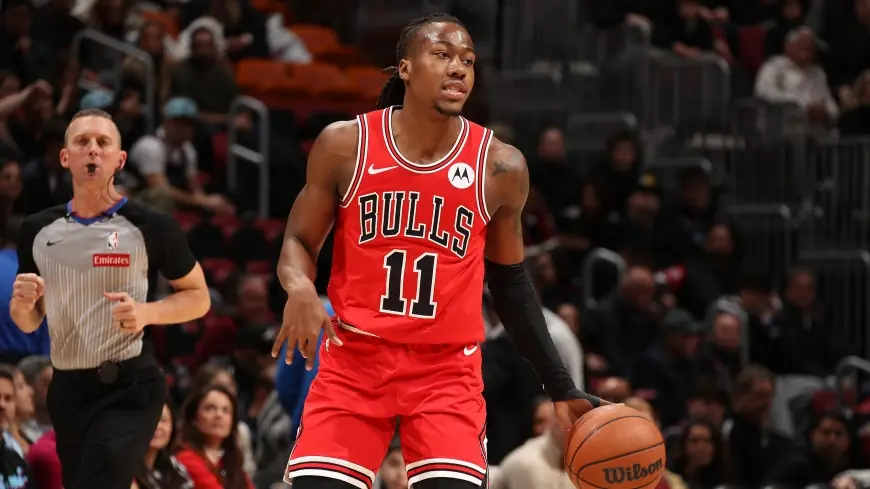
Minnesota made a late move ahead of the NBA trade deadline, pulling in guard Ayo Dosunmu and forward Julian Phillips from Chicago in a deal that reshapes both teams’ timelines. The Timberwolves leaned into a win-now rotation need—another dependable ball-handler and scorer—while the Bulls continued a reset by converting veteran value into younger pieces and future draft capital.
The trade was reported Thursday, Feb. 5, 2026 (ET), with the league’s trade deadline set for 3:00 p.m. ET.
The deal: who goes where
Minnesota receives Dosunmu and Phillips. Chicago receives Rob Dillingham, Leonard Miller, and four second-round draft picks.
| Timberwolves–Bulls trade (Feb. 5, 2026) | Details |
|---|---|
| Timberwolves receive | Ayo Dosunmu; Julian Phillips |
| Bulls receive | Rob Dillingham; Leonard Miller; 4 second-round picks |
Why Minnesota targeted Dosunmu
Dosunmu, 26, has been one of Chicago’s more consistent two-way guards this season, averaging about 15.0 points and 3.6 assists while shooting efficiently—over 50% from the field and roughly the mid-40s from three. For Minnesota, that profile matters because the team has needed more creation and scoring punch beyond its top options, especially in bench-heavy stretches.
In practical terms, Dosunmu gives Minnesota:
-
A guard who can attack closeouts and pressure the rim
-
A secondary initiator who can keep the offense organized
-
A capable defender at the point of attack
There’s also a roster-building angle: Minnesota gains a player it can potentially retain beyond this season with additional contract flexibility tied to his rights, which can matter for a team managing the cap while trying to stay competitive.
What Julian Phillips adds (and what he doesn’t—yet)
Phillips, 22, has played a limited role, averaging under 3 points in about 35 games. His value is more about developmental runway than immediate box-score impact. Minnesota can evaluate whether he fits as a low-usage wing who defends, runs the floor, and grows into a more reliable shooter—exactly the type of role player teams like to cultivate behind established starters.
For now, his short-term role projects as situational minutes and practice reps rather than a guaranteed rotation spot.
Why Chicago moved Dosunmu and took Dillingham
Chicago’s side reads like a classic rebuild transaction: sell a productive guard for a younger former top-10 pick, add another young forward, and stack second-rounders to increase flexibility in future trades or drafts.
Dillingham, 21, has struggled to carve out a steady role in Minnesota, averaging about 3.5 points and 1.7 assists in limited minutes. Still, the Bulls are betting on a few things that Minnesota couldn’t offer right now:
-
More developmental reps and on-ball opportunities
-
A clearer pathway to prove he can run an NBA offense
-
Time to add strength and stabilize decision-making without contender-level pressure
Leonard Miller, 22, has also been stuck in sparse minutes, averaging about 2.3 points in limited appearances. Chicago can treat him as a longer-term frontcourt project—another swing at size, skill, and growth in a system that should prioritize development the rest of the way.
What this means for the Timberwolves’ rotation
Minnesota’s immediate question is simple: where do Dosunmu’s minutes come from, and how quickly can he integrate? The easiest fit is as a guard who stabilizes second units and closes select games based on matchup.
If he produces early, Minnesota can reduce the burden on its primary creators and keep lineups from stalling when the offense becomes too predictable. If the fit is clunkier than expected, the trade still reflects a clear philosophy shift: the Wolves chose a proven NBA contributor over a longer development timeline.
What’s next for both teams after the deadline
For Minnesota, the next few games will show whether this is a needle-mover or just depth insurance. The team needs Dosunmu to be playable in high-leverage moments, not just absorb regular-season minutes.
For Chicago, the focus turns to development and draft positioning—figuring out if Dillingham can be a long-term lead guard option and whether Miller can become part of a future frontcourt rotation. The added second-round picks also give the Bulls more ways to maneuver: packaging picks in future deals, buying into drafts, or taking additional swings on upside.
Sources consulted: Reuters, NBA, Chicago Tribune, The Athletic