























US-Russia Treaty Ends, Sparking Nuclear Arms Race Concerns

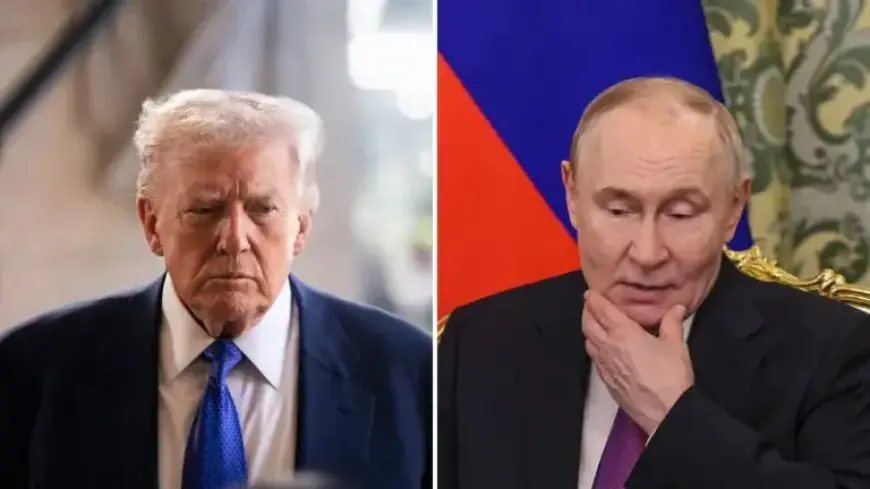
The expiration of the New START treaty between the United States and Russia on February 4, 2026, has raised concerns about a potential nuclear arms race. This treaty was the final agreement limiting the nuclear arsenals of both nations. For the first time in decades, there are no formal boundaries in place. Experts fear this lapse could escalate tensions and lead to conflict.
Background of the New START Treaty
Implemented in February 2011, the New START treaty capped each country at:
- 1,550 deployed nuclear warheads
- 700 deployed intercontinental ballistic missiles, submarine-launched ballistic missiles, and heavy bombers
- 800 deployed and non-deployed launchers
This agreement was extended for an additional five years in 2021. However, it is now irrelevant concerning current geopolitical dynamics, particularly with China’s expanding nuclear capabilities. According to a 2022 Pentagon report, China might possess around 1,500 nuclear warheads by 2035 if it continues its current pace of expansion.
Reaction to the Treaty’s Expiration
Thomas Countryman, former acting undersecretary of state for arms control, expressed concern that this situation could ignite a rapid escalation toward nuclear conflict. Some analysts argue the restrictions of the New START treaty were obsolete and hindered the U.S., especially with China’s nuclear expansion.
Statements from Key Officials
Former President Donald Trump criticized the inclusion of only the U.S. and Russia in nuclear agreements. He proposed a trilateral nuclear deal involving China. Secretary of State Marco Rubio supported this view, emphasizing the necessity of including China due to its growing stockpile. However, Beijing has consistently rejected such discussions.
Potential Consequences
The lack of treaty limitations leaves both nations free to increase their nuclear arsenals. Russia’s Foreign Ministry has stated that they believe the U.S. has abandoned commitments under the treaty. This situation could result in a scenario where both countries ramp up their nuclear capabilities.
Experts’ Opinions
Many analysts warn against allowing the New START limits to lapse. Paul Dean, former assistant secretary of state, argues that unpredictability in nuclear weapons management poses a national security threat. It is crucial for both countries to establish transparency to avoid miscalculations and unintentional escalations.
Future of U.S. Nuclear Strategy
As the U.S. considers its path forward, some suggest that adhering to the original treaty limits temporarily may be beneficial. Experts like Rose Gottemoeller indicate that maintaining constraints could provide an opportunity to assess and prepare for future challenges. In contrast, Matthew Kroenig asserts that the absence of limits may not deter Russian and Chinese aggression effectively.
Conclusion
The end of the New START treaty has ignited fears of an unchecked nuclear arms race. As both the U.S. and Russia recalibrate their strategies, the need for dialogue and cooperation becomes increasingly essential. Abandoning arms control measures could lead to a volatile environment with significant global repercussions. The situation calls for careful diplomatic efforts to avoid a new era of nuclear uncertainty.