

























Gold price slips as dollar firms and traders unwind bets after volatile surge

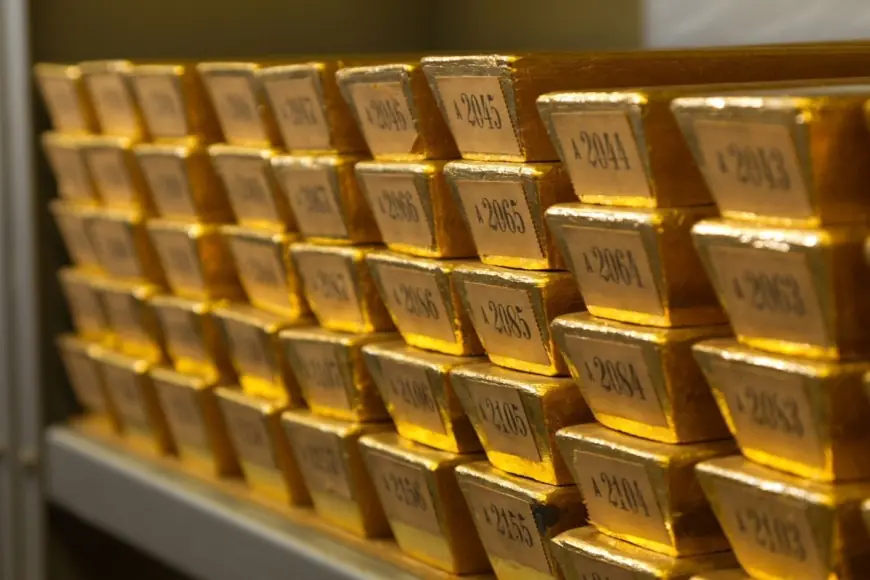
Gold prices pulled back Thursday as a firmer U.S. dollar and profit-taking pressured the metal following an unusually violent run of record highs, sharp selloffs, and fast rebounds. The retreat underscores how quickly positioning has been swinging as traders reassess the outlook for U.S. rates, geopolitics, and risk appetite across markets.
What’s happening in gold today
Spot gold was lower in morning trading after sliding more than 3% earlier in the session, reflecting a broad “risk-off” tone that hit commodities and equities at the same time. The move comes after a two-day bounce that followed one of the steepest drops in decades, leaving many short-term traders focused on managing exposure rather than pressing fresh bets.
A snapshot of key market levels Thursday morning (ET):
| Time (ET) | Spot gold (USD/oz) | U.S. gold futures (USD/oz) | Spot silver (USD/oz) | 10-year Treasury yield |
|---|---|---|---|---|
| ~6:56 a.m. | 4,869.85 | 4,891.30 (April) | 78.50 | — |
| ~9:35 a.m. | 4,855.00 | — | — | 4.23% |
Why a firmer dollar matters
Gold is priced in dollars, so a rising dollar tends to make bullion more expensive for buyers using other currencies, often cooling demand at the margin. With the dollar pushing to a roughly two-week high Thursday, the currency effect added to the pressure from traders taking profits after the latest rebound.
The dollar’s strength has also fed a wider market narrative: when the greenback rises alongside falling equities and choppy commodities, it can signal a defensive shift in positioning. In that kind of tape, leveraged trades in gold can unwind quickly, amplifying intraday swings.
Traders unwind bets after a whipsaw week
The pullback is best understood in the context of the last several sessions, which have seen exceptional volatility in precious metals. Gold surged to fresh records late last week, then dropped sharply, rebounded for two days, and slipped again Thursday—an environment where short-term flows can dominate traditional “safe-haven” logic.
A key driver has been positioning. When markets get crowded—too many investors leaning the same way—small catalysts can trigger forced selling, margin-driven liquidation, or rapid de-risking. That dynamic has been especially visible in silver, which tends to move more violently than gold because it is thinner and more speculative.
Rates, yields, and the macro tug-of-war
Interest-rate expectations remain a crucial input for gold. Lower yields can support gold by reducing the opportunity cost of holding a non-yielding asset, but the relationship isn’t always clean on volatile days when liquidity and positioning take over.
Thursday’s bond market move pointed toward a softer growth pulse: Treasury yields slipped after data suggested some weakening in the labor market and an increase in announced layoffs. The 10-year yield eased to about 4.23% by mid-morning. Even with yields down, gold still fell—an example of how the dollar and fast-moving risk sentiment can overwhelm the usual rate channel in the short run.
What to watch into the close
For the remainder of Thursday, traders will be watching whether gold stabilizes above recent panic lows or resumes the slide that followed last week’s record peak. Two near-term signals matter:
First, whether the dollar keeps climbing. If the dollar remains firm while equities stay under pressure, gold may struggle to regain momentum despite its longer-term appeal as a hedge.
Second, whether volatility cools. After a week of sharp reversals, many desks are likely to reduce exposure into key macro data and policy headlines, which can leave prices more sensitive to sudden bursts of buying or selling.
The broader setup is that gold’s longer-term uptrend has collided with a short-term positioning washout. If selling pressure fades and prices begin holding key levels for more than a few hours at a time, the market may start to rebuild confidence. If not, the next leg could be driven less by fundamentals and more by which side—late longs or fresh shorts—gets forced out first.
Sources consulted: Reuters; The Associated Press; Bloomberg; Business Insider