























Washington Post layoffs deepen turmoil as Bezos stays quiet and Marty Baron warns of lasting damage

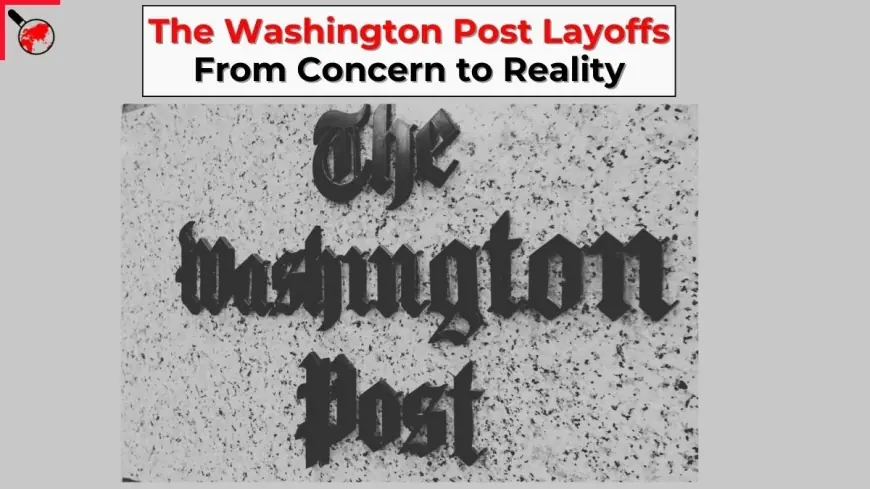
The Washington Post eliminated roughly a third of its staff this week in one of the most sweeping newsroom contractions in recent U.S. media history, triggering a wave of anger inside the company and fresh questions about owner Jeff Bezos’ long-term commitment. The cuts landed as Amazon stock was down in Thursday trading, adding another layer of scrutiny to whether Bezos is seeking to lower political and reputational friction across his business interests.
The layoffs—announced Wednesday, Feb. 4, 2026—hit multiple desks and support functions at once, with former executive editor Marty Baron publicly arguing the reductions risk pushing the institution into a long-term decline rather than a reset.
What was cut and how big it was
Employees described large-scale job losses across editorial and business operations, with several units reportedly reduced to a fraction of prior staffing or dismantled outright. Management described the move internally as a structural overhaul meant to streamline decision-making and focus resources on fewer “distinctive” priorities.
While exact totals vary by department, the broad picture is consistent: hundreds of people were affected, representing close to one in three positions across the company.
What leadership is saying
Editor in chief Matt Murray described the move as a “strategic reset” and told staff the core mission—national politics, government, accountability reporting—would remain central even with fewer people. At the same time, employees and observers noted that shrinking breadth can indirectly weaken depth: fewer specialized desks and fewer editors often translate into slower enterprise reporting, less original beat coverage, and fewer chances to take risks on long investigations.
Another flashpoint has been communication. Staff have criticized senior leadership for limited detail on how the organization will look after the cuts, and for the speed at which the decision was executed.
Bezos’ role and the questions hanging over ownership
The backlash has centered on Bezos because he remains the ultimate decision-maker on strategy and resourcing, even if day-to-day operations sit with executives. In public, Bezos has not offered a detailed explanation for the layoffs, and that silence has fueled staff frustration.
The debate around ownership has sharpened into two competing narratives:
-
Supporters of the reset argue the media business has changed so dramatically that aggressive cost-cutting is unavoidable, and that a narrower focus is the only way to stabilize subscriptions and advertising.
-
Critics argue that cutting into core reporting capacity reduces the very differentiation that sells subscriptions, risking a cycle where fewer stories lead to fewer readers, which leads to more cuts.
Marty Baron’s warning: “death spiral” risk
Marty Baron, who ran the newsroom during major investigative and political eras, has been among the most prominent internal critics. He has argued that the scale of the reduction undermines ambition and could start a “death spiral” dynamic: diminishing coverage weakens relevance, relevance drops subscriptions, and revenue pressure triggers the next round of cuts.
Baron’s comments also highlight an uncomfortable reality for legacy news brands: rebuilding trust and habit is difficult once staffing falls below the level needed to consistently produce must-read work.
Amazon down: why the stock move is part of the conversation
Amazon’s share price weakness isn’t the cause of the layoffs, but it has become part of how the public frames Bezos’ choices. As of 10:19 a.m. ET on Thursday, Feb. 5, 2026, Amazon shares were trading around $222.30, down about 4.6% on the day after touching an intraday low near $220.38.
That drop has reignited a familiar question: whether Bezos is incentivized to minimize distractions—political, reputational, or operational—while Amazon faces investor scrutiny on growth, margins, and competitive pressure. Even without direct linkage, the timing invites comparison in the public mind: a billionaire owner cutting deeply at a civic institution while his flagship company absorbs market volatility.
What happens next inside the newsroom
The immediate next phase is practical and messy: reassigned beats, collapsed editing layers, and gaps in coverage that will become visible over weeks rather than days. Longer term, three signals will matter most:
-
Scope clarity: whether leadership publicly defines what is no longer a priority—and sticks to it—rather than trying to do everything with fewer people.
-
Talent retention: whether remaining reporters and editors stay, or whether voluntary departures accelerate.
-
Subscriber response: whether readers perceive a drop in quality and breadth, or whether focus improves the product.
The layoffs have already changed the competitive landscape in Washington media. Rivals are likely to pursue scoops on the outlet’s internal turmoil while also moving quickly to capture readers who feel the product no longer matches the price.
Sources consulted: Associated Press, Poynter, PBS NewsHour, The New Yorker