
























Nikola Vučević to Celtics, Anfernee Simons to Bulls: Deadline Deal Reshapes Boston’s Frontcourt and Chicago’s Guard Rotation

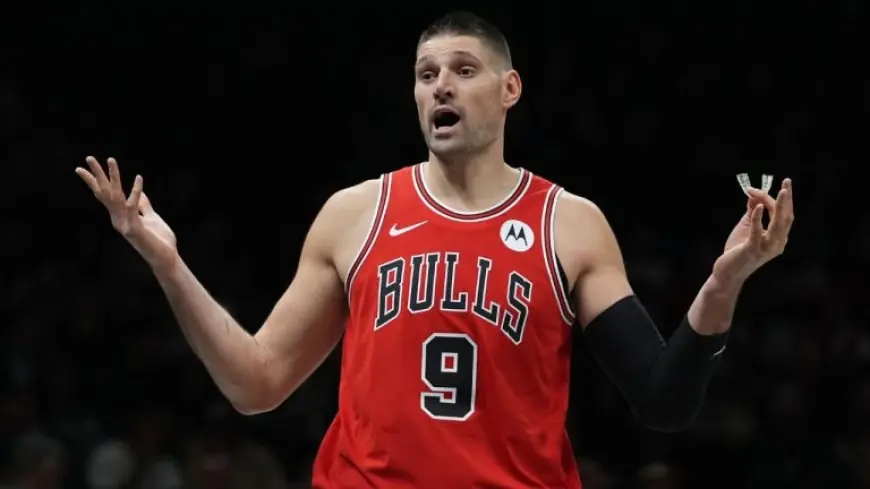
Boston and Chicago have finalized one of the biggest talent-for-fit swaps of this trade-deadline week, with the Celtics acquiring veteran center Nikola Vučević and the Bulls landing guard Anfernee Simons in return. The move immediately changes how both teams can play on both ends of the floor—and it lands at a moment when Boston has been searching for steadier size while Chicago continues to reshape its roster around a faster, guard-heavy identity.
The deal also explains why search interest has spiked across “Celtics trade,” “Bulls trade,” “Vučević trade,” and “Anfernee Simons trade” all at once: it’s a rare swap where the on-court logic and the financial logic point in the same direction for both sides.
What happened: Celtics add Nikola Vučević, Bulls add Anfernee Simons
Vučević, a two-time All-Star and one of the league’s most skilled pick-and-pop bigs, heads to Boston after producing roughly 17 points and 9 rebounds per game this season with strong three-point efficiency for a center. Simons, a high-volume shot-maker who can swing quarters with pull-up shooting, goes to Chicago after a season in a smaller offensive role than he previously held.
From a pure needs standpoint, the swap is clean:
-
Boston gets a proven starting-caliber center who can space the floor, stabilize minutes, and punish switches.
-
Chicago gets a scoring guard who can create his own shot and juice an offense that can stagnate late in games.
Behind the headline: why Boston did this now
Boston’s biggest problem hasn’t been star power. It’s been the grind of regular-season minutes at center and the volatility that comes when your frontcourt depends heavily on unproven or matchup-specific options. Vučević gives the Celtics a real offensive hub at the five: he can run dribble handoffs, hit cutters, and keep the paint open for driving lanes. That matters even more for a Celtics team navigating injuries and rotation churn.
There’s also a second layer: money and flexibility. Vučević’s contract sits around the low $20 million range for this season and, crucially, it’s expiring. That makes him easier to fit and easier to move later if needed. Swapping Simons’ larger expiring figure for Vučević can also change Boston’s luxury-tax posture and roster-building constraints, especially under the league’s newer spending rules that penalize teams operating above the apron lines.
Incentives at play for Boston:
-
Upgrade the center spot without sacrificing core wings.
-
Add a playoff-style skill set that plays in half-court games.
-
Reduce financial friction and keep future options open.
What Chicago is betting on with Simons
For Chicago, Simons isn’t just “a scorer.” He’s a shot-creation investment. He can take tough shots that many teams simply can’t manufacture, and he brings gravity that can open the floor for everyone else. If the Bulls are leaning into a quicker identity and want more perimeter punch, Simons fits the template.
The trade also signals a willingness to pivot away from building around a traditional center as an offensive focal point. Vučević is still productive, but Chicago appears to be prioritizing guard depth, pace, and lineup versatility.
Stakeholders who gain leverage:
-
Chicago’s guards, who now have another creator to relieve pressure.
-
Boston’s wings, who get a center who can shoot and pass without clogging the lane.
-
Both front offices, who gain cleaner contract pathways heading into the offseason.
Celtics depth chart ripple: how Vučević changes the rotation
Vučević gives Boston a different menu of lineup choices:
-
Starting center stability: reliable screens, rebounding positioning, and consistent offensive touches.
-
Spacing upgrade: defenders must respect him at the arc, which reduces help at the rim.
-
Half-court release valve: when actions break down, he can operate from the elbows and the post.
The trade can also change Boston’s substitution pattern. Instead of surviving non-star minutes at center, the Celtics can keep a more organized offense on the floor with Vučević as a hub.
What we still don’t know
A few key questions will determine whether this is a “nice fit” or a “real needle-mover”:
-
How Boston protects Vučević defensively against elite pick-and-roll attacks in May and June.
-
Whether Chicago empowers Simons as a primary creator or keeps him as a high-octane secondary option.
-
What follow-up moves either team makes before the trade deadline on Thursday, February 5, 2026, ET.
What happens next: scenarios and triggers
-
Boston makes a small follow-up move for defense or depth
Trigger: the team decides it needs more perimeter containment to cover for bigger lineups. -
Chicago rebalances its guard minutes again
Trigger: overlap creates diminishing returns unless roles are clearly defined. -
A playoff chess-match preview emerges quickly
Trigger: Boston’s new center rotation gets tested against teams that hunt bigs in space. -
The expiring-contract angle becomes the offseason story
Trigger: either team wants to pivot again in summer roster construction.
Celtics schedule: next games to watch in Eastern Time
Boston’s upcoming slate offers immediate measuring-stick games and a quick opportunity to see how the center rotation settles:
-
Wednesday, February 4, 2026: Celtics at Rockets, 8:00 PM ET
-
Friday, February 6, 2026: Heat at Celtics, 7:30 PM ET
-
Sunday, February 8, 2026: Knicks at Celtics, 12:30 PM ET
-
Wednesday, February 11, 2026: Bulls at Celtics, 7:30 PM ET
That Bulls matchup, in particular, could turn into an early “trade narrative” game—Vučević against his former team and Simons under a fresh spotlight.
What makes this deal linger is that it’s not just a headline swap. It’s a strategy reveal: Boston is signaling it wants steadier structure at center for the stretch run, while Chicago is leaning harder into perimeter creation. The next week will show whether the fit looks obvious—or whether one more move is still coming.