























Billie Eilish, “Wildflower,” and the Grammys speech that sparked Tongva Tribe scrutiny

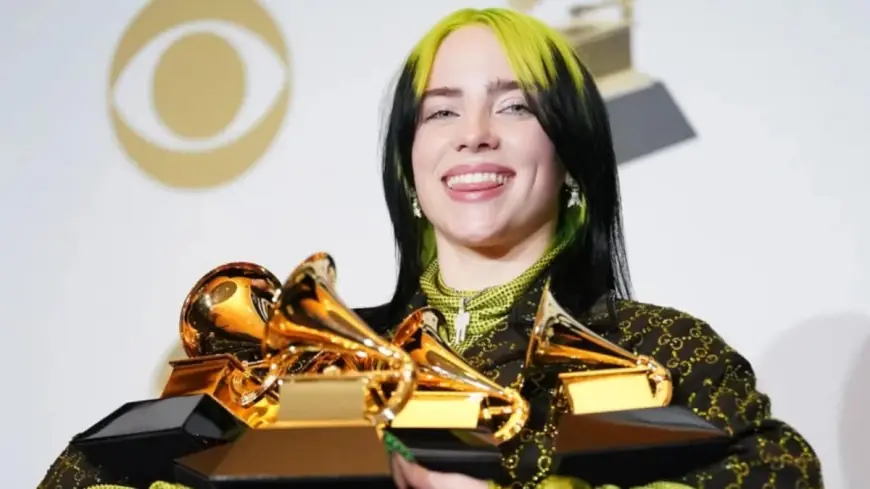
Billie Eilish’s Grammys moment on Sunday, February 1, 2026, has moved beyond a typical awards-night headline, turning into a fast-evolving debate about immigration rhetoric, Indigenous land acknowledgments, and what audiences expect from celebrity activism. The flashpoint: Eilish’s Song of the Year win for “Wildflower,” followed by a pointed onstage message that immediately prompted both praise and backlash.
What Billie Eilish said at the Grammys
After accepting Song of the Year for “Wildflower,” Eilish delivered a short but forceful statement that linked immigration enforcement to the history of land dispossession, including the line, “No one is illegal on stolen land,” alongside criticism of immigration raids and the agency responsible for them. The wording traveled quickly across social feeds, turning the speech into one of the ceremony’s most replayed segments.
The reaction split along familiar lines: supporters framed it as a rare use of a prime-time moment to challenge policy and language around migrants, while critics argued the statement was provocative, overly broad, or inconsistent with how wealth and property work in practice.
Tongva Tribe enters the conversation
As the speech spread, attention shifted to a local question with national resonance: whose ancestral land sits beneath high-value real estate in the Los Angeles area. In the days after the ceremony, the Tongva Tribe was pulled into the discourse as people online debated whether Eilish’s home and surrounding neighborhoods overlap with Tongva ancestral territory.
A Tongva Tribe statement circulating in recent coverage has focused on clarifying the land-history context and the importance of naming the specific Indigenous community when public figures reference “stolen land.” The discussion has pushed the story from a general land-acknowledgment argument toward something more concrete—what a meaningful acknowledgment looks like, and whether it changes behavior, donations, or advocacy beyond a single speech.
Emily Austin backlash and the viral reaction clip
Another thread of the story centers on Emily Austin, a sports-media personality and influencer who became a trending name after a video showed her reacting in the audience during Eilish’s remarks. The clip, widely reshared after the Grammys, captured visible skepticism and commentary that many viewers interpreted as mocking or dismissive.
Austin’s supporters have framed her reaction as pushback against politicizing an awards show. Critics argue that the reaction clip amplified a culture-war framing that reduces complicated topics—immigration enforcement, Indigenous sovereignty, and historical dispossession—into quick “gotcha” moments. Either way, the incident demonstrates how awards speeches now compete with real-time reaction content that can redirect the narrative within minutes.
Why “Wildflower” is central to the debate
“Wildflower” winning Song of the Year matters here because it keeps Eilish at the center of the news cycle longer than a one-off viral clip typically would. The win invites renewed scrutiny of her public platform and decision to attach a political message to the trophy moment, rather than keeping remarks strictly musical.
At the same time, the backlash illustrates how quickly audiences conflate the art and the speech. Some viewers questioned the outcome on artistic grounds, while others argued the controversy had little to do with the song itself and more to do with the message delivered after the envelope was opened.
What happens next for this story
This is likely to keep moving in three directions over the next several days:
-
Official responses: Whether Eilish or her representatives add context, or whether the Tongva Tribe’s message gets reiterated in a clearer, more widely shared form.
-
Amplification cycle: Whether additional audience clips or backstage comments become the next “main character” moment, further shifting attention from the award to the reaction economy.
-
Follow-through expectations: Whether the conversation turns toward concrete actions—community engagement, direct support, or sustained advocacy—or stays locked in a debate over a few sentences on a televised stage.
For now, the story sits at the intersection of celebrity messaging and local history, with the Tongva Tribe’s involvement pushing the conversation toward specificity: if someone invokes “stolen land,” many are asking which land, which people, and what responsibility follows.
Sources consulted: The Recording Academy, Los Angeles Times, Billboard, Yahoo Entertainment