
























Cher’s 2026 Grammys “Luther” Mix-Up Goes Viral, Sending Fans Back to Luther Vandross and Spotlighting Kendrick Lamar and SZA’s Record of the Year Moment

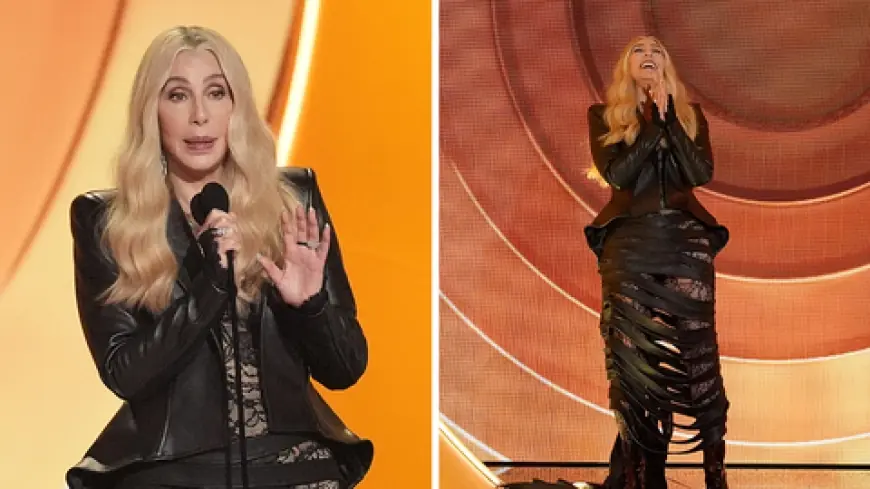
Cher’s appearance at the 2026 Grammy Awards turned into one of the night’s most replayed moments after a presenting mishap tangled together three musical eras: a legendary soul icon, a modern hit built on classic R&B, and a live-telecast format where a split-second of confusion can become the headline.
On Sunday, February 1, 2026, ET, Cher took the stage to present Record of the Year. In a brief but memorable stumble, she appeared to read or say the wrong name, prompting an immediate correction and a wave of online reactions. The actual winners were Kendrick Lamar and SZA for “Luther,” a track whose title and musical DNA directly nod to Luther Vandross. That overlap is the key to why the moment didn’t just land as an awkward flub—it landed as an accidental cultural mash-up that made a lot of sense to the audience once they connected the dots.
What Cher did at the Grammys 2026, and what she said that sparked the confusion
During the presentation, Cher initially moved as if the segment had ended before the winner announcement was completed. After returning to the microphone, she delivered a winner name that sounded like a reference to Luther Vandross rather than to “Luther,” the Kendrick Lamar and SZA song. The show quickly steered back on track, and Lamar and SZA accepted the award.
The detail that matters: this wasn’t a random name. “Luther” is titled after Luther Vandross, and the record’s production includes a prominent connection to his music. That’s why the mistake traveled so quickly—viewers could instantly tell something was off, but the “wrong” answer was still strangely on-theme.
Kendrick Lamar and SZA’s “Luther,” explained: why Luther Vandross is part of the story
If you’re seeing searches like “kendrick lamar luther,” “luther vandross kendrick lamar,” and “who is luther vandross” all spike together, it’s because “Luther” is built as a bridge between generations.
The song’s title honors Luther Vandross, the velvet-voiced R&B superstar whose phrasing and romantic ballad style defined an era. “Luther” draws from that lineage musically, including a recognizable sample tied to Vandross’ work with Cheryl Lynn on a famous rendition of “If This World Were Mine,” itself rooted in classic soul.
So when Cher’s announcement veered toward Vandross, the internet immediately did what it always does: it treated the moment like both a mistake and a tribute. For longtime fans, it was a reminder of Vandross’ enduring influence. For newer listeners, it was an invitation to learn why a modern Record of the Year winner carries his name in the first place.
Behind the headline: why live TV slips become bigger than the award itself
This incident isn’t just about one presenter misspeaking. It’s about incentives that shape modern awards shows.
Live telecasts are engineered for momentum: quick transitions, tight timing, and minimal friction. Presenters are often juggling cues, screens, stage directions, and loud rooms. When anything goes slightly off-script, it’s instantly visible. And in a world where social clips circulate faster than official recaps, the most human moment can outrun the actual victory.
There’s also a reputational asymmetry at play. For Cher, a stumble becomes a referendum on age, preparedness, or the show’s production, even though the real outcome is untouched. For the winners, the risk is that their career moment gets reduced to a punchline—unless the story is reframed as something bigger, like a conversation about musical lineage.
In this case, the overlap between the title “Luther” and Luther Vandross’ legacy softened the edge. The moment didn’t just mock a mistake; it reopened a door to the history behind the record.
What we still don’t know about the Cher Grammys 2026 moment
A few pieces remain fuzzy, which is why versions of the story keep mutating online:
-
Whether the confusion stemmed from a screen prompt, staging cue, or a simple misread
-
Exactly what Cher saw in front of her at the moment she announced the name
-
Whether the show will change how it sequences or displays winner information for high-profile categories
Those gaps are fertile ground for misinformation, especially when search terms start blending unrelated rumors into the same thread. The most reliable facts are the simplest ones: the category was Record of the Year, and the winners were Kendrick Lamar and SZA for “Luther.”
What happens next: likely outcomes and what to watch
Here are the realistic next steps, with clear triggers:
-
A clearer backstage explanation from show organizers
Trigger: ongoing attention keeps the story alive beyond a day or two. -
A reframed narrative focusing on Luther Vandross’ influence
Trigger: renewed interest in Vandross’ catalog and the song’s sampling lineage. -
A boost in streams and searches for “Luther” and Vandross classics
Trigger: casual viewers who missed the music context go looking for why the names collided. -
A broader debate over awards-show pacing and telecast design
Trigger: the industry treats the moment as a production lesson, not a meme.
Why it matters: a viral flub that accidentally became a music-history lesson
What made this episode stick wasn’t just that Cher made a mistake. It’s that the mistake pointed straight at the reason “Luther” resonated in the first place: it’s a contemporary record that wears its influences openly. In a single awkward beat of live television, the Grammys ended up spotlighting the throughline from Luther Vandross’ era to Kendrick Lamar and SZA’s—then handed Record of the Year to the artists most directly benefiting from that connection.