

























Washington Post layoffs: one-third staff cuts reshape newsroom and operations

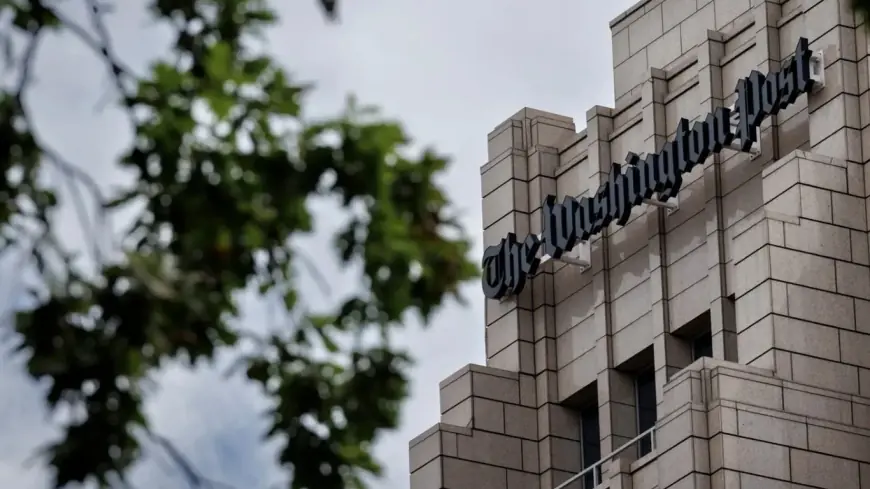
The Washington Post carried out sweeping layoffs Wednesday, February 4, 2026, cutting about one-third of its workforce in a restructuring that sharply reduces parts of its newsroom and closes or scales back several legacy coverage areas. The move is one of the most significant contractions at the organization in decades, landing as major news outlets continue to wrestle with subscription churn, shifting audience habits, and weakened digital advertising.
Leaders described the cuts as necessary to stabilize the business and refocus coverage, while staff reaction has centered on the loss of reporting capacity and the long-term impact on the paper’s reach.
What the layoffs mean today
In a staff-wide video meeting Wednesday morning (ET), executive editor Matt Murray outlined changes that touch virtually every part of the company. The reductions include deep newsroom cuts as well as layoffs in business-side departments.
Companywide, leadership indicated the layoffs amount to roughly one-third of employees. Public estimates circulating Wednesday suggested the total could be around 800 jobs, with more than 300 positions potentially coming from the newsroom; the precise breakdown has not been publicly confirmed in a single consolidated tally.
Key takeaways
-
Roughly one-third of staff are being cut across the company.
-
The sports department is being eliminated, and international coverage is being reduced.
-
The books department is closing, and a flagship audio project is being shut down.
-
Leadership is redirecting resources toward national reporting priorities and subscriber growth.
Which desks and products are being cut
The most visible editorial change is the elimination of the traditional sports department, a major shift for a publication that has long treated sports as a core daily franchise. In parallel, leadership said international staffing will be reduced, narrowing the footprint of overseas reporting.
Other changes include closing the books department and ending a prominent in-house audio effort. Editing operations and local coverage are also being reorganized, with the Washington-area report undergoing a structural reset intended to reduce cost and tighten focus.
The combined effect is a smaller, more centralized newsroom that prioritizes a narrower set of high-engagement beats, with fewer standalone sections that historically served dedicated but smaller audiences.
Why the Washington Post is restructuring now
The layoffs follow several years of steep financial pressure, including widely cited losses that leadership has been trying to reverse through a mix of cost cuts and strategy shifts. Like many publishers, the organization has faced declining referral traffic as distribution patterns changed across search and social platforms, making it harder to convert casual readers into paying subscribers.
Leadership has framed the reset as a step toward reaching a sustainable financial position by the end of 2026. The plan relies on concentrating on “distinctive” journalism that is more likely to retain subscribers, while cutting areas viewed as less central to that mission or more expensive relative to audience returns.
The broader industry backdrop is unforgiving: even strong brands have struggled to keep pace with changing consumption habits, particularly among readers who expect news to be free, fast, and optimized for mobile feeds.
Staff reaction and the labor picture
The layoffs have triggered sharp internal backlash, including public statements of grief and anger from prominent journalists and the employee union. Critics of the cuts argue that shrinking the newsroom undermines accountability reporting and reduces the publication’s ability to cover communities consistently, especially outside Washington.
There is also tension around trust. Employees point to earlier assurances that some newsroom roles would be protected, and argue that the scale of Wednesday’s cuts clashes with those expectations. Leadership, meanwhile, has emphasized that the decision reflects business realities and the need to protect the organization’s future.
This dynamic—leaders seeking a faster turnaround while staff worry about mission and morale—has become a defining challenge for large newsrooms trying to transition from print-era scale to digital-era economics.
What to watch next
The next few weeks will likely determine whether this restructuring becomes a temporary retrenchment or the start of a longer period of contraction. Three signals matter:
-
Beat coverage gaps: which stories or geographies see reduced day-to-day reporting.
-
Subscriber trajectory: whether the refocused product slows cancellations and lifts new sign-ups.
-
Talent retention: whether remaining staff stay, or whether departures accelerate after the layoffs.
For readers, the most immediate change will be visible in what is no longer covered with the same intensity—particularly sports and parts of international reporting—and in how aggressively the paper pursues fewer, higher-impact storylines meant to sustain subscriptions.
Sources consulted: Reuters, Associated Press, The Wall Street Journal, Poynter