

























Iranian drones drive new flashpoints at sea, sanctions push, and wider proliferation fears

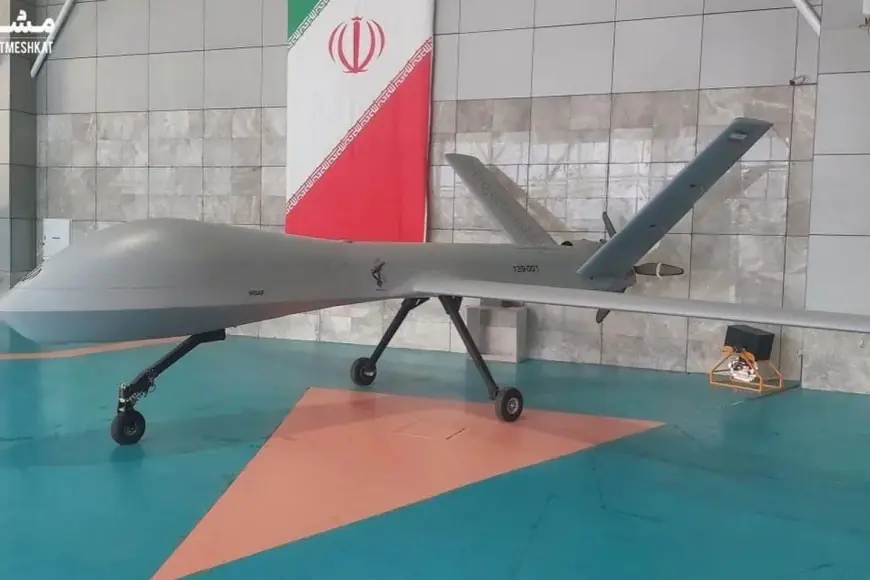
Iranian-made drones are again at the center of rising regional friction and global security planning after a U.S. Navy fighter jet shot down an Iranian unmanned aircraft that approached the aircraft carrier USS Abraham Lincoln in the Arabian Sea on Tuesday, February 3, 2026 (ET). The incident, paired with stepped-up enforcement actions aimed at drone procurement networks and fresh European moves targeting Iran’s security apparatus, has renewed focus on how quickly Iran’s drone ecosystem has expanded — and how widely its designs have spread.
The immediate risk is tactical: miscalculation near busy shipping lanes. The longer-term issue is strategic: low-cost, mass-produced drones that can be exported, copied, or adapted faster than air defenses can scale affordably.
A shootdown near a U.S. carrier
U.S. Central Command said an Iranian one-way attack drone “aggressively approached” the USS Abraham Lincoln with “unclear intent” while the carrier transited international waters in the Arabian Sea, roughly 500 miles from Iran’s southern coast. An F-35C launched from the carrier shot the drone down in what the military described as self-defense. No U.S. personnel were injured and no American equipment was damaged.
The same day included another tense maritime episode: a U.S. Navy destroyer moved to assist a U.S.-flagged tanker that encountered harassment by Iranian small boats while transiting the Strait of Hormuz, one of the world’s most sensitive chokepoints for energy and commercial traffic.
Iranian state-linked media later framed a drone flight as a completed “surveillance mission” in international waters, underscoring how both sides are treating the same set of events as messaging as much as maneuver.
Why Iranian drones are hard to deter
Iran’s drone advantage isn’t centered on a single “super” platform. It’s the combination of:
-
Scale: large quantities that can overwhelm defenses and force expensive intercepts.
-
Simplicity: components that can be sourced through layered procurement routes.
-
Flexibility: the same families of drones can be tuned for reconnaissance, decoy roles, or one-way attack missions.
-
Transferability: designs and production know-how can be moved, taught, or reverse-engineered.
That package makes drones a tool for both state military signaling and proxy-group pressure. Even when a launch platform is not publicly confirmed, the capability shapes behavior: ships reroute, air defenses stay activated, and leaders face pressure to respond to every approach that looks “off-nominal.”
Sanctions target procurement networks
Washington’s sanctions strategy has increasingly focused on the supply chain rather than only the end-user. In November 2025, the U.S. Treasury announced designations targeting 32 individuals and entities across multiple countries tied to procurement networks supporting Iran’s ballistic missile and unmanned aerial vehicle production.
The measures highlight how drone manufacturing depends on imported machinery, guidance components, and chemical inputs that can be purchased through intermediaries. They also raise the stakes for banks, freight forwarders, and manufacturers that may unknowingly touch a sanctioned node — a dynamic that can chill legitimate trade while still leaving room for black-market adaptation.
The core policy goal is disruption: slowing the flow of specialized parts and increasing the cost and time required to assemble effective drones at scale.
Europe tightens posture toward Iran’s security apparatus
Europe has also moved to harden its stance. In January 2026, the European Union proposed tightening restrictions on exports of critical drone and missile technologies to Iran. A separate milestone followed on January 29, 2026 (ET), when the EU formally designated Iran’s Islamic Revolutionary Guard Corps (IRGC) as a terrorist organization, broadening legal and financial tools used to restrict support.
The drone link is direct: the IRGC is widely viewed as central to Iran’s drone development, testing, and operational doctrine. Policy shifts that constrain the IRGC’s access to financing, equipment, and overseas facilitators are intended to reduce the pace of innovation and export — though enforcement challenges remain significant.
Ukraine’s battlefield keeps the drone story global
Iranian drone designs remain a defining feature of long-range harassment and infrastructure pressure in the Russia–Ukraine war. Open-source tracking groups have documented sustained waves of Shahed-type launches, including thousands in a single month during late 2025. Even when interception rates are high, the strategic effect persists: air defenses are forced to stay engaged, civilian alert systems are stretched, and electrical and industrial targets face repeated risk.
The war has also accelerated counter-drone learning. Jamming, low-cost interceptors, improved radar cueing, and layered defenses are evolving fast — but so are drone tactics, including the use of decoys and mixed salvos to exhaust intercept inventories.
Where this goes next
Two timelines now matter most:
-
Near-term maritime stability: Further close approaches by drones or fast boats near commercial traffic corridors increase the odds of a rapid escalation cycle, especially if communication channels are limited or domestic politics push for tougher responses.
-
Medium-term proliferation pressure: As sanctions and export controls tighten, procurement networks may fragment rather than disappear, producing a cat-and-mouse pattern in which interdictions slow production but do not stop it.
Recent milestones (ET)
| Date | Event | Why it matters |
|---|---|---|
| Jan. 20, 2026 | EU moves to tighten drone-tech export restrictions | Adds pressure on supply routes |
| Jan. 29, 2026 | EU designates IRGC as a terrorist organization | Expands legal/financial constraints |
| Feb. 3, 2026 | U.S. shoots down Iranian drone near USS Abraham Lincoln | Raises miscalculation risk at sea |
| Feb. 3, 2026 | Hormuz tanker incident prompts U.S. naval assistance | Underscores shipping-lane sensitivity |
The broader trajectory is clear: drones are no longer a niche capability. They are a core instrument of deterrence, disruption, and signaling — and incidents like the Feb. 3 carrier approach show how quickly a single flight can become a geopolitical headline.
Sources consulted: U.S. Central Command; U.S. Department of the Treasury; European Union; Institute for Science and International Security