





















Eddie Bauer Stores Closing: Why the Outdoor Retailer’s Nearly 200 Locations Are at Risk as 2026 Store Closures Accelerate

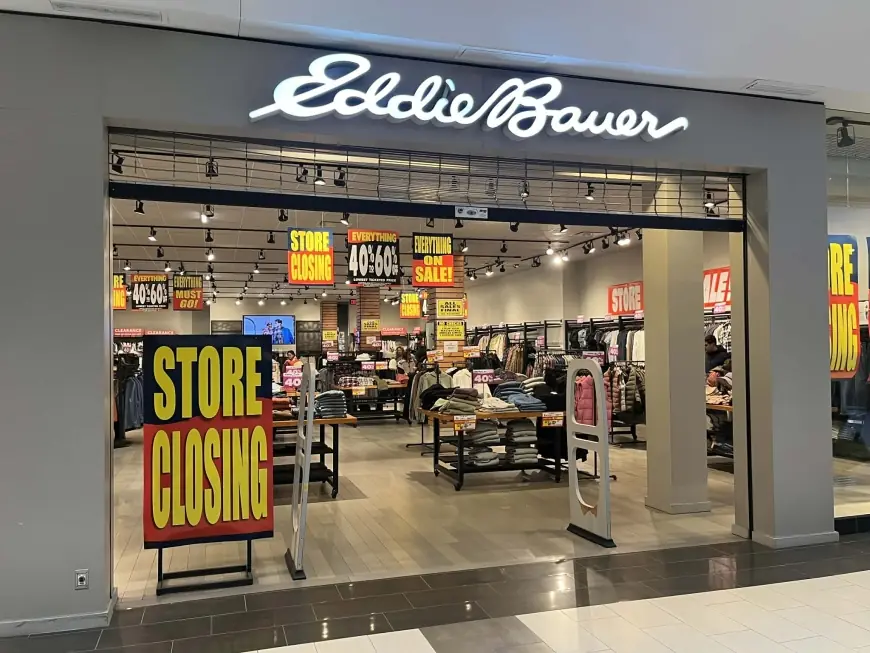
Eddie Bauer is bracing for widespread store closures in 2026 as the company that operates its North American retail footprint prepares a bankruptcy restructuring that could shutter most, if not all, of the brand’s roughly 180 to 200 stores across the United States and Canada. The situation is still developing, but the direction is clear: Eddie Bauer’s mall and outlet presence is being squeezed by lease costs, inventory obligations, and a retail landscape that is punishing mid-tier apparel chains caught between discount giants and premium outdoor specialists.
The expected restructuring has also exposed something many shoppers do not realize: Eddie Bauer’s business is split across different operators and licenses. That corporate plumbing matters, because it means a bankruptcy for the store operator does not necessarily mean the end of the brand itself.
What’s happening with Eddie Bauer stores in 2026
In recent days, multiple reports and industry briefings have pointed to a planned Chapter 11 filing by the entity that runs Eddie Bauer’s brick-and-mortar stores. The working expectation is that the filing would be used to exit leases and renegotiate liabilities tied to real estate and inventory.
In plain terms: the stores are the problem asset, and bankruptcy is the mechanism to shrink fast.
A few locations could survive if another operator takes over select leases, but the base case being discussed in retail circles is a steep downsizing, with closures concentrated in malls and underperforming outlet centers.
Why Eddie Bauer can close stores without “going away”
Eddie Bauer today functions as a brand with different pieces operated under separate agreements.
One operator handles the physical stores. Another operator can handle online sales and wholesale distribution. The intellectual property sits with a brand-management owner that can shift licenses if performance or financial stability deteriorates.
That setup creates two parallel realities:
-
Shoppers see one Eddie Bauer.
-
Behind the scenes, the store operator can fail while the brand continues through online channels, wholesale partners, or international licensing.
This is why you may see headlines about “stores closing” at the same time the company insists the brand will continue. Both can be true.
Behind the headline: what’s driving the closures now
Eddie Bauer’s store footprint is colliding with pressures that have been building for years, but are hitting harder in 2026:
High fixed costs
Mall and outlet leases are unforgiving when traffic drops. Rent, common-area charges, and required store upkeep do not fall just because a weekend is slow.
Inventory risk
Apparel retail is vulnerable to weather swings and trend changes. When product misses the moment, markdowns destroy margin. That margin destruction becomes lethal when paired with high rent.
The “middle squeeze”
Consumers are splitting spending between value retailers and premium, technical outdoor brands. Mid-market lifestyle labels have to fight on both ends: discounts to keep volume, and marketing spend to stay relevant.
A brand built for the past retail map
Eddie Bauer was designed for a world where malls were default. The U.S. is still over-stored relative to demand in many regions, and a wave of chains are choosing contraction over slow bleed.
Retailers closing stores in 2026: Eddie Bauer is not alone
Eddie Bauer’s crisis is part of a broader store-closure cycle in 2026. Several major chains across categories have announced hundreds of closures, with companies citing “efficiency,” “footprint optimization,” and “strategic focus” as they cut costs and push more sales online.
This is not a single-industry downturn. It is a structural reshaping: fewer locations, more selective geography, and a stronger bias toward stores that function as brand showrooms rather than pure sales floors.
Second-order effects are already visible:
-
Mall landlords face higher vacancy and more pressure to replace apparel anchors with entertainment, fitness, and services.
-
Smaller retailers lose spillover traffic when neighboring chains shut down.
-
Local jobs disappear in clusters, because closures often happen in batches across multiple nearby centers.
What we still don’t know
Even if a bankruptcy filing occurs, several key points remain unresolved:
-
The exact number of Eddie Bauer stores that will close and on what schedule
-
Whether liquidation sales will be widespread or targeted
-
Whether another operator steps in to keep a small subset of stores running
-
How aggressively leases will be rejected, and which regions will be hit hardest
It is also unclear how much of the store network can be saved through landlord concessions. In many restructurings, survival comes down to a simple math test: can rent be cut enough, fast enough, to make a store profitable again.
What happens next: realistic scenarios and triggers
Most-likely path: rapid footprint collapse
If a Chapter 11 filing proceeds, expect a fast round of lease exits and liquidation activity, with only a limited number of stores potentially sold or transferred.
Partial survival through a “handful” strategy
If interested buyers pick off the best locations, Eddie Bauer could keep a small retail presence in high-performing centers while leaning harder into online and wholesale.
Brand continuity, retail reset
Even with near-total store closures, the Eddie Bauer name can persist through online sales and partners, especially if the licensing owner prioritizes distribution over operating stores.
The trigger for each scenario is the same: whether the store operator can secure enough liquidity and landlord cooperation to keep the network alive, or whether the cleanest solution is to shut it down and rebuild around lower-cost channels.
Why it matters for shoppers and malls
For shoppers, the near-term impact is practical: closures can mean deep discounts, shrinking local availability, and warranty or returns questions that depend on how operations are reorganized. For malls and outlet centers, Eddie Bauer’s potential exit is another signal that the apparel-heavy leasing model is still in retreat.
Eddie Bauer’s story is not just about one retailer. It is a snapshot of 2026 retail economics: when leases, inventory risk, and shifting shopping habits collide, even a heritage name can be forced to choose between a smaller footprint and no footprint at all.