





















Matt Nagy joins the New York Giants as offensive coordinator, signaling a John Harbaugh-style reset in 2026

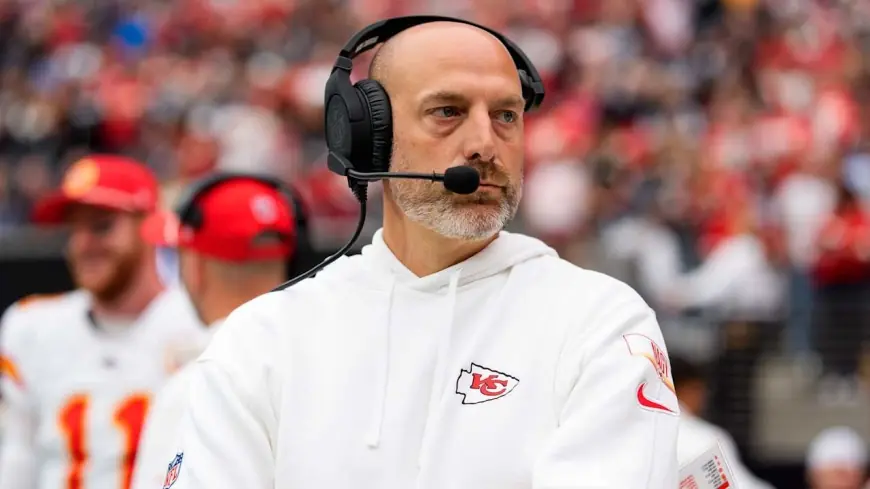
The New York Giants’ first major coaching-staff headline of the 2026 offseason is now in place: Matt Nagy is set to run the offense under new head coach John Harbaugh. The move lands as part of a broader “serious football” reset in East Rutherford, with the Giants prioritizing experienced NFL play-calling, quarterback development, and a cleaner offensive identity after years of inconsistency.
Nagy’s arrival is not a splashy branding hire. It’s a structure hire. And it tells you what the Giants think their fastest path back to relevance looks like.
What happened: the Giants land Matt Nagy to lead the offense
The Giants are hiring Nagy as offensive coordinator for the 2026 season, pairing him with Harbaugh weeks after Harbaugh took the head coaching job on a five-year deal. Nagy comes most recently from Kansas City, where he worked in the league’s most stable offensive ecosystem and remained closely tied to Andy Reid’s coaching tree.
The immediate practical question is straightforward: who calls plays? Harbaugh has historically leaned on coordinators for play-calling, and Nagy is an experienced play-caller, which suggests the offense will have a defined “voice” rather than a committee feel.
Why this hire matters: it’s a bet on quarterback development and offensive clarity
Nagy’s résumé includes two parts that front offices value when they’re trying to reboot a franchise:
-
He’s been a head coach before, which typically means he’s seen what breaks on Sundays and how game plans fail when pressure hits.
-
He’s spent significant time inside a high-functioning offensive structure, where weekly preparation, language, and roles are consistent year over year.
That matters for the Giants because the hardest part of rebuilding isn’t drafting talent; it’s building an environment where young players stop guessing. Offensive identity is often the first place teams try to create that consistency, because the quarterback touches everything.
Behind the headline: what the Giants are really trying to solve
Context: The Giants are coming off a rough multi-year stretch and needed a coaching regime that could stabilize the building fast. Harbaugh’s reputation is about culture and standards. Nagy’s reputation is about offense, structure, and modern spacing concepts that can scale from “get the first down” football to “win in January” football.
Incentives:
-
For Harbaugh, an established offensive coordinator reduces early-season volatility and lets the head coach focus on program-building, game management, and roster alignment.
-
For Nagy, this is a chance to reassert his best identity: designer of an offense and developer of quarterbacks, without the full burden of being the face of the franchise.
-
For the Giants front office, it’s a credibility play. Hiring a known coordinator signals that the team is done experimenting.
Stakeholders: The quarterback room, the offensive line, and the skill-position core benefit most if the system is coherent. Meanwhile, ownership and fans are watching for immediate signs that the Giants are no longer reinventing themselves every month.
Second-order effects: This hire also shapes the Giants’ player-acquisition plan. Once the coordinator is set, the draft and free-agency priorities become clearer: linemen who fit the blocking rules, receivers who win in the route combinations Nagy prefers, backs who can protect and catch, and a quarterback profile that matches the intended rhythm and spacing.
The key question: can Nagy translate “Reid-world” success into Giants reality?
Nagy’s recent years came in an environment built for continuity: elite quarterback play, stable terminology, and a culture that rarely panics. New York is the opposite: pressure-heavy, impatient, and far less forgiving when a two-game skid becomes a month-long storyline.
That’s the challenge. The best coordinators don’t just design plays; they design answers for when the plan collapses. The Giants will need:
-
A run game that can function even when the passing game stalls
-
Protection solutions that don’t require perfection up front
-
Third-down concepts that create easy throws
-
Red-zone identity that doesn’t depend on highlight plays
If Nagy can give the Giants that, the wins will follow. If not, the hire becomes another short-lived attempt at importing success from elsewhere.
What we still don’t know
Several pieces will determine whether this is a true turning point or just a headline:
-
Who the Giants’ starting quarterback will be in Week 1 of 2026, and how the staff evaluates the long-term answer
-
Whether Nagy will have full play-calling control or share duties with Harbaugh
-
How the rest of the offensive staff is built, especially the offensive line coach and quarterbacks coach
-
Whether the Giants pursue a veteran quarterback to stabilize the floor while developing a younger option
These aren’t small details; they’re the entire story of whether this system can take root.
What happens next: realistic scenarios before the 2026 season
-
Staff build-out accelerates, with the Giants targeting coaches aligned with the same offensive language and development philosophy.
-
The quarterback plan clarifies by early spring, either via a veteran addition, a draft investment, or both.
-
The roster starts to tilt toward “fit” over “flash,” especially on the offensive line and at receiver.
-
Early-season evaluation becomes about process: fewer self-inflicted errors, clearer situational football, and an offense that looks like it knows what it’s trying to be.
The Matt Nagy hire is the Giants choosing structure over improvisation. Paired with John Harbaugh, it’s a statement that the franchise believes the quickest way back is not a single star move, but a system that finally stops changing every time the wind shifts.