





















Disney names Josh D’Amaro as new Disney CEO, elevates Dana Walden, and sets up a March 18 transition that could reset Disney stock expectations

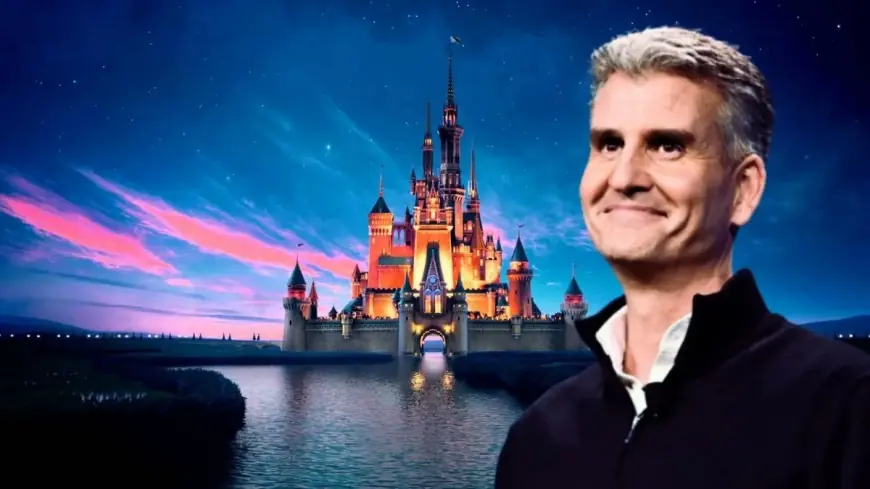
Disney’s long-running succession saga now has a date, a name, and a clear organizational bet. On Tuesday, February 3, 2026, the company’s board selected Josh D’Amaro to become the next Disney CEO, with the handoff scheduled for the annual meeting on March 18, 2026, when he will succeed Bob Iger. In the same move, Disney signaled a creative and strategic reshuffle by positioning Dana Walden for a larger enterprise role, tightening the link between the company’s entertainment pipeline and the broader corporate agenda.
For investors watching Disney stock, the announcement is less about a single executive and more about whether Disney can finally move from a comeback narrative into a stable operating era: clearer leadership, cleaner internal lines of authority, and fewer headline distractions at a time when streaming economics and legacy TV pressures are still colliding.
What happened and what changes on March 18
D’Amaro, best known for running Disney’s parks and experiences business, is set to take over as chief executive at the March 18 annual meeting. The board also plans to add him as a director immediately after the meeting, reinforcing that this is intended to be a durable transition rather than an interim bridge.
At the same time, Disney is expanding Walden’s creative leadership remit, a signal that the company wants tighter command over content decisions, release cadence, franchise management, and the increasingly complex tradeoffs between theatrical, streaming, and linear television.
This is the clearest succession outcome Disney has produced since Iger returned to the CEO role in late 2022, following the abrupt exit of Bob Chapek.
Why Disney picked D’Amaro and why it’s a high-stakes bet
D’Amaro’s background is the message. Disney is choosing an operator whose core identity is execution, guest experience, and monetization discipline in businesses that generate large, relatively predictable cash flow. Parks have been Disney’s engine for years, and in a volatile media landscape, the board is effectively saying: keep the flywheel that works, then rebuild the parts that don’t.
That matters because the CEO job at Disney is uniquely cross-wired. The company is simultaneously:
-
A global theme parks and consumer products machine
-
A studio and franchise pipeline that lives and dies on creative judgment
-
A streaming portfolio still balancing subscriber ambition against profitability
-
A legacy TV portfolio facing structural decline and affiliate pressure
Choosing a parks leader can read as a stabilizing move, but it also creates an immediate question: can Disney keep creative risk-taking alive while emphasizing operational rigor?
Behind the headline: incentives, stakeholders, and what the board is trying to prevent
Context: Iger’s return was always framed as a rescue mission and a reset after the Chapek period. The unresolved problem was not only strategy; it was continuity. Disney’s business model punishes leadership churn because every division relies on long-lead planning cycles, especially film slates, park expansions, and multi-year sports rights.
Incentives for the board: deliver a transition that looks orderly, restores internal confidence, and reduces the perception that Disney is perpetually auditioning CEOs in public.
Incentives for Disney’s leadership team: lock in a structure where entertainment and experiences stop competing for attention and start operating on a single calendar with shared priorities.
Stakeholders include:
-
Shareholders who want predictable execution and fewer governance surprises
-
Employees and creative partners who want clarity on greenlight authority and risk tolerance
-
Theme-park and consumer-products operators who want capital allocation to remain stable
-
Sports and distribution partners watching for direction on the future of ESPN and the broader TV footprint
Second-order effects: a clean succession can lower the company’s “drama discount” in the market, but it also concentrates accountability. If the stock underperforms or the strategy stalls, there is less room to blame transitional ambiguity.
What we still don’t know
The announcement answers the “who” and “when,” but several critical pieces are still missing and will determine whether the market treats this as a true reset.
-
The precise division of power between D’Amaro and Walden
If Walden’s mandate is expansive, Disney may be building a two-pillar leadership model: operational discipline plus creative command. If it’s vague, internal friction can return quickly. -
The company’s near-term media strategy choices
Disney still must navigate streaming bundle economics, pricing, churn management, and the shrinking economics of linear channels. Investors will want to know what gets sold, restructured, or doubled down on. -
Capital allocation priorities
Will Disney lean into park expansions, focus on debt and balance sheet flexibility, or aggressively fund content to defend market share? The CEO transition will raise expectations for an explicit capital philosophy. -
The ESPN pathway
Any concrete move toward a streamlined direct-to-consumer sports offering, rights strategy adjustments, or partnership structure could become the defining business story of D’Amaro’s first year.
What happens next: realistic scenarios and triggers
-
A reassurance tour and organizational tightening
If Disney quickly announces reporting lines, decision rights, and a crisp operating cadence, confidence can rise fast. Trigger: clear executive structure and early strategic messaging before or at the March 18 meeting. -
A stronger emphasis on experiences as the earnings anchor
If Disney highlights parks, cruise growth, and consumer products as the foundation funding media reinvention, investors may reward the narrative. Trigger: forward guidance that frames experiences as the stabilizer. -
A sharper, potentially painful reset for legacy TV
If Disney accelerates channel rationalization, renegotiates distribution, or reduces exposure to low-margin linear operations, it may face short-term noise but gain long-term credibility. Trigger: concrete actions rather than gradual drift. -
A franchise-first creative strategy
If Walden’s expanded role translates into fewer, bigger bets with tighter brand control, Disney may prioritize consistency over experimentation. Trigger: early slate choices and distribution decisions that clearly signal the new creative operating model.
The transition date is close enough that the market will demand specifics quickly. Disney has chosen a CEO profile that implies stability and execution. Now it has to prove that stability can also produce growth, not just calmer headlines.