

























ICE Detains 5-Year-Old Liam Conejo Ramos: A Judge’s Decision Analyzed

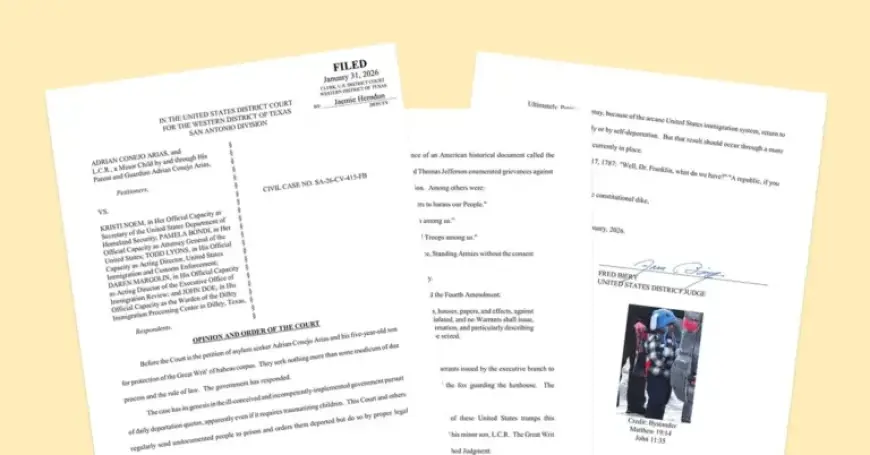
A recent case surrounding 5-year-old Liam Conejo Ramos has drawn significant attention to immigration enforcement practices. The boy, captured in a powerful image, was detained by ICE while accompanied by his father, Adrian Conejo Arias, an asylum seeker from Ecuador. The father and son were taken from Minnesota to a detention facility near San Antonio, Texas. Their legal team filed a petition for a writ of habeas corpus, aiming to challenge their detention.
Judge Biery’s Ruling on Liam Conejo Ramos’ Case
On a pivotal Saturday, federal Judge Fred Biery of Texas’ Western District ruled in favor of Liam and Adrian. He granted the petition that sought their release from detention, underscoring the importance of due process and the rule of law. Judge Biery’s decision has resonated widely, extending beyond legal circles due to its impassioned language and pointed critiques of the current administration.
Background of the Case
The detention of Liam and his father reflects broader issues within the immigration system. According to Judge Biery, the government’s pursuit of deportation quotas has led to the arbitrary detention of families, often causing trauma to children. He emphasized that the essence of habeas corpus is to protect ordinary individuals from such government overreach.
Implications of the Ruling
- Judge Biery highlighted the necessity of providing legal justification for detaining individuals.
- His ruling critiques executive overreach, suggesting it violates constitutional guarantees.
- He called attention to historical grievances against authoritarianism, comparing the current administration to past injustices.
- The ruling asserts that upholding due process is essential to maintaining the integrity of the American constitutional order.
Constitutional and Ethical Considerations
In his decision, Judge Biery illustrated the importance of the Fourth Amendment, which protects against unreasonable searches and seizures. He stated that administrative warrants issued by the executive branch do not fulfill the requirement of probable cause. His ruling serves as a reminder of the need for checks on executive power, emphasizing the role of the judiciary in maintaining individual liberties.
A Symbol of Hope and Responsibility
Judge Biery’s written decision includes poignant reflections on the responsibilities of governance and the protection of vulnerable populations. He invoked biblical references, suggesting a moral responsibility to safeguard children like Liam. His ruling, described as both a legal affirmation and a moral call to action, enhances the visibility of issues surrounding immigrant rights and due process.
This case serves as an important reminder of the ongoing challenges within the United States immigration system. It raises critical questions about the treatment of asylum seekers and the obligations of the government to uphold the rule of law. As the nation examines its policies, the story of Liam Conejo Ramos stands out as both a warning and a plea for compassion.