





Don Lemon Arrested After Reporting on Minnesota Church Protest, Igniting New Press Freedom Fight Over Where Journalism Ends and Criminal Liability Begins

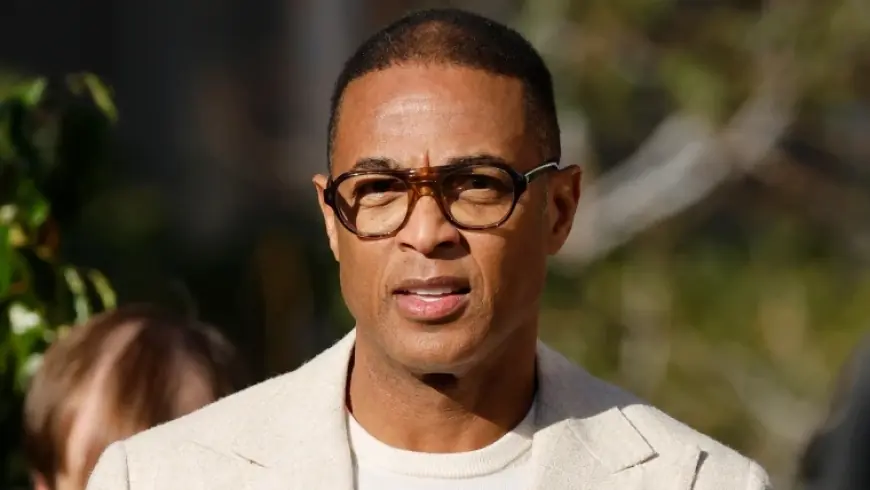
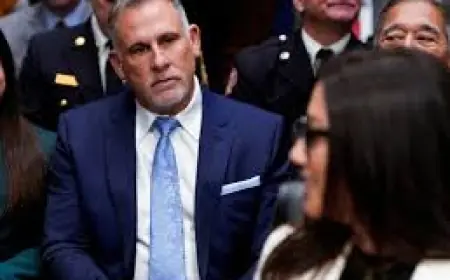
Don Lemon was taken into federal custody late Thursday, January 29, 2026, after authorities tied his coverage of a January 18 protest inside a St. Paul, Minnesota church to civil rights charges. He was released the next day, Friday, January 30, 2026, after a court appearance in California, but the case is now headed toward a high-stakes courtroom test of the First Amendment, the right to worship, and the government’s ability to treat protest coverage as participation.
The arrest immediately set off a national argument because Lemon says he was present strictly as a journalist livestreaming a news event, while federal prosecutors argue his role crossed into conspiracy and interference with worshippers’ rights.
What happened: the church protest, the arrest, and the charges
The underlying incident occurred on Sunday, January 18, 2026, when demonstrators entered Cities Church in St. Paul during a worship service to protest immigration enforcement. The protest centered on claims that a church leader, David Easterwood, also held a leadership role connected to U.S. Immigration and Customs Enforcement operations in Minnesota. Video of the disruption circulated widely, showing worshippers confronting demonstrators and attempts to restore order.
Federal prosecutors later sought charges tied to the disruption. In the days that followed, a magistrate judge initially declined to approve a criminal complaint against Lemon, citing an insufficient showing at that stage. Prosecutors then pursued the matter through a grand jury process, which resulted in indictments.
Lemon now faces two federal counts frequently cited in official summaries of the case: conspiracy to deprive rights under 18 U.S.C. 241 and a charge under the Freedom of Access to Clinic Entrances Act, commonly called the FACE Act, under 18 U.S.C. 248. The government’s theory, as described publicly, frames the alleged harm as interference with worshippers’ constitutional rights and intimidation or obstruction at a place of worship.
Lemon was arrested in California and appeared in federal court in Los Angeles on Friday afternoon, January 30, 2026. He was released with conditions and is expected to appear in federal court in Minnesota on February 9, 2026.
Was Don Lemon arrested, and why was he taken into custody?
Yes. He was arrested and briefly detained as part of the federal case tied to the January 18 church protest. Authorities allege his conduct went beyond observation and documentation. Lemon denies that and says he was doing reporting, not organizing or directing the protest.
That factual dispute will matter more than the political noise. In cases like this, outcomes often hinge on granular questions: what was said on camera, whether the journalist coordinated with demonstrators, whether movement inside the church impeded worshippers, and whether the livestream shows active encouragement versus passive documentation.
Who is Don Lemon?
Don Lemon is a longtime American television journalist and anchor best known for years at a major cable news network, where he rose from correspondent to prime-time host and later moved to a morning program. He left that network in April 2023 after a turbulent period marked by on-air controversies and internal tensions. The network described the separation as a parting, while Lemon said he was fired and that the decision was not communicated to him directly in advance.
That history matters now because it shapes how audiences interpret the arrest: critics see a polarizing figure meeting consequences, while supporters see a high-profile test case that could chill aggressive reporting.
Georgia Fort and other arrests: why this is now bigger than one journalist
Lemon’s case is linked to a broader set of arrests related to the same protest. Independent journalist Georgia Fort was also taken into custody, an event she livestreamed from her home as agents arrived. Activist Trahern Jeen Crews and Jamael Lydell Lundy were also arrested in the same enforcement sweep, according to public statements from federal officials.
The result is a multi-defendant narrative that blurs categories people typically want kept separate: protest organizers, activists, and journalists. For press freedom advocates, that blur is the risk. For prosecutors, the message is that a camera does not automatically create immunity if they believe the person behind it joined a coordinated action.
Behind the headline: incentives, stakeholders, and the pressure points
The incentives are clear on all sides.
Federal authorities have an institutional interest in deterring disruptions of worship and in signaling control during a period of intense immigration conflict. Applying a law historically associated with clinic access to an alleged interference with religious exercise also sends a broader message: legal tools can be repurposed when the government wants maximum leverage.
For Lemon and Fort, the incentive is equally direct: if reporting from inside a chaotic public event can trigger felony exposure, journalists will avoid the places where the public most needs documentation.
Stakeholders include the church’s congregants, who want the right to worship without intimidation; demonstrators, who argue moral urgency against immigration enforcement; journalists and press freedom groups, who worry about precedent; and political figures who gain by framing the story as either accountability or suppression.
What we still don’t know
Several missing details will decide whether this becomes a landmark press freedom case or a narrower fact-bound prosecution:
What specific acts prosecutors say Lemon took that constitute conspiracy rather than coverage
Whether the government has communications or coordination evidence beyond what appears in the livestream
How redactions and victim or witness protections will be handled, given the public attention
Whether the FACE Act theory survives early legal challenges when applied to a church disruption
What happens next: scenarios and triggers
Dismissal or narrowing of charges
Trigger: a judge finds the indictment theory too stretched, especially on the journalism versus participation line.
Pretrial suppression fights and First Amendment motions
Trigger: defense teams argue the prosecution criminalizes reporting activity or relies on protected speech.
Plea deals for some defendants, trial for others
Trigger: evidence strength varies across defendants, creating incentives to separate outcomes.
Trial that becomes a national proxy battle
Trigger: the court allows expansive testimony on press rights, worship rights, and protest tactics, turning the case into a broader referendum.
Why it matters
This case sits at a volatile intersection: immigration politics, protest escalation, the sanctity of worship spaces, and the fragility of press access in confrontational environments. The next key development will not be a viral clip. It will be the court’s first substantive ruling on whether filming and interviewing inside a disruptive protest can be treated as criminal interference, and if so, what that means for every journalist who shows up when events turn chaotic.