

























WHOOP Band Controversy Hits Australian Open 2026 as Alcaraz and Sabalenka Ordered to Remove Wearables

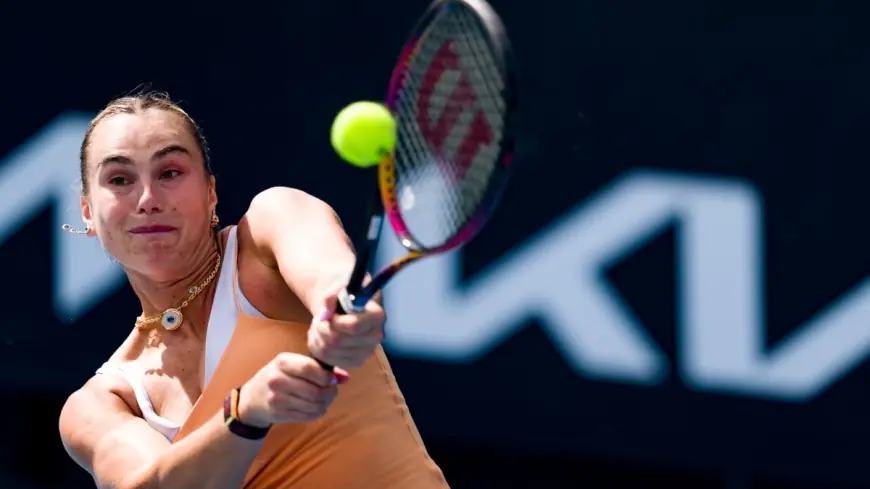
The WHOOP fitness band has become an unlikely headline at the Australian Open 2026, after top players were told they could not wear the device during matches under current Grand Slam rules. The dispute has spilled beyond gear preferences into a bigger question tennis has been dodging for years: who controls athlete health data in real time, and how fast the sport is willing to modernize.
Carlos Alcaraz and Aryna Sabalenka, both world No. 1s, have been among the most visible stars caught up in the decision, with the wearable suddenly treated less like a recovery tool and more like a potential rules violation.
A device issue collides with marquee Australian Open results
The timing has made the moment louder. Alcaraz, a central figure in the men’s draw, was told to remove his WHOOP band as the tournament reached its highest-pressure stages. He advanced through the first week with a straight-sets win over Tommy Paul, then powered into the semifinals with a dominant quarterfinal performance against Alex de Minaur. Sabalenka, meanwhile, continued her Melbourne run by defeating teenager Iva Jovic to reach the semifinals for the fourth straight year.
Neither player’s on-court results were decided by the wearable ruling, but the interruption drew attention precisely because it happened to players still deep in the tournament. Further specifics were not immediately available about whether any additional players were warned in later rounds beyond the high-profile cases already discussed publicly.
Why the “WHOOP watch” counts as a banned device at majors
A WHOOP band is not a traditional smartwatch with a screen. It is designed to be worn continuously to capture biometrics such as heart rate, sleep, strain, and recovery trends, feeding that information into an app for analysis. Many athletes treat it as a long-term training log rather than an in-match coaching tool.
The snag is that Grand Slams apply stricter rules than most week-to-week tour events. Wearables that can transmit data, display information, or communicate through vibration are treated cautiously because of concerns about live feedback and the sport’s long-standing restrictions on receiving instruction during play. Some specifics have not been publicly clarified about the exact threshold each major uses to decide whether a device is permitted, particularly when different models and settings can change what a wearable can do.
How the rule process works in tennis, and where the confusion starts
Tennis has overlapping layers of governance. The tours can permit certain equipment, and the sport’s rule structure can allow devices under specific conditions, but the four majors are governed separately and can enforce their own tournament regulations. In practice, that can mean a device is widely accepted all season, then suddenly prohibited at the biggest events.
Wearables also create an enforcement problem: even if a player insists a device is set to passive mode, an official may not be able to verify that instantly courtside. The debate has focused on whether features like haptic feedback are disabled and whether the device could be used to send signals. That uncertainty is part of why the wearable issue flared in Melbourne, with players saying they believed they were in compliance based on earlier guidance, only to learn Grand Slam rules were different.
A full public timeline has not been released for when the majors may formally revisit the policy.
What the Australian Open says it offers instead of wearables
Tournament organizers have pointed to alternative tracking systems already built into the event, including camera-based performance metrics that can measure movement patterns and shot data without requiring athletes to wear devices. From an integrity standpoint, venue-based tracking is easier to standardize because every player is measured the same way and no one has an equipment advantage.
But the players’ argument is that external tracking is not a complete substitute for internal biometric data. Heart rate, recovery markers, and physiological strain are personal health information, and players say they use it to manage workload, not to gain tactical coaching mid-point. That’s why the disagreement has landed as a philosophical clash: standardize everything for fairness, or let athletes access their own bodies’ signals the same way other sports increasingly do.
Who is affected, and why this debate is bigger than a wristband
This is not just a niche equipment story. It affects players and coaches who build training plans around biometric trends, especially during a two-week major where recovery between matches can be decisive. It also affects tournament officials tasked with enforcing rules consistently in real time, often with limited ability to confirm device settings or technical specs mid-match.
Technology companies and athlete-support teams are also stakeholders. Wearables are part of a growing ecosystem of performance services, and restrictions at majors can shape adoption, sponsorship expectations, and how openly athletes share data with their teams. Fans feel it too, indirectly, because the conversation ties into player welfare: if a tool helps an athlete avoid overtraining or spot warning signs early, banning it can look out of step with modern sports medicine.
What comes next for WHOOP technology in Grand Slam tennis
The next verifiable milestone will be the release of updated tournament regulations and player information materials ahead of the next Grand Slam, which will show whether wearables remain prohibited or whether a standardized approval path is introduced. For now, the Australian Open has exposed the gap between what players consider basic health tracking and what Grand Slam rulebooks still treat as a competitive risk—and that gap is unlikely to disappear quietly.