Highguard Launches Big, Then Bleeds Players Fast: What the “Charts” Show, When It Released, and the Fixes That Decide Its Future

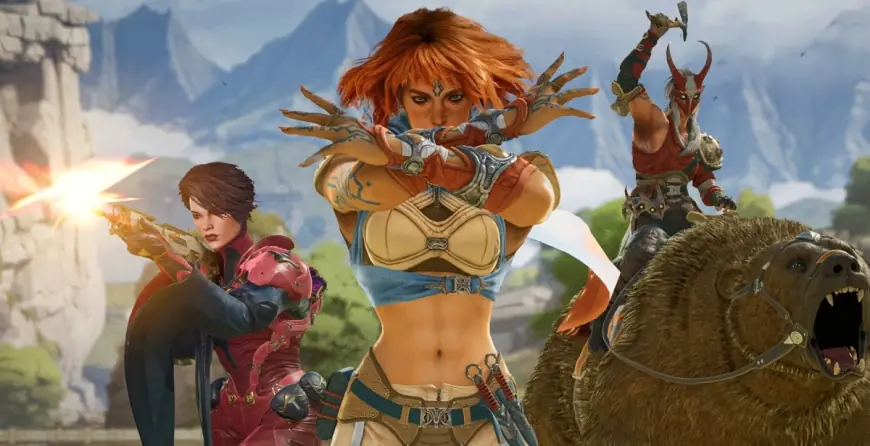
Highguard, a new free-to-play online shooter with raid-style objectives, is off to one of the most dramatic starts of 2026: a huge day-one rush, followed by a steep drop in concurrent players and a wave of early negative user feedback that turned its “release week” into a reputational fight.
The game released Monday, January 26, 2026, with the global unlock widely pegged at 1:00 p.m. Eastern Time for the PC launch window. It arrived on PC and current-generation consoles with cross-play, aiming to blend hero-shooter gunfights with base-raiding and extraction-like tension.
Highguard release date and rollout: why the debut felt like a stumble
Highguard didn’t enter the market quietly. It was teased months earlier during a major December industry showcase, where the first trailer drew skepticism from viewers who expected either a bigger reveal or a clearer explanation of what the game actually is.
That matters because this genre is crowded and impatient. If players show up expecting one thing and get another—small-team tactical play versus large maps, competitive PvP versus a raid loop—the first 48 hours can harden into a narrative that’s difficult to reverse.
By launch night, many early adopters were no longer judging “potential.” They were judging stability, matchmaking, and moment-to-moment feel.
Highguard “charts”: the player spike, the drop, and what it implies
Public player-count trackers for the PC version show a clear arc:
-
Peak concurrent players on launch day: roughly 97,000
-
Within the next day: the 24-hour peak fell to around 20,000
-
By late week: “right now” counts were hovering in the low-teens thousands, with day-to-day peaks well below the launch surge
Those numbers don’t mean Highguard is “dead.” They do mean the game is currently failing the most important test for free-to-play multiplayer: retention. Big launches are common. Sustained engagement is what pays for servers, content updates, and long-term support.
Why early feedback turned negative: stability, performance, and design friction
Three categories dominate the complaint loop so far:
1) Technical performance and server stress
Early players reported inconsistent performance, stutters, and queue issues—especially during the launch crush. A free-to-play game can survive rough balance. It struggles to survive if players can’t get stable matches.
2) Anti-cheat and “trust” concerns
A portion of the backlash centered on intrusive anti-cheat implementation. Even if the intent is protection, this topic tends to trigger instant distrust online—especially when messaging is vague or when players feel they’re being asked to accept heavy-handed software without a clear explanation.
3) Map scale versus match format
Highguard’s combat is built around small teams, but a number of players argue the maps are too large for the format, creating long downtime, awkward pacing, and fights that feel random rather than earned. In a competitive shooter, pacing is identity. If the loop feels slow, no amount of content roadmap can compensate.
Behind the headline: why Highguard is a bigger bet than it looks
This isn’t just a “new shooter” story. It’s a story about how the market punishes anything that looks derivative—and how expensive it is to compete in multiplayer in 2026.
Context
Players have more options than ever, and switching costs are near zero. If the first session is frustrating, the next download is a click away.
Incentives
-
The studio’s incentive is to prove it can deliver a durable live-service hit, not just a good concept.
-
Players’ incentive is to spend time where their time feels respected—stable servers, fair matchmaking, clear progression.
-
The wider industry’s incentive is to find the next “sticky” phenomenon, which increases pressure on every new launch to look like a breakout immediately.
Stakeholders
Beyond players, the stakeholders include competitive communities, content creators, and even console certification pipelines—because patch speed can determine whether a negative narrative hardens or softens.
Second-order effects
If Highguard is seen as a cautionary tale—big hype, bad first week—it can make audiences more skeptical of surprise drops and more demanding about transparency before launch.
What we still don’t know
The next few weeks will answer questions that matter more than the launch-day peak:
-
Can the team stabilize performance across hardware setups quickly?
-
Will matchmaking, pacing, and balance changes land fast enough to retain the “curious but unimpressed” crowd?
-
Does the raid layer evolve into something genuinely distinctive, or does it feel bolted onto standard shooter rounds?
-
Will the game’s live-service cadence meaningfully change the experience, or just add cosmetics and minor variants?
What happens next: realistic scenarios and triggers
-
A rebound built on fixes
Trigger: rapid performance patches, shorter queues, and meaningful pacing changes that make matches feel tighter. -
A slow bleed into niche status
Trigger: updates arrive, but they don’t address the core loop complaints—players don’t hate it, they just stop caring. -
A sharp turnaround via a “reset” update
Trigger: a major mid-season redesign that changes map flow, objectives, or match structure enough to feel like a new game. -
A monetization backlash
Trigger: if the store or progression design is perceived as predatory while gameplay issues remain unresolved. -
A competitive ceiling forms early
Trigger: ranked play and balance stabilize, but the overall audience stays small—creating a dedicated base without mainstream scale.
Highguard’s release date is now behind it. The real launch is what happens next: whether the game can convert a spectacular first-day crowd into a habit—and whether its developers can turn “rough first impression” into “fixed and worth another look” before players move on for good.