























Pauline Hanson movie draws fresh attention as “A Super Progressive Movie” sparks cancellations and a Holly Valance “Kiss Kiss” rewrite

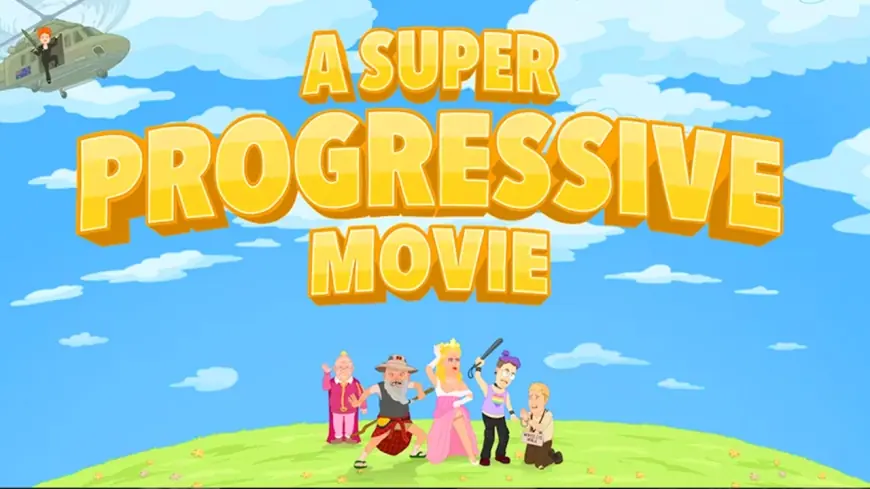
The pauline hanson movie at the center of Australia’s latest culture-war flare-up is an adult-rated animated satire titled A Super Progressive Movie, promoted by Senator Pauline Hanson and her political party, One Nation. In the last few days, the film’s rollout has been marked by abrupt screening cancellations in some cities, rapid rescheduling in others, and a companion track that has pushed the project from fringe curiosity into a national talking point.
Further specifics were not immediately available on the film’s verified ticket sales totals across all venues, beyond public claims made around individual sessions.
“A Super Progressive Movie” faces cancellations, then reappears on the schedule
The film’s launch week has been uneven. Multiple sessions in Melbourne and Hobart were pulled at short notice, then at least one major Melbourne run was later reinstated. Hanson has framed the cancellations as proof the film is being targeted by ideological opponents, while critics argue the content is deliberately provocative and built to inflame.
Public promotional descriptions position the story as a send-up of progressive politics, featuring a fantasy scenario where Hanson becomes prime minister. The plot leans on exaggerated stereotypes, and the marketing emphasizes “no-holds-barred” satire. Ticket prices listed for some sessions have been unusually high for a standard cinema release, with prices circulating in the range of roughly 99 to 129 Australian dollars depending on the venue and package.
Some specifics have not been publicly clarified, including the full list of confirmed session times across every city stop and whether additional cancellations or venue changes are planned.
Pauline Hanson song becomes the loudest headline: Holly Valance reworks “Kiss Kiss”
A second element has proven even more combustible: a pauline hanson new song performed by Holly Valance that reworks Valance’s early-2000s pop hit “Kiss Kiss” into a political parody tied to the film. The updated version has been promoted as part of the A Super Progressive Movie campaign and has quickly gone viral because of both the throwback hook and the lyrical targets.
The song has drawn sharp condemnation for content widely described as derogatory toward transgender people and the broader LGBTQ+ community. Supporters describe it as satire aimed at “woke” politics, while opponents say it crosses from satire into demeaning caricature. The most common public reaction has been less about the melody than about what the rewrite appears to normalize in pursuit of a punchline.
Key terms have not been disclosed publicly around who approved the final lyrical language and what, if any, internal standards were used to assess potential harm before release.
How a satire release turns into a numbers fight
The film-and-song pairing is designed for modern attention economics. A controversial release doesn’t only compete on reviews or word-of-mouth; it competes on visibility, shares, and the speed at which a talking point becomes a trending topic.
Here’s the mechanism. Digital download rankings can be influenced heavily by concentrated buying from highly motivated supporters, because a small surge in paid downloads within a short window can lift a track quickly. That’s different from broader streaming consumption, which usually reflects sustained listening by a much larger pool. The result is that a “number one” claim can be technically true in a narrow measurement while still not reflecting mass listening across the wider music market.
A similar dynamic plays out with event-style cinema sessions. When screenings are packaged as special events, priced above standard tickets, or marketed as a cultural flashpoint, the audience often self-selects into committed supporters and committed opponents. That raises the emotional temperature and makes cancellations, rescheduling, and protests part of the product story.
A full public timeline has not been released for how long the film will remain in theaters versus shifting to home viewing options.
Who is affected, and what comes next
Two groups feel the impact most immediately. LGBTQ+ Australians and their allies are affected because the publicity cycle can amplify content they view as stigmatizing, even when labeled as “comedy.” Cinemas, event hosts, and local staff are affected because controversial bookings can trigger security concerns, staff complaints, and reputational blowback, regardless of the venue’s personal views.
Politically, Hanson and One Nation benefit from oxygen: the controversy keeps the party in the conversation and helps mobilize supporters who see the project as defiance. Valance’s involvement also pulls in a separate audience that might not otherwise engage with an Australian political satire release, widening the reach through pop nostalgia.
The next verifiable milestone is the film’s next slate of scheduled public screenings and any additional venue decisions, alongside the next official chart and sales updates that will show whether the “Kiss Kiss” rewrite holds momentum beyond the initial surge.