Marvel Studios’ Wonder Man Arrives in the MCU With a Hollywood Satire Twist, Full-Season Drop, and a Clear Signal About the Next TV Strategy

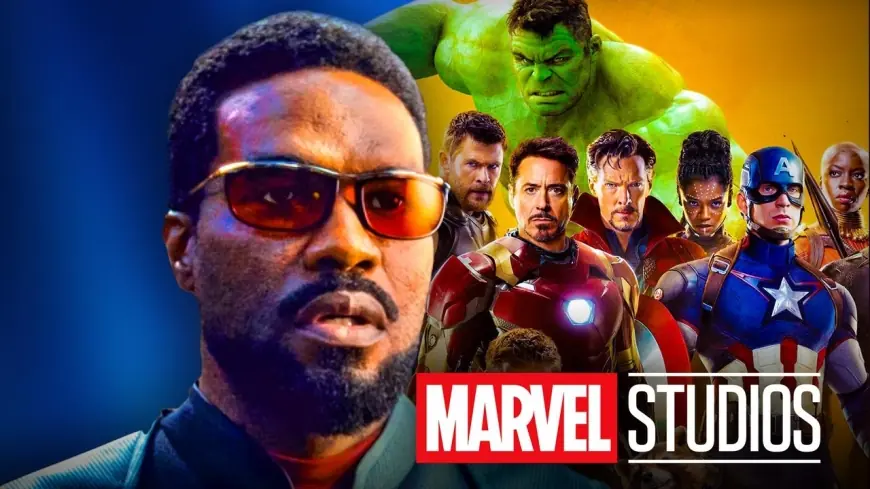
Marvel Studios’ Wonder Man is no longer a “coming soon” entry on the MCU calendar. The series officially launched on Tuesday, January 27, 2026, with a prime-time debut at 9:00 p.m. ET and a binge-friendly rollout that made all eight episodes available at once. For viewers searching release date and release time, that single detail answers two questions at once: it is out now, and it came online in an evening window designed to spike conversation immediately.
The bigger story, though, is what Wonder Man represents. This isn’t a typical capes-and-cameos play. It’s a meta Hollywood story about acting, image, and power, packaged inside superhero skin.
Wonder Man release date and release time in ET
Wonder Man’s debut was set for Tuesday, January 27, 2026 at 9:00 p.m. ET. Instead of weekly episodes, the entire eight-episode season dropped simultaneously.
That choice matters because it changes how the show is consumed and judged. Weekly releases build suspense and give a series time to grow. Full-season drops create a faster verdict: audiences binge, decide, and move on. Marvel is betting Wonder Man’s hook is strong enough to win viewers quickly, without relying on slow-burn momentum.
Wonder Man cast: Yahya Abdul-Mateen II leads a story about fame and hiding in plain sight
Yahya Abdul-Mateen II stars as Simon Williams, a struggling actor chasing a breakthrough role while keeping extraordinary abilities under wraps. The show leans into the irony: Simon wants to be seen, but his powers make him dangerous to notice. That tension is the engine of the series.
Ben Kingsley returns as Trevor Slattery, an actor whose career has long since peaked and who now becomes an unexpected partner in Simon’s pursuit of the spotlight. Their pairing is the show’s most obvious tonal statement: the series isn’t just about saving the day, it’s about surviving a ruthless industry with ego, insecurity, and reinvention.
The ensemble also includes Arian Moayed as Agent P. Cleary, plus X Mayo, Olivia Thirlby, and Byron Bowers. Zlatko Buric plays director Von Kovak, whose in-universe remake of a superhero film becomes the central professional obsession for multiple characters.
What the Wonder Man show is really doing inside the MCU
Wonder Man uses the entertainment industry as its battleground. Instead of treating celebrity as a byproduct of heroism, it treats celebrity as the problem: who gets believed, who gets hired, who gets protected, and who gets erased. The show even bakes in a key worldbuilding idea that shapes Simon’s choices: Hollywood has a stigma, and even an effective ban, around open superpowered presence. That pushes Simon into a double life that is less “secret identity” and more “career survival strategy.”
Behind the headline, this is Marvel testing a different kind of storytelling math:
-
Lower reliance on major crossovers
-
More emphasis on character voice and tone
-
A setting that can comment on Marvel’s own fame machine without breaking the universe
It’s a self-awareness play, but it’s also risk management. After years of interconnected plotting, a segment of the audience wants stories that don’t require homework. Wonder Man is built to be understood as a standalone ride while still feeling like it exists in the same world.
Why Marvel made Wonder Man now: incentives and pressure points
The incentives are straightforward. Marvel needs TV projects that can deliver three things at once: a clean entry point for casual viewers, a distinct vibe that doesn’t feel interchangeable, and a reason to keep paying attention between tentpole films. Hollywood satire is a way to do that without repeating the familiar “new hero learns powers, fights big threat” template.
Stakeholders are also pulling in different directions:
-
Fans want novelty but still expect MCU coherence.
-
Creators want room to experiment without being chained to continuity mandates.
-
The studio wants series that feel event-worthy without ballooning budgets.
Second-order effects matter too. If Wonder Man works, it becomes a template for more tone-forward projects that can live adjacent to the main saga instead of inside it. If it doesn’t, the lesson will be that experimentation is fine, but only when attached to bigger legacy characters.
What we still don’t know
Even with the season out, several key questions remain unresolved:
-
Whether the story is designed as a one-season arc or a springboard for more
-
How directly Simon Williams will intersect with other major MCU characters later
-
Whether the “Hollywood ban” concept will ripple into other MCU projects or remain specific to this series
What happens next: realistic scenarios to watch
-
Season two depends on retention, not buzz
Trigger: strong completion rates and sustained conversation in the two-week window after launch. -
Simon Williams becomes a future team piece
Trigger: a post-season narrative breadcrumb that positions him for a larger ensemble role. -
Marvel doubles down on “Spotlight-style” standalone stories
Trigger: positive reception for tone-first series that don’t demand crossover dependence.
Wonder Man’s opening move is clear: it arrived in one big drop, anchored by a lead who can play both vulnerability and swagger, and it’s using Hollywood as a mirror for superhero identity. Whether it becomes a lasting MCU pillar or a sharp one-off experiment will depend on how many viewers finish the season and ask for more.