Wordle Today: Puzzle 1685 Answer “FLAKY” Sparks a Familiar Mix of Groans, Grins, and Strategy Debates

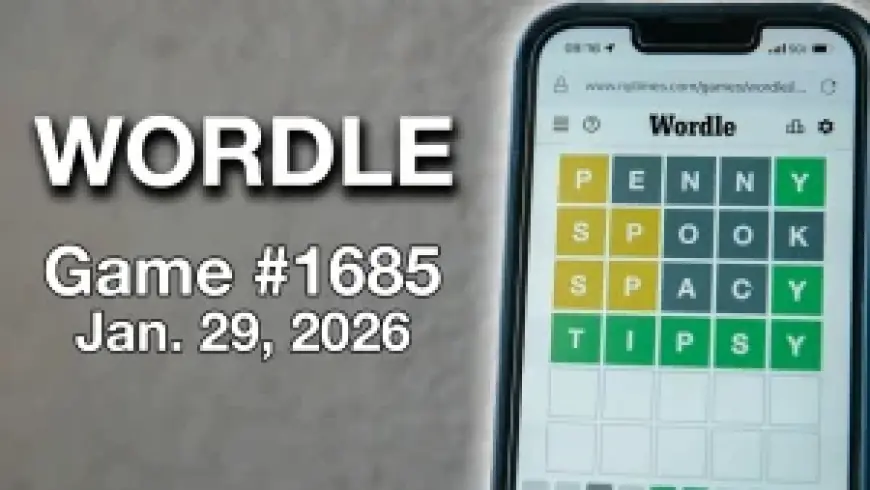
Thursday’s Wordle puzzle, released January 29, 2026 (ET), pushed players into a classic trap: a common word with an uncommon “shape.” The answer for Puzzle 1685 is FLAKY—a word most people recognize instantly once they see it, but one that can be surprisingly hard to land in six tries if your early guesses don’t surface the right consonant combo.
That dynamic is exactly why Wordle remains sticky years after its peak hype cycle. The daily puzzle still delivers a reliable micro-drama: five letters, a few minutes of tension, and a group chat (or family breakfast table) full of competing approaches.
Wordle answer today and why “FLAKY” played tougher than it looks
“FLAKY” is straightforward in meaning—typically describing something unreliable, inconsistent, or prone to falling apart. But as a puzzle answer, it has two features that spike difficulty:
-
The “FL” opening is less common among many popular starter words, meaning players who default to broad-vowel openers can burn attempts without narrowing quickly.
-
The “AKY” ending creates late-guess pressure. Once you spot the Y at the end, a lot of people pivot to a small set of possibilities, and it becomes easy to chase the wrong branch.
In other words, it’s the kind of Wordle that can feel “easy” if you find one key letter early—and brutal if you don’t.
Spoiler-safe hints that match today’s puzzle
If you’re looking for help without a full reveal, these clues point in the right direction:
-
The word is usually used critically, not as praise.
-
It can describe a person’s behavior or a material’s condition.
-
It starts with a consonant blend and ends with Y.
-
Think: inconsistent, unreliable, crumbly, depending on context.
If you already finished, you can see why the word is fair: it’s common vocabulary, not obscure slang. The challenge is purely letter-pattern.
Behind the headline: why Wordle still dominates daily attention
Wordle’s staying power isn’t just nostalgia. It’s a neat alignment of incentives:
-
Players get a low-stakes daily ritual that feels productive without demanding hours.
-
Communities get a built-in conversation starter that avoids spoilers through its shareable colored grid.
-
Puzzle curators get a live feedback loop: difficulty becomes instantly measurable through social chatter and completion rates.
-
The hosting business benefits from repeat visits and habit formation—Wordle isn’t just a game, it’s retention.
Second-order effects matter, too. Daily puzzle culture has become a “soft social network” for a lot of people—shared routines without the stress of deeper social media engagement.
What we still don’t know: the transparency gap players keep circling back to
Even for a simple five-letter game, there are recurring points of confusion that flare up whenever a puzzle feels unusually hard or unusually “vibe-y”:
-
How are answers selected and balanced over time?
Players debate whether the sequence is designed to mix easy days with tougher letter patterns or whether it’s more random than it feels. -
How are regional vocabulary differences handled?
A “common” word to one audience can be less common to another, and that affects perceived fairness. -
How consistent are stats and streak tracking across devices?
Whenever a streak resets unexpectedly, trust takes a hit—because for many players, the streak is the real game.
Those missing pieces don’t ruin the experience, but they shape how players interpret difficulty: as fun challenge, or as a frustrating “gotcha.”
What happens next: realistic scenarios for the Wordle ecosystem
Here are a few likely paths Wordle’s daily conversation takes from here, with clear triggers:
-
More “pattern trap” puzzles soon
Trigger: curators keep rotating in answers with tricky consonant blends that reward varied starter strategies. -
A renewed push for “no spoiler” etiquette
Trigger: more players share the actual answer too early, prompting backlash and tighter group norms. -
More players diversify their starter words
Trigger: puzzles like “FLAKY” punish vowel-heavy defaults, nudging people toward consonant coverage. -
Another flare-up over streak reliability
Trigger: any widespread stats glitch or login change that affects tracking, especially on mobile. -
Puzzle-adjacent content grows again
Trigger: continuing demand for hints, strategy breakdowns, and difficulty talk—because the meta-game is part of the fun.
Why it matters, even if it’s “just a game”
Wordle’s daily grip is a reminder that the internet doesn’t run only on big news. It also runs on rituals—small shared moments that let people feel connected without the heaviness of everything else. Today’s answer, “FLAKY,” fits that theme in an ironic way: the game itself is the opposite of flaky. It shows up every day, asks for five letters, and reliably gives people something to compare, laugh about, and carry into the rest of the morning.