

























Gold Price Today Holds Near Record Highs Around $5,440 as Investors Hedge Dollar Risk and Rate Uncertainty

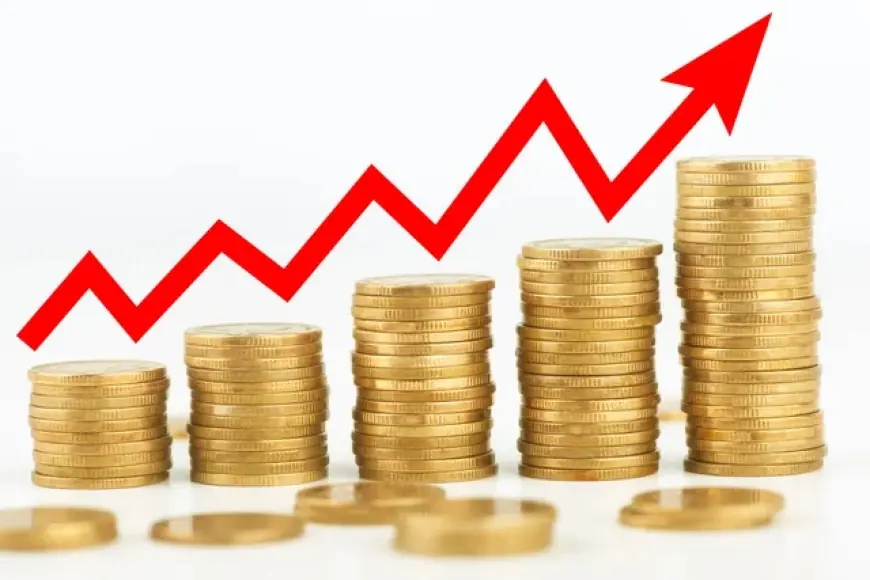
Gold price today stayed pinned near fresh record territory on Thursday, January 29, 2026 (ET), as buyers continued to treat bullion as insurance against currency swings, policy uncertainty, and headline risk. Spot gold was trading around $5,439 per troy ounce during the latest pricing window, up roughly 0.4% from the prior close and within a tight band that has repeatedly tested new highs.
For quick reference, $5,440 per ounce equals about $174.89 per gram. Prices move continuously, so exact quotes can change minute to minute.
Gold Price Today: Where spot and futures are trading
The market’s focus remains on two benchmarks:
-
Spot gold: about $5,439 per ounce, with the day’s range roughly $5,417 to $5,453 as traders bought dips and took profits near the highs.
-
Most-active U.S. gold futures: about $5,448 per ounce, essentially flat on the session and hovering just below the latest peak.
That small premium in futures versus spot is normal in a market where financing costs, delivery timing, and hedging demand influence contract pricing.
What’s driving the move: the three forces pushing gold higher
Gold’s surge is rarely about a single catalyst. Right now, three pressures are stacking in the same direction:
A weaker-dollar narrative, even when the dollar steadies intraday
Gold often benefits when investors worry about purchasing power, fiscal direction, or currency volatility. Even short-lived dollar rebounds have struggled to knock gold down meaningfully, which suggests demand is broader than a one-day trade.
Rate-path uncertainty after the Fed’s latest pause
The Federal Reserve’s decision to hold rates steady this week reinforced a “wait and see” stance. Gold tends to like that environment because it keeps markets debating how quickly policy may ease later, and it can cap real yields that otherwise compete with non-yielding assets like bullion.
Safety buying that’s turning structural
A classic “risk-off” spike usually fades quickly. What’s different now is persistence. Gold is behaving less like a panic button and more like a portfolio allocation shift, with buyers willing to hold through pullbacks.
Behind the headline: why this rally feels different
A move to the mid-$5,000s changes the psychology of the gold market.
Context
When prices break into a new zone, there are fewer obvious “anchor” levels from recent history. That can increase volatility because traders have to discover support and resistance in real time.
Incentives
-
Long-term holders are buying gold as credibility insurance: not a bet on apocalypse, but a hedge against policy mistakes and sudden currency repricing.
-
Short-term traders are riding momentum, which can amplify both rallies and sharp pullbacks.
-
Central banks and reserve managers have incentives to diversify, and gold is the simplest non-sovereign reserve asset.
Stakeholders
Higher gold prices affect far more than investors: jewelry demand can soften as consumers balk at sticker shock, refiners and fabricators face working-capital pressure, miners see revenue tailwinds, and policymakers watch gold as a rough barometer of confidence.
Second-order effects
A sustained gold surge can tighten financial conditions indirectly by signaling caution, strengthening the “store of value” narrative across other hard assets, and drawing capital away from riskier corners of the market.
What we still don’t know
Several missing pieces will determine whether gold consolidates or makes another leg higher:
-
Whether the dollar stabilizes meaningfully or resumes sliding
-
Whether real yields drift lower or rebound on stronger data
-
Whether physical demand holds up at these levels or becomes price-sensitive
-
Whether buying is broad-based or increasingly concentrated in momentum positioning
-
Whether policymakers change tone in a way that resets rate expectations
What happens next: realistic scenarios with triggers
-
Sideways consolidation near the highs
Trigger: the dollar stops weakening and yields stabilize, cooling momentum without breaking the uptrend. -
Another push to new records
Trigger: softer economic data or clearer expectations for rate cuts later in 2026, pulling real yields down. -
A fast pullback that feels sudden
Trigger: crowded positioning meets a sharp dollar rebound or a surprise shift in rate expectations. -
Choppy trading with big intraday swings
Trigger: mixed economic signals keep both buyers and sellers active, creating wide ranges but little net direction. -
A broader “hard-asset” catch-up trade
Trigger: renewed inflation anxiety or credibility concerns push more investors to raise commodity and metals exposure.
Gold price today is telling a simple story: investors are paying up for optionality. Whether that premium grows from here depends less on jewelry demand or mine supply in the near term, and more on the next few weeks of currency moves, rate expectations, and confidence in the policy outlook.