Dazzle Potential Mates With Invisibility Patterns: A New Flirting Technique

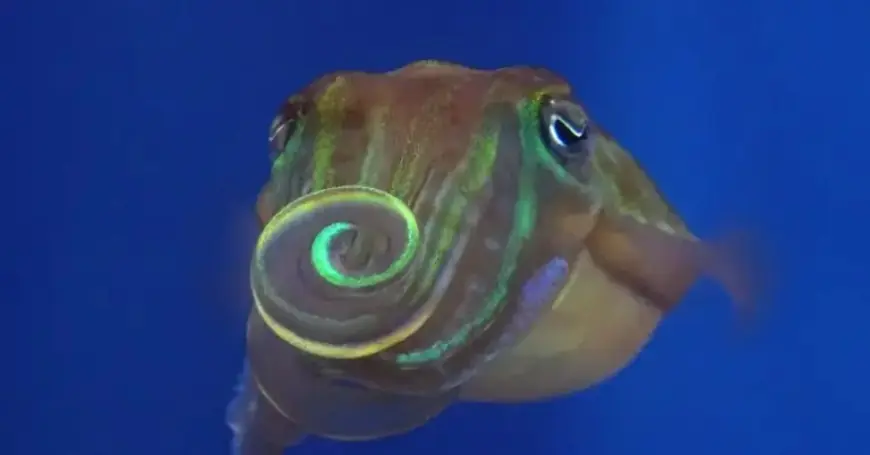
Recent research has unveiled a fascinating new flirting technique employed by cuttlefish. These marine creatures utilize polarized light patterns in their courtship displays, unseen by the human eye. The study, published in the Proceedings of the National Academy of Sciences, provides groundbreaking evidence of this remarkable behavior.
Dazzling Potential Mates with Invisibility Patterns
Cuttlefish, which belong to the same family as squids and octopuses, have unique adaptations for mating. Male cuttlefish display specialized, elongated arms during courtship. By manipulating light, they create patterns that are only visible to certain animals capable of perceiving polarized light.
The Science Behind Polarized Light
Humans cannot discern between different orientations of light waves. In contrast, animals such as certain fish and insects can detect these variations. When light is filtered and causes some orientations to be blocked, it becomes polarized, adding contrast in the visual perception of those that can see it.
- Polarized light provides texture and contrast.
- Animals use polarized patterns for communication and attraction.
Research Findings
Dr. Arata Nakayama, a research fellow at the National Taiwan Normal University, led the study. He spent more than a month observing male cuttlefish at the Asamushi Aquarium to document their mating displays. He used specialized cameras to capture both visible and polarized light patterns.
During the courtship display, the male cuttlefish shrinks its pigment cells, revealing reflective cells that create a polarized light pattern. This pattern varies depending on the female’s perspective as she typically watches from below.
Implications of the Study
The discovery of how cuttlefish use polarized light for mating signals opens new avenues in understanding animal communication and sensory capabilities. Roger Hanlon, a senior scientist at the Marine Biological Laboratory, noted the potential applications of this research in bio-inspired engineering and military technologies.
Dr. Nakayama emphasized that studying these unique displays provides insights into evolutionary adaptations among different species. Understanding how animals stand out in their environments enhances our knowledge of natural selection and communication methods.
The remarkable mating technique of cuttlefish showcases the intricate relationship between sensory perception and communication in the animal kingdom, inviting further exploration into this captivating realm.