China’s Thermal Battery Innovation Poised to Transform Energy Industry

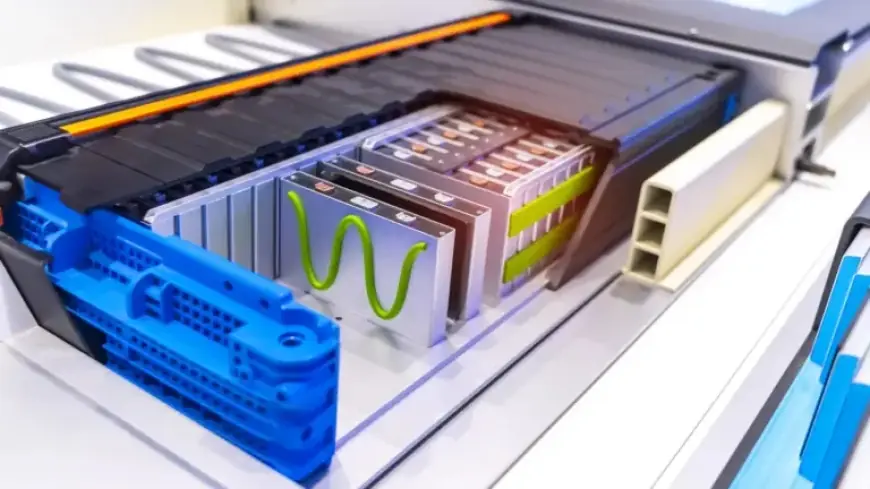
Recent advancements in energy storage technology are evolving rapidly, with significant attention on thermal batteries. These batteries have the potential to meet diverse energy requirements, especially in extreme temperature environments. New research from Chinese scientists may address the long-standing challenges associated with thermal batteries, particularly the shuttle effect.
Understanding the Shuttle Effect in Thermal Batteries
The shuttle effect is a critical issue affecting thermal batteries. It occurs when intermediate polysulfides within the battery dissolve, leading to irreversible sulfur loss and decreased charge efficiency. Researchers have made various attempts to mitigate this problem by experimenting with different sulfur electrode designs.
Innovative Research from China
A research team led by Professor Wang Song and Zhu Yongping from the Institute of Process Engineering at the Chinese Academy of Sciences has made notable progress. Their recent study, published in Advanced Science, proposes a new approach to enhance thermal battery performance. By introducing a specialized barrier in the battery’s design, they aim to limit material loss caused by the shuttle effect.
- The new barrier is constructed using covalent organic frameworks (COFs).
- COFs create a porous structure that allows for selective ion movement.
- This innovation enables better control over the internal materials of the thermal battery.
Potential Applications of Thermal Batteries
Thermal batteries are particularly valuable in scenarios where traditional batteries fail, such as extreme temperatures. Their resilience makes them suitable for various applications, including:
- Military operations
- Aerospace systems
- Deep-well drilling equipment
These batteries have already demonstrated reliability in demanding environments, forcing researchers to find ways to enhance their mainstream usage. By overcoming the shuttle effect, the new research lays the groundwork for the future development of high-density thermal batteries.
The Future of Thermal Battery Technology
While this research does not fully resolve the shuttle effect, it provides essential insights for advancing thermal battery technology. Continued exploration into innovative designs and materials could revolutionize energy storage solutions beyond conventional lithium-based options.
As scientists and engineers build on this foundation, the potential for thermal batteries to transform various industries looks promising. The ability to operate in challenging conditions opens up new possibilities for energy storage systems across diverse sectors.