UNH stock swings ahead of earnings as Medicare Advantage rate shock rewrites the 2027 outlook

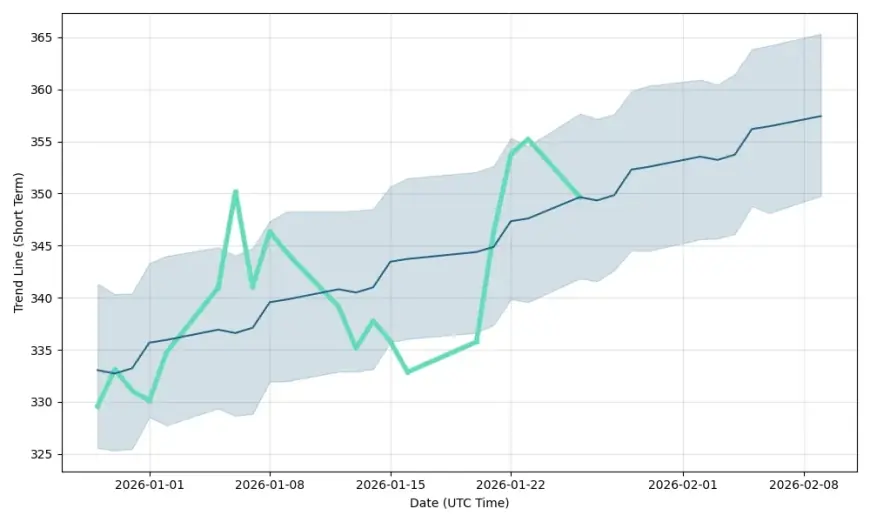
UNH stock traded lower into the close Monday, January 26, 2026, as investors weighed two forces that can move the entire managed-care sector at once: a fresh federal proposal that would keep 2027 Medicare Advantage payment growth near flat, and UnitedHealth’s own earnings and 2026 guidance update scheduled before the market opens Tuesday, January 27, 2026.
As of late Monday trading (about 4:15 p.m. ET), UNH was around $351.64, down roughly 1.3% on the session, after an unusually wide intraday range that at one point stretched from roughly $320 to $355 on heavy volume.
What moved UNH stock today
The immediate catalyst was a new proposal for 2027 Medicare Advantage payment rates that, as currently outlined, implies an estimated average increase of about 0.09%. That figure landed well below what many investors had been assuming, and the proposal also targets a long-debated “chart review” style billing practice that insurers use to document diagnoses and adjust risk scores.
For companies like UnitedHealth, Medicare Advantage is a major earnings engine. When the market sees potential pressure on how fast payments grow—and on how risk adjustment can be documented—the first reaction is usually a reset of forward profit expectations, even if final numbers will not be set until later.
Why this hits UnitedHealth harder than a typical policy headline
UnitedHealth has been trying to convince investors that 2025’s medical-cost turbulence was a fixable shock rather than a new normal. That makes guidance the main event, not just reported results. In other words, the stock is trading on management’s confidence in the path back to steadier margins.
The problem is that the 2027 proposal introduces a new “speed bump” into that recovery narrative:
-
Lower rate growth can cap benefit richness, forcing plans to choose between richer perks, premium stability, and margin protection.
-
Risk-adjustment rule tightening can reduce the upside from coding intensity and analytics, which has been a sensitive topic for the entire industry.
-
Pricing decisions get harder when the revenue baseline is uncertain, especially if medical utilization remains sticky.
Behind the headline: incentives, winners, losers, and the real fight over Medicare Advantage
This moment isn’t just about one day’s price action. It’s about who gets to capture value in a program that sits at the center of U.S. healthcare spending.
Incentives
-
Federal policymakers are signaling they want tighter payment accuracy and less reliance on coding as a competitive advantage.
-
Insurers want predictability and enough cushion to fund benefits that keep enrollment rising.
-
Investors want evidence that 2025’s cost pressures were cyclical, not structural.
Winners and losers if the proposal holds
-
Potential winners: seniors if plan designs shift toward simpler benefits and less “gaming” of documentation; taxpayers if payment growth slows; smaller or more operationally disciplined plans if complexity is reduced.
-
Potential losers: insurers with business models heavily optimized around risk adjustment; members if benefit generosity gets trimmed to protect margins; providers if payer negotiations tighten further to offset rate constraints.
Second-order effects
-
Expect more aggressive provider contracting, renewed focus on care management and pharmacy economics, and sharper internal scrutiny of which member segments are profitable under tighter benchmarks.
-
If benefits compress, churn could rise, which increases marketing and onboarding costs—another hidden margin headwind.
What we still don’t know
A few missing pieces will determine whether Monday’s move is the start of a longer rerating or just earnings-week volatility:
-
How UnitedHealth frames 2026: Does management lean into stabilization, or acknowledge that cost and policy risks remain elevated?
-
How much of the 2027 proposal is negotiable: Proposals can evolve materially before finalization.
-
How regulators and lawmakers escalate scrutiny: A Senate committee report earlier this month criticized “aggressive strategies” used to maximize Medicare Advantage risk scores. Even without formal wrongdoing findings, repeated scrutiny can raise compliance costs and constrain tactics.
What happens next: scenarios to watch this week
-
Guidance reassures, stock stabilizes: If UnitedHealth outlines credible margin improvement drivers and cost trends cool, the market may treat the 2027 proposal as manageable noise.
-
Guidance disappoints, policy fears amplify: If 2026 outlook comes in cautious, investors may conclude that both costs and policy are tightening at the same time.
-
Sector-wide repricing: Even strong company-specific execution can be overwhelmed if investors decide the Medicare Advantage “rules of the road” are changing.
-
Narrative shifts to Optum diversification: If insurance margin visibility drops, more attention will move to the services and pharmacy businesses as earnings stabilizers.
Why it matters for investors and employees
UNH stock isn’t just a single-company ticker—it’s a bellwether for how Wall Street is valuing the managed-care model under changing cost trends and changing policy rules. Monday’s volatility shows the market is no longer willing to treat Medicare Advantage growth assumptions as a steady escalator.
For investors, the key question is simple: does Tuesday’s guidance paint a path where operational improvements can outrun policy tightening? For employees and partners, the practical consequence could be an internal pivot toward tighter cost discipline, more automation, and more selective growth—especially in Medicare Advantage markets where benefit pressure rises fastest.