UNH stock steadies in the mid-$300s as UnitedHealth prepares to set the tone for 2026

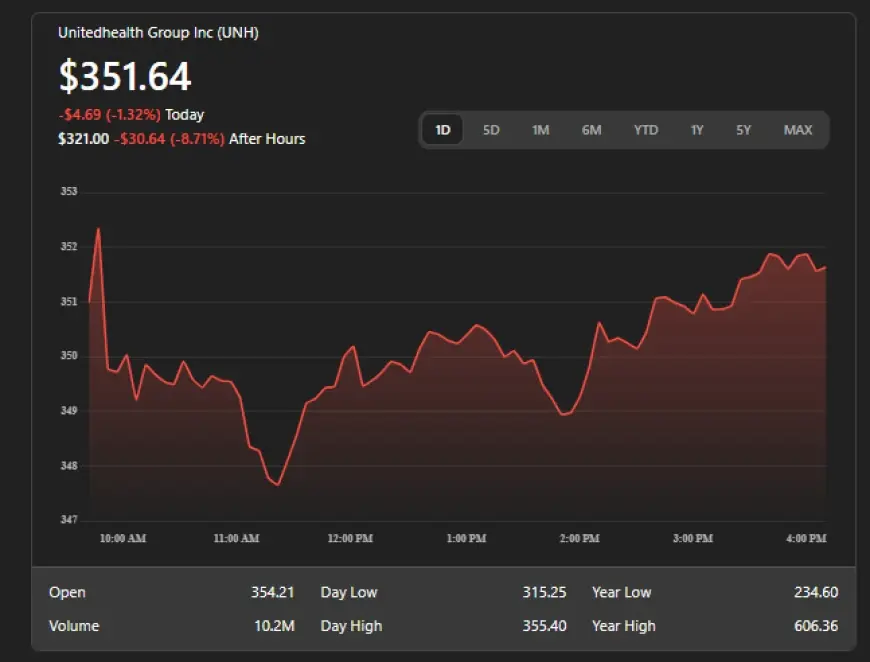
UNH stock is trading with a “wait-for-the-guide” feel heading into UnitedHealth’s full-year results and 2026 outlook, after a soft start to the week that left shares hovering around the mid-$300s. The next move is less about what happened last quarter and more about what management says comes next—especially on medical cost trends, pricing power, and the durability of earnings as insurers navigate another year of high care use.
Investors are watching this report closely because UnitedHealth often functions as a bellwether for the managed-care group. When it signals stability, the sector tends to breathe easier. When it hints that costs are outrunning pricing, the whole space can re-rate quickly.
What’s new for UNH stock: guidance day, not headline day
UnitedHealth is scheduled to release full-year 2025 results and provide 2026 financial guidance before the market opens Tuesday, January 27, 2026, followed by a management call at 8:00 a.m. ET. That timetable matters because it concentrates the “price discovery” window into premarket trading and the first hour after the open, when liquidity and emotion can amplify the initial reaction.
The market’s focus is likely to land on three numbers embedded in the guidance framework:
-
Expected medical cost trends (how fast claims are rising)
-
Membership expectations across key books of business
-
Operating margin trajectory at both the insurance arm and Optum
If those inputs look controllable, “defensive compounder” narratives can return. If they look unstable, UNH can trade more like a cyclical name than a defensive one.
The core debate: medical cost trend versus pricing catch-up
The simplest way to frame the story is this: utilization has been high, and the industry has been repricing to catch up.
In prior commentary, UnitedHealth has pointed to Medicare Advantage pricing assumptions for 2026 that reflect a meaningfully higher medical cost trend than what the company experienced earlier in 2025—an acknowledgment that the system is seeing more care, and that provider billing and coding patterns can intensify that trend.
For investors, the question isn’t whether costs are elevated—it’s whether the company has successfully priced for it without sacrificing competitiveness. If pricing lags utilization, margins compress. If pricing gets ahead of utilization, membership can soften. UnitedHealth needs to persuade the market it can thread that needle.
Behind the headline: incentives, stakeholders, and where the leverage sits
Context: The managed-care industry is in a post-pandemic reset. People are using more outpatient procedures, more specialist care, and more complex therapies. That pushes claims up even when membership is steady.
Incentives:
-
Management wants to show that 2026 pricing and benefit design will restore predictability—without sounding like it’s pulling back from growth.
-
Investors want fewer surprises: stable claims trends, clear pricing logic, and a margin path they can model.
-
Regulators and policymakers are under pressure to show oversight of large insurers and the Medicare ecosystem, which can influence sentiment even when it doesn’t change quarterly results.
Stakeholders: Seniors choosing Medicare plans, employers budgeting health benefits, providers depending on clean claims flow, and shareholders relying on consistent cash generation all have skin in the 2026 outlook.
Medicare Advantage: tailwind on paper, complexity in practice
For 2026, average Medicare Advantage payment rates are projected to rise by roughly 5% versus 2025. That’s a headline positive, but it doesn’t automatically translate into profit growth. The actual outcome depends on how that increase lines up with real-world medical inflation, utilization intensity, and benefit richness.
A key second-order effect to watch: if insurers respond to cost pressure by narrowing networks, adjusting benefits, or exiting pockets of unprofitable business, the competitive map can change quickly—affecting not only membership but also provider negotiations and local market dynamics.
What we still don’t know
Even with a clear schedule, several missing pieces will determine how the market interprets the report:
-
Whether medical cost trends are stabilizing, still accelerating, or uneven across products
-
How confident management sounds about pricing discipline in employer plans for 2026
-
Whether membership is shifting toward higher-acuity populations that carry more claims risk
-
How much residual operational and legal overhang remains tied to the broader ecosystem disruption caused by last year’s Change Healthcare cyberattack and its aftermath, including remediation and risk controls
What happens next: 5 realistic scenarios and their triggers
-
Guidance supports a “back to normal” margin story
Trigger: medical cost trend described as manageable and consistent with 2026 pricing. -
Guidance is stable but cautious
Trigger: management emphasizes elevated utilization but insists it’s priced in; stock may chop rather than trend. -
Guidance disappoints on cost trend
Trigger: higher-than-expected claims outlook or a slower margin recovery path; downside can be sharp. -
Membership trade-offs become the headline
Trigger: any sign the company is choosing margin over growth in specific segments. -
Risk narrative resurfaces
Trigger: expanded commentary on regulatory scrutiny, cybersecurity controls, or litigation exposure that changes the market’s confidence in “clean” earnings power.
Why it matters beyond the ticker
UNH stock isn’t just a read on one company—it’s a read on whether the private insurance model can keep pace with the reality of higher care use without handing the bill entirely to employers, seniors, and taxpayers. Tuesday’s guidance will help set expectations for premium trends, benefit design, and provider negotiations in 2026—and it will signal whether the sector’s recent volatility is a temporary adjustment or a longer reset in profitability.