Scientists Explore 2,000-Year-Old Artifact Likely an Ancient Battery

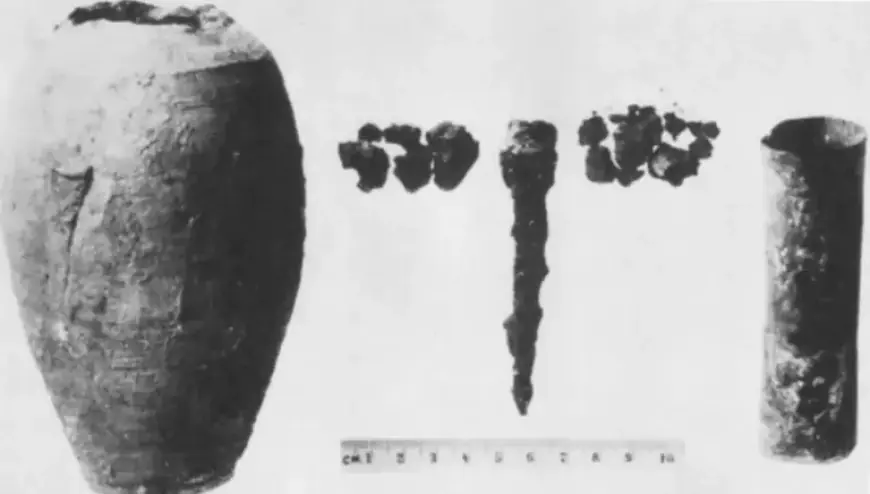
In Iraq, a 2,000-year-old artifact has sparked a lively debate among scientists. Known as the “Baghdad battery,” this object, discovered nearly a century ago, consists of a clay jar that once contained a copper vessel along with an iron rod. Some researchers believe this arrangement suggests it could function as an ancient energy storage device.
Understanding the Baghdad Battery
The Baghdad battery’s design raises the question: was it an early form of battery? Independent researcher Alexander Bazes recently conducted tests, suggesting this artifact could generate more power than previously thought. His findings indicate that the clay jar’s porous exterior acted as a separator. By enclosing an electrolyte, possibly lye, this configuration might have allowed for the production of 1.4 volts, comparable to a modern AA battery.
Research Findings
- Bazes proposes the copper vessel and iron rod created two cells, thereby enabling electrical output.
- Other theories suggest the artifact’s purpose was ritualistic rather than utilitarian.
While Bazes supports the idea of the Baghdad battery as a power source, he contests alternative theories. Some fringe archaeologists have suggested it served to electroplate jewelry. Instead, Bazes hypothesized it was used to “ritually corrode” prayers written on paper, with the corrosion symbolizing an energetic influence.
Contrasting Views in Archaeology
Contrarily, University of Pennsylvania archaeologist William Hafford challenges Bazes’s conclusions. He emphasizes that the artifact likely served as a sacred jar for storing prayers, not a battery. Hafford cites similar discoveries in the region, including a clay jar containing ten copper vessels, as indications of its true use.
According to Hafford, the iron rod’s role was likely ceremonial. He states that prayers were placed inside the jar, sealed, and then buried as part of a ritual to connect with chthonic deities. This perspective highlights the complex interplay between technology and belief systems in ancient cultures.
Conclusion
The Baghdad battery continues to intrigue researchers. As investigations unfold, the debate surrounding its purpose and capabilities remains unresolved. Both perspectives offer valuable insights into the artifact’s historical and cultural significance.