Woodrow Wilson High School lockdown in East Dallas puts student safety—and neighborhood spillover—back in focus

A violent incident near Woodrow Wilson High School in East Dallas jolted a normal dismissal day into a lockdown, forcing families into the familiar scramble of texts, traffic, and uncertainty. Even when gunfire happens off campus, the consequences land inside classrooms: lockdown procedures activate, nearby streets clog, and students absorb the stress in real time. Here’s the part that matters: the episode highlights how quickly public safety events in the surrounding blocks can disrupt learning and strain school communications.
The immediate impact on students, parents, and the campus perimeter
Lockdowns are designed to be simple—stop movement, secure rooms, wait for clearance—but the experience rarely feels simple for the people living through it. Students lose access to routine supports (moving between classes, meeting siblings, catching buses). Parents converge at once, often with incomplete information, and the roads around a campus can turn into a bottleneck that slows everything down.
It’s easy to overlook, but the perimeter is the story: a park, a parking lot, and a few blocks of street become the difference between “outside the school” and “inside the school day.” When police activity concentrates across the street, the school still has to manage safety, crowd control, and reunification—without turning a volatile situation into panic.
For families, the stress isn’t only the event itself; it’s the information gap. When a lockdown starts, students may hear sirens, see activity out windows, or learn fragments through friends. That gap is where rumors thrive, and where schools feel pressure to communicate quickly while details are still coming together.
What happened near Woodrow Wilson High School in Dallas
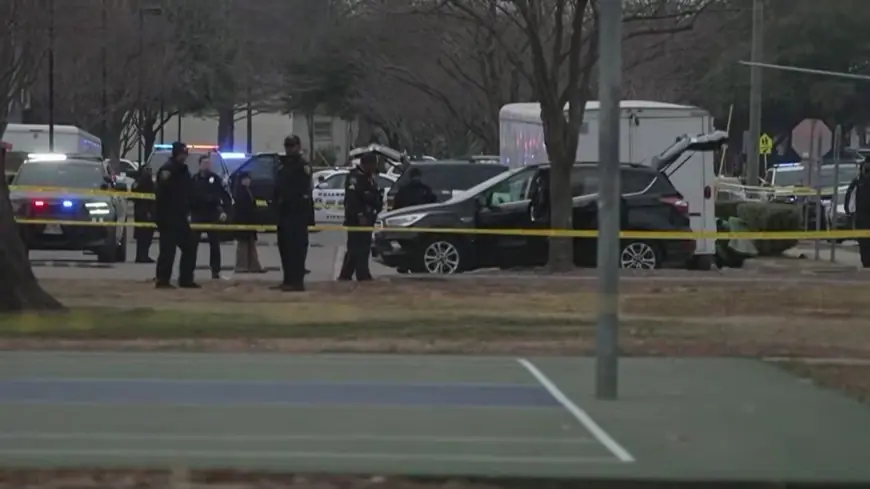
On Thursday afternoon, gunfire was reported in the area across from Woodrow Wilson High School, near a park and along South Glasgow Drive. Police response grew quickly, and the high school moved into lockdown while officers secured the scene. Authorities later confirmed that one person was shot and died after being taken to a hospital, and that a suspect was taken into custody.
Officials indicated the shooting occurred off school property, and it was not immediately clear whether students were involved. Students were released around the normal dismissal window, but the surrounding area remained heavily affected by police activity and street restrictions, complicating pickups and travel through the neighborhood.
A quick timeline of how the afternoon unfolded:
-
Mid-afternoon: Emergency calls bring police and medical responders to the area near the park across from the school.
-
Shortly after: The school initiates a lockdown as officers work nearby.
-
Late afternoon: Students begin leaving campus around typical dismissal time, with pickup traffic slowed by closures and congestion.
-
By early evening: Police confirm a death and say a suspect is in custody; broader details remain limited.
The real question now is how quickly officials can clarify key unknowns—especially whether anyone connected to the schools was involved—and how the campus community will be supported the next school day after a high-stress lockdown.
In the near term, the practical issues are straightforward: families want clear guidance on dismissal, safe routes, and what students should do if they’re walking, biking, or waiting near the park corridor. The longer-term issue is harder: repeated disruptions can normalize fear and chip away at students’ sense of safety, even when the danger isn’t inside the building.
Woodrow Wilson High School will likely face a familiar set of next-day challenges: making space for students to process what happened, addressing parent concerns about campus-adjacent safety, and coordinating with law enforcement on any updates—while still trying to keep the school day feeling like a school day.