Chagos Islands Deal Explained: Where the Chagos Islands Are, Why Diego Garcia Matters, and Why Trump Is Attacking the UK–Mauritius Plan

The Chagos Islands have jumped back into the headlines because a sovereignty deal between the UK and Mauritius is moving through the final political stages while keeping the Diego Garcia military base operating under a long lease. Donald Trump has now turned the Chagos islands deal into a wider argument about national security, warning that handing sovereignty to Mauritius is a strategic mistake and linking it to his broader “security-first” messaging in global hotspots.
At the center of the dispute is a familiar triangle: UK legal and diplomatic pressure to resolve a long-running sovereignty fight, Mauritius’ claim to the archipelago, and the U.S.–UK priority of protecting the Diego Garcia base that supports operations across the Middle East, East Africa, and South Asia.
Where are the Chagos Islands and what is Diego Garcia?
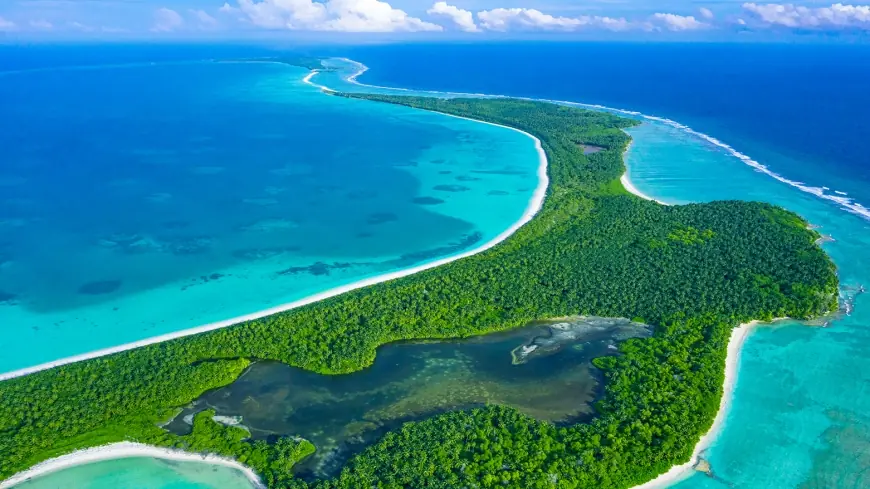
The Chagos Archipelago is a chain of atolls in the central Indian Ocean, roughly south of the Maldives and about halfway between East Africa and Indonesia. It’s remote, low-lying, and scattered, but geopolitically outsized because Diego Garcia, the largest island, hosts a major U.S.–UK military facility.
Diego Garcia is not a symbolic outpost. It’s a logistics and power-projection hub used for air and naval operations, long-range deployments, and rapid response across multiple regions. That’s why any change in sovereignty language around the archipelago instantly becomes a security story, even if base access is contractually protected.
-
The Chagos Islands are a remote Indian Ocean archipelago south of the Maldives.
-
Diego Garcia is the largest island and the site of a major U.S.–UK military base.
-
The UK–Mauritius deal transfers sovereignty while leasing Diego Garcia back long-term.
-
UK ministers argue the deal protects the base from future legal and diplomatic threats.
-
Trump is framing the deal as a weakness signal in a world of great-power competition.
The Chagos islands deal: what the UK and Mauritius agreed to
In practical terms, the chagos island deal separates “who holds sovereignty” from “who controls the base.” The UK has agreed to hand sovereignty of the Chagos Islands to Mauritius while keeping Diego Garcia operating under a lease arrangement designed to preserve the base’s mission and restrict hostile influence.
The political argument inside the UK is about whether that structure genuinely locks in security or whether it creates a future vulnerability. Supporters say it stabilizes the base by removing a longstanding international dispute. Critics say changing sovereignty at all opens the door to pressure, renegotiation, or interference down the line even with lease language in place.
The deal is also entangled with the fate of displaced islanders and their descendants, many of whom argue they were excluded from key decisions and fear the arrangement could complicate resettlement or access questions.
Why the Chagos Islands UK story is exploding now
Two things are happening at once:
First, the UK’s parliamentary and procedural steps are turning the agreement from a diplomatic headline into a binding policy path, forcing politicians to take a clear position. Second, Trump has injected the issue into U.S. political messaging, attacking the UK approach and treating it as evidence that allies can make security decisions he believes are reckless.
Senior UK figures, including Darren Jones, have responded by insisting the agreement is already set and that the purpose is to secure the Diego Garcia base for roughly the next century. The government line is that resolving sovereignty is part of protecting the base, not endangering it.
Trump news: why Donald Trump is attacking the Chagos island deal
Trump’s core claim is simple: transferring sovereignty is unnecessary and projects weakness. He has argued that rivals pay attention to symbolic retreats and that strategic assets should be held as tightly as possible, even if operational control remains unchanged.
This matters for two reasons. It puts pressure on the UK politically by amplifying domestic critics, and it complicates alliance messaging because it pits a blunt U.S. position against a UK policy framed as strengthening national security. It also drags the Chagos question into a larger Trump narrative about how he would handle contested territories and strategic choke points.
Historical context: why Chagos remains a live international dispute
The Chagos Islands were separated from Mauritius in the 1960s, and the local population was removed as the Diego Garcia base was built in the late 1960s and 1970s. For years, international bodies and courts have urged the UK to end its administration of the archipelago, creating steady legal and diplomatic pressure that the UK government says could eventually threaten the base’s long-term stability if left unresolved.
That unresolved history is why today’s deal is framed as “closing a file” that never stopped generating legal risk and political controversy.
FAQ: Chagos, Mauritius, and Diego Garcia
What is the Chagos islands deal?
A plan for the UK to transfer sovereignty of the Chagos Islands to Mauritius while keeping Diego Garcia operating under a long-term lease for U.S.–UK military use.
Where are the Chagos Islands?
In the central Indian Ocean, south of the Maldives and between East Africa and Indonesia.
Why is Diego Garcia so important?
It’s a major military hub that supports operations and logistics across multiple regions, making it strategically valuable for the U.S. and UK.
Who is Darren Jones in this story?
A senior UK minister who has defended the deal publicly and argued it secures the base long-term despite Trump’s criticism.
What to watch next is less about rhetoric and more about mechanics: the remaining legislative steps, any legal challenges tied to displaced Chagossians’ rights, and how firmly the final text locks in base access and security restrictions. If the deal’s safeguards are seen as airtight, the controversy may fade into diplomatic background noise; if loopholes or political backlash grow, the chagos islands deal could become a recurring flashpoint in UK–U.S.–Mauritius relations.