Resident Evil 7 Thrives on Switch 2, While Village Disappoints

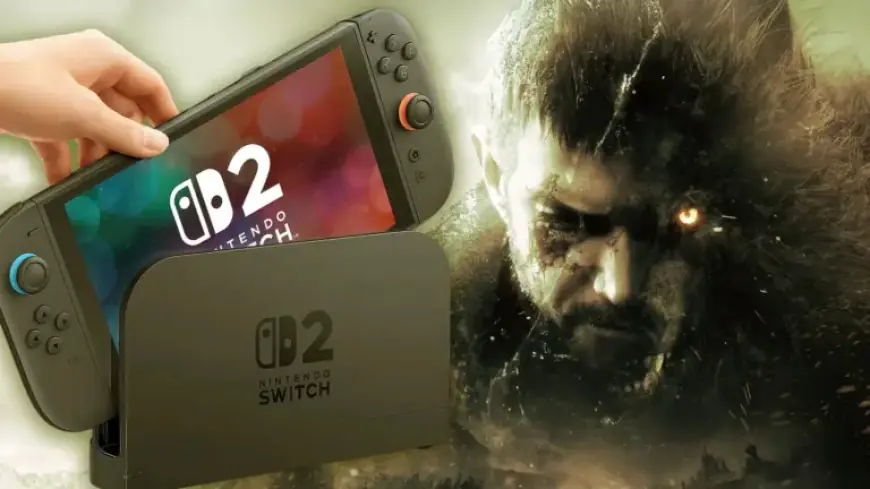
Capcom recently released versions of Resident Evil 7 and Resident Evil Village for the Switch 2 on February 27th. While both titles brought significant excitement, they delivered varied experiences. Resident Evil 7 proved to be a solid port, whereas Resident Evil Village faced challenges on the new hardware.
Resident Evil 7: A Seamless Transition to Switch 2
Resident Evil 7 on Switch 2 mirrors the PlayStation 4 version in many aspects. The visuals have been tweaked, resulting in less aggressive shadow cascades and variations in volumetric resolution. However, a noticeable color shift has been observed on the Switch.
In docked mode, the game runs at approximately 720p, upscaled to 1080p, likely utilizing Nvidia’s DLSS technology. Compared to the PS4 version, which operates at native 1080p, the Switch version reduces foliage flicker and enhances specular lighting. A consistent frame-rate of 60fps helps maintain fluid gameplay.
Handheld mode offers a resolution around 432p, yet it retains the smooth 60fps performance, largely attributed to DLSS, making it a strong offering for portable gaming.
Resident Evil Village: Performance Hurdles Ahead
Resident Evil Village presents a stark contrast, especially with its demanding environments. The resolution is consistent with Resident Evil 7, running at 720p when docked and 432p in handheld mode. Despite its impressive visuals, it struggles to meet the target frame-rate.
- Comparison with PS4: While the PS4 aims for 900p, it suffers from TAA issues affecting distant views.
- Visual Upscaling: Again, DLSS plays a role, with the Switch offering superior image quality in most scenarios.
- Fog and Snow Rendering: Oddly, fog density is greater on Switch 2, whereas snowfall rendering is lacking.
Despite its visual advantages, performance varies significantly during gameplay. In certain expansive environments, frame rates are inconsistent, occasionally dropping below the desired 60fps. Notably, the reservoir area can dip to around 40fps. In handheld mode, frame drops and judders become more frequent, highlighting performance limitations.
Benchmarking Against Xbox Series S
Comparative testing with Xbox Series S reveals intriguing insights. For Resident Evil 7, the Switch 2 delivers performance on par, consistently achieving 60fps. However, the Xbox Series S offers sharper visuals at 1440p with ray tracing capabilities, albeit with performance impacts.
When it comes to Resident Evil Village, the Series S manages to maintain a locked 60fps without the performance drop seen on Switch 2. Capcom’s port for the latter shows technical promise but ultimately falls short in performance consistency.
Final Thoughts
In conclusion, Capcom’s approach to porting these titles to Switch 2 has yielded mixed results. Resident Evil 7 stands out as a commendable adaptation, while Resident Evil Village exhibits significant performance challenges. Gamers who prioritize a stable frame-rate may find it more beneficial to explore alternative platforms for the Village installment. As a suggestion, diversifying performance targets could enhance the gaming experience in future titles.