Purdue University names first chief quantum officer as Manfra set to lead expanding quantum initiatives

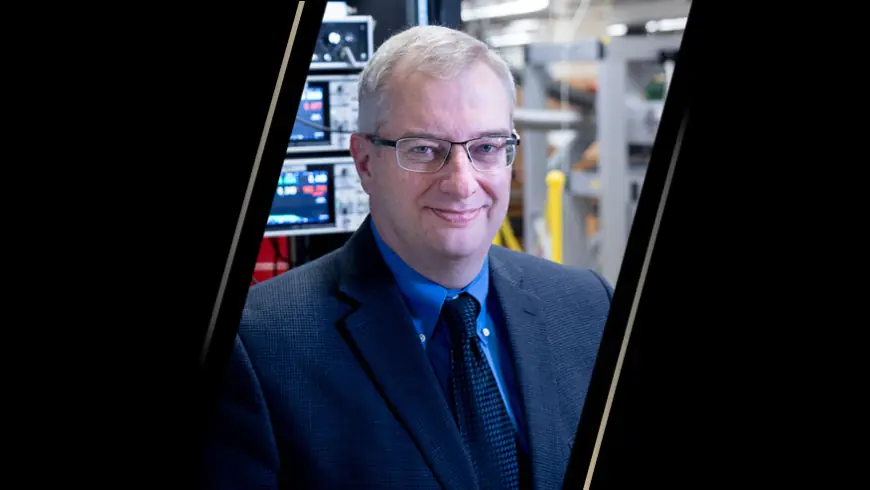
Quantum computing expert Michael Manfra has been appointed Purdue University’s first chief quantum officer, a role created to centralize and accelerate the campus’s quantum research, education and external partnerships. The appointment was announced on March 3, with the role taking effect Jan. 1, 2026.
Purdue University establishes chief quantum officer post to coordinate portfolio and integration
The new chief quantum officer position is designed to provide strategic oversight of Purdue’s growing quantum portfolio. In this joint role, Manfra will guide the university’s engagement with industry and government partners, oversee educational activities tied to quantum science and engineering, and serve as a special advisor to university leadership to integrate quantum work into the broader Purdue Computes initiative.
Responsibilities highlighted for the position include aligning research priorities, expanding collaborations beyond campus, and ensuring quantum efforts are woven into institutional computing and technology strategies. The appointment signals a formal effort to centralize leadership for quantum-related programs and degrees across the university.
Manfra’s mandate: research leadership, workforce development and partnerships
As chief quantum officer, Manfra will oversee Purdue’s newly launched quantum degrees program and related educational offerings. Purdue is preparing a next-generation quantum workforce through a range of educational opportunities focused on quantum computing, communications and sensing that pair theoretical study with practical application.
- Portfolio oversight: Strategic direction of campus quantum research and programs.
- Industry and government engagement: Building and managing external partnerships.
- Educational leadership: Supervising quantum degree programs and workforce preparation.
- Executive advising: Serving as a direct advisor to university leadership to align quantum activities with institutional computing goals.
Background and credentials that shaped the selection
Manfra is currently director of the Purdue Quantum Science and Engineering Institute and holds multiple professorships across physics and engineering disciplines. His academic appointments include the Bill and Dee O’Brien Distinguished Professorship of Physics and Astronomy, a professorship in the Elmore Family School of Electrical and Computer Engineering, and a professorship in materials engineering.
His research leadership includes guiding a Purdue team that produced concrete evidence of anyons, particles relevant to efforts to build fault-tolerant, large-scale quantum computers. Professional experience before his return to campus includes a decade at Bell Laboratories and a prior leadership role as scientific director of a Microsoft Quantum effort in West Lafayette. He took the helm of the Purdue Quantum Science and Engineering Institute in 2025.
Manfra was also recognized with the American Physical Society’s 2026 Oliver E. Buckley Condensed Matter Physics Prize for experimental work on anyons in two-dimensional electron systems. That recognition underscores the emphasis on connecting fundamental research discoveries to potential technological applications.
What’s next and what to watch
With a start date of Jan. 1, 2026, Manfra’s appointment initiates a period of concentrated alignment across research, education and partnerships for quantum work at Purdue University. Expect the office to prioritize launching the new degree program, strengthening ties with industry and government collaborators, and integrating quantum activities into the Purdue Computes initiative.
Details about specific partnership agreements, program curricula and staged deliverables were not included in the announcement. These elements may be disclosed over time as the new office establishes its agenda and operational plans.
Recent updates indicate this is a foundational move in the university’s strategy to expand quantum science and engineering capacity and to prepare students for a growing demand in quantum-related talent.