























Why Does Trump Want Greenland? The Strategic, Economic, and Political Drivers Behind the Push

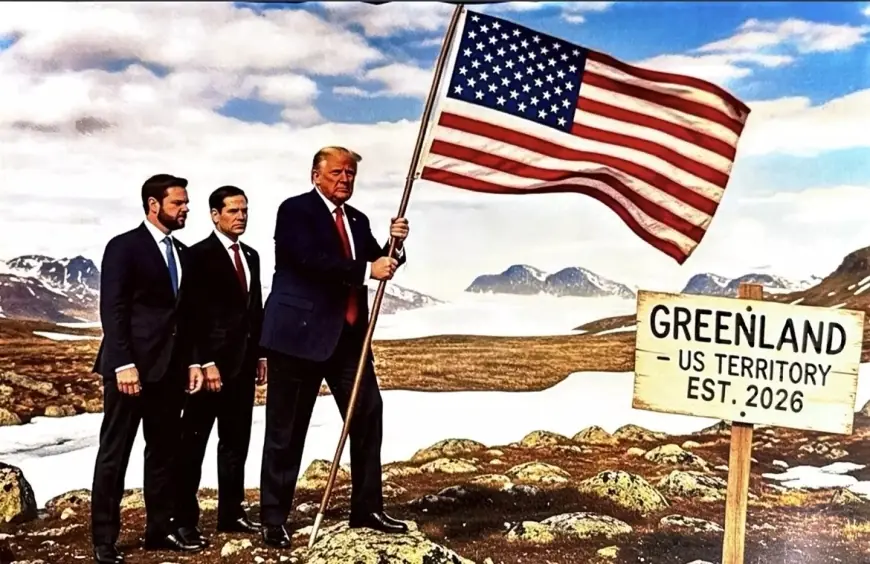
Trump’s renewed focus on Greenland is rooted in a mix of hard-security strategy, critical-minerals competition, and high-visibility politics. Greenland sits at the center of the Arctic’s changing map, where military early warning, new shipping routes, and access to scarce resources are becoming more valuable. The idea isn’t just about buying land; it’s about leverage, long-term positioning, and signaling strength to rivals and allies alike.
In recent days, Trump has doubled down publicly on the idea that U.S. control over Greenland is necessary for security, while European governments have pushed back and warned of diplomatic fallout. The result is a fresh flare-up over an old proposal, now amplified by today’s Arctic tensions and the global race for minerals needed in defense and clean-energy supply chains.
Trump and Greenland: the security logic he keeps returning to
Greenland’s location matters more than its population size. It lies on key air and sea corridors between North America and Europe, and it’s close to routes that matter for missile defense and early-warning systems. The U.S. already maintains a major military presence on the island, and from Washington’s perspective Greenland is a forward perch in a region where Russia is expanding activity and China is seeking influence through investment, research presence, and supply chains.
That’s why Trump and his allies frame Greenland as a national-security asset: controlling it (or at least ensuring exclusive strategic alignment) reduces vulnerability in the Arctic and strengthens U.S. monitoring and deterrence.
-
Trump’s argument centers on Arctic security and early-warning positioning, not just territory.
-
The U.S. already operates a significant military installation in Greenland, making the island strategically embedded in U.S. defense planning.
-
Greenland’s minerals are increasingly treated as security-relevant inputs for defense manufacturing and advanced technology.
-
Climate-driven changes are raising the Arctic’s value by shifting access, logistics, and shipping possibilities.
-
The push also functions as a pressure campaign on allies, tying security issues to trade and diplomatic leverage.
Critical minerals: rare earths, supply chains, and the “resource map” motive
A second driver is minerals. Greenland is often discussed as having promising deposits of rare earth elements and other critical minerals used in everything from guidance systems and radar to electric motors and grid infrastructure. Even when deposits exist, extraction in Greenland is difficult: harsh weather, limited infrastructure, high costs, and permitting politics can slow projects for years.
Still, the strategic appeal is straightforward: if the U.S. can secure preferential access, shape regulation, or anchor long-term partnerships, it reduces dependence on rivals for processing and supply. In that sense, Greenland becomes less a “real estate deal” and more a supply-chain insurance policy.
The Arctic is changing: routes, influence, and great-power competition
Trump’s Greenland fixation fits a broader pattern: the Arctic is no longer treated as a quiet frontier. Melting ice is extending seasonal access, which can reshape shipping, fisheries, undersea cables, and search-and-rescue demands. It also increases the importance of ports, airfields, and staging areas.
Greenland sits in the middle of these shifts. Even if new shipping lanes don’t replace traditional routes, the strategic planning value is rising: whoever has reliable access and infrastructure can move faster in crises and gather better intelligence.
Why the politics are so intense: allies, tariffs, and “strength” signaling
There’s also a political logic. Greenland is part of the Kingdom of Denmark and has its own self-governing institutions, so any U.S. move that sounds like takeover talk lands as a direct challenge to a long-standing ally relationship. That’s why the rhetoric triggers sharp reactions: it touches sovereignty, NATO cohesion, and Europe’s internal unity.
At home, the issue can also play as a dramatic, easily understood symbol of “American strength,” especially when packaged alongside industrial policy themes like mineral independence and defense readiness. Internationally, it can be used as bargaining pressure, where security demands and trade threats get mixed into the same negotiation atmosphere.
Greenland’s own politics matter too. Many Greenlanders prioritize economic development and greater autonomy, but that doesn’t automatically translate into support for becoming U.S. territory. Any attempt to force the question would likely harden resistance and complicate investment.
Greenland has come up in U.S. strategic thinking for decades, including past American interest in purchasing the island and expanding Arctic basing. What’s different now is the intensity of public messaging and the way critical minerals and great-power rivalry have moved from niche topics to top-tier national priorities.
FAQ
Can the U.S. actually “buy” Greenland?
Not unilaterally. Greenland’s status involves Denmark and Greenland’s self-governing authorities, and any change would face major legal and political barriers.
Is this mostly about the military base?
The base is a major factor, but the broader rationale includes Arctic monitoring, logistics, and long-term leverage in a more contested region.
Are Greenland’s minerals ready to be mined at scale?
Some deposits are considered promising, but large-scale mining faces serious hurdles: cost, infrastructure, environmental constraints, and multi-year permitting timelines.
What happens next depends less on slogans and more on whether the U.S. pivots toward practical steps: deeper defense agreements, infrastructure investment, and mineral partnerships that respect Greenland’s governance. Watch for concrete policy moves—budget decisions, new Arctic security initiatives, or structured talks with Denmark and Greenland—because those signals will matter more than the headline-grabbing rhetoric.